


Single Doctor vs Clinic Instagram Strategy: Feature Comparison for Indian Healthcare
Compare single-doctor and clinic Instagram strategies for Indian healthcare across trust velocity, NMC and DPDP compliance, reels, lead capture and monthly cost bands, with buyer archetypes from a solo dentist to a 100-bed multi-specialty hospital.
No pitch. Written root-cause diagnosis. AI-powered, healthcare only.
Direct answer
Compare single-doctor and clinic Instagram strategies for Indian healthcare across trust velocity, NMC and DPDP compliance, reels, lead capture and monthly cost bands, with buyer archetypes from a solo dentist to a 100-bed multi-specialty hospital.
TL;DR

TL;DR
- A single-doctor Instagram handle earns trust faster than a clinic handle because the algorithm and the human eye both reward a real face over a logo, but the moment the doctor takes a week off or moves cities, the entire growth curve stalls.
- A clinic Instagram handle wins on continuity, cross-specialty depth and institutional credibility for corporate tie-ups and insurance-desk conversations, but takes four to six months longer to earn the same save-per-reach ratio.
- The NMC social media advisory and the DPDP Act 2023 apply differently to a personal doctor handle versus an institutional clinic handle. Most Indian practices we audit are non-compliant on at least one of the two, usually without realising it.
- For most five to fifteen chair Indian clinics, the correct answer is neither pure model. It is a hybrid ecosystem where the doctor's personal handle carries the face and the clinic handle carries the process, cross-tagged, with the clinic feeding the algorithm on scale.
- Realistic monthly budget in 2026: personal handle only ₹35,000 to ₹60,000, clinic only ₹55,000 to ₹90,000, hybrid ecosystem ₹75,000 to ₹1.4 lakh. Any offer below the floor is almost always a reels-mill with no compliance layer.
Table of contents
- Why this comparison matters in Indian healthcare right now
- What "single doctor" and "clinic" actually mean on Instagram
- The eight axes we will compare on
- Head-to-head comparison table across four handle tiers
- Per-axis deep dives
- Which model fits which Indian buyer
- The compliance layer nobody talks about
- How Ichelon Consulting Group helps you decide
- Pricing reality and the 70-30 model for services
- Frequently asked questions
Why this comparison matters in Indian healthcare right now
Two things changed in the Indian healthcare Instagram landscape between 2024 and 2026, and most clinic owners we speak with are still operating on 2022 assumptions.
The first shift is regulatory. The NMC's social media advisory, combined with the operational reach of the DPDP Act 2023, has moved the goalposts on what a doctor and a clinic can post, how they can source testimonials, and how they can process a prospect's DM. The rules do not read the same for a personal handle owned by a registered practitioner and a clinic handle operated by a legal entity. Any content plan that treats them as interchangeable is quietly building risk into the practice.
The second shift is behavioural. Indian patients under forty now research a doctor's face and voice on Instagram or YouTube before they ever click through to a GMB listing. That is not a Delhi or Bangalore pattern anymore. We see it clearly in Jaipur, Kochi, Coimbatore, Bhubaneswar, Nagpur and Guwahati leads landing in the AtomCRM boards of our dental, dermatology, IVF and orthopaedic clients. The trust decision is happening on Instagram. The booking is happening on WhatsApp. GMB is the confirmation step. That reshuffling changes what an Instagram handle needs to do and who should own it.
Set against those two shifts, the choice between running the account from the founder doctor's handle, a clinic-branded handle, or both, is not a taste question. It is a structural design decision that determines compliance risk, staffing cost, lead attribution and continuity of the practice's brand equity.
What "single doctor" and "clinic" actually mean on Instagram
For the rest of this piece, four handle tiers show up in the comparison table. Worth defining them plainly.
Tier A, single-doctor personal brand. The account is registered in the doctor's name, uses the doctor's face across the grid, and speaks in first person. Ownership sits with the doctor personally, not the practice. Content is educational, opinionated and often draws on the doctor's teaching, publications or media appearances.
Tier B, multi-doctor clinic account. A five to fifteen consultant practice runs a single institutional handle. Founder doctor appears in perhaps thirty to forty per cent of posts, but the account rotates across consultants, patient-education carousels and clinic environment content. Ownership is corporate.
Tier C, hospital or institutional account. A fifty to five-hundred bed hospital, a chain of clinics across two or more cities, or a diagnostics network. The account speaks in an institutional voice. Individual consultants show up as guests. The tone is closer to a healthcare brand than a personal creator.
Tier D, hybrid doctor plus clinic ecosystem. A personal doctor handle and a clinic handle both run in parallel, cross-tagged and coordinated. Content is shot once, edited twice, published on both handles with different first frames and captions. This is the pattern we set up most often for Indian clinics between three and twenty chairs.
The eight axes we will compare on
Instead of scoring these four tiers on generic marketing metrics, the axes below are the ones that actually change the shape of a healthcare practice's Instagram plan.
- Trust velocity and the type of E-E-A-T signal each handle earns.
- Content sustainability and how much of the growth curve depends on one person.
- Compliance surface under the NMC social media advisory and the DPDP Act 2023.
- Algorithm behaviour, reel reach and save-rate patterns per tier.
- Depth across services versus depth in one clinical area.
- Lead capture, attribution and how cleanly the handle hands off to a CRM.
- Cross-platform amplification into GMB, YouTube and WhatsApp.
- Monthly cost economics and team dependency to keep the account alive.
Head-to-head comparison table
| Axis | Tier A: Single-doctor personal brand | Tier B: Multi-doctor clinic account | Tier C: Hospital or institutional account | Tier D: Hybrid doctor plus clinic |
|---|---|---|---|---|
| Trust velocity | Fastest. Face plus voice plus opinion compounds in six to twelve weeks. | Medium. Needs four to six months of consistent output to feel real. | Slowest for warmth. Fastest for corporate legitimacy. | Fast on doctor handle, medium on clinic handle, together compound faster than either alone. |
| Creator dependency | Very high. One doctor exits and the audience is orphaned. | Low. Handle survives any single departure. | Very low. Institutional continuity by design. | Medium. Personal side is fragile, clinic side is stable. |
| NMC and DPDP compliance load | Lighter, but personal registration is on the line for every post. | Heavier. Institutional data-fiduciary obligations kick in. | Heaviest. Enterprise-grade consent and disclosure. | Both loads apply. Needs a single content-review workflow across both handles. |
| Reel reach and save patterns | Higher save-rate per view. Algorithm rewards a real face. | Higher share-rate for educational carousels. Reels reach is muted. | Reach depends on paid amplification. Organic is limited. | Best combined reach. Cross-tagged reels borrow both audiences. |
| Service depth | Deep on the doctor's specialty. Shallow everywhere else. | Balanced across services offered at the clinic. | Wide across specialties, thin per topic. | Deep on the doctor's specialty, balanced across the rest via clinic handle. |
| Lead capture and CRM handshake | DMs land with the doctor. Attribution is manual unless a bridge tool is used. | DMs land with front-desk. Cleaner attribution into a clinic CRM. | Structured intake forms. Attribution is enterprise-friendly. | Two DM inboxes. Needs a shared inbox tool feeding one CRM. |
| Cross-platform amplification | Strong into YouTube if the doctor publishes there. Weak into GMB. | Strong into GMB and WhatsApp. Weak into YouTube unless funded. | Strong across all platforms with the right budget. | Strongest overall. Doctor drives YouTube, clinic drives GMB and WhatsApp. |
| Monthly cost band, India 2026 | ₹35,000 to ₹60,000 | ₹55,000 to ₹90,000 | ₹1.25 lakh to ₹3.5 lakh | ₹75,000 to ₹1.4 lakh |
Per-axis deep dives
Trust velocity and the type of E-E-A-T signal
A personal doctor handle earns trust faster because the human eye and the Instagram algorithm both reward what looks like a real person, in a real coat, in a real chamber. The E-E-A-T signal is intrinsic. The follower is trusting the doctor and, by extension, the clinic. A clinic handle has to work harder to earn the same warmth. It compensates with volume, consistency, patient-education depth and behind-the-scenes footage. The E-E-A-T signal is institutional. The follower is trusting the practice as a category-brand. Neither is better on principle. The question is which signal the practice's growth actually needs. A senior dermatologist in South Delhi looking to move up-market needs personal trust. A three-city dental chain looking to raise its ticket size in Tier 2 needs institutional trust. In both cases a hybrid does more than either single handle.
Content sustainability and creator dependency
The blunt version of this axis. If your growth curve depends on one person's face, energy and clinical schedule, then a random three-week course in Boston or a family emergency in Bhopal can freeze your entire pipeline. We have watched a personal-brand-only handle in Hyderabad drop from a hundred and forty thousand accounts reached per month to under twenty thousand in six weeks because the founder took a research sabbatical. Nothing was wrong with the content. There was simply none of it. A clinic handle, by design, distributes the load across consultants, patient stories and process content. Slower to grow, harder to break. The hybrid pattern insulates the practice against both risks, which is why it has become our default recommendation.
NMC and DPDP Act 2023 compliance surface
This is the axis most Indian practices underestimate. On the NMC side, the social media advisory prohibits solicitation of patients, disparagement of other practitioners, misleading claims and, for aesthetic and procedural specialties, unqualified before-after visual content. On the DPDP side, health information is sensitive personal data, which changes how DMs, testimonials, appointment requests and even story replies must be stored, processed and shared. A personal handle carries the compliance risk on the individual registration. A clinic handle carries it on the legal entity, which under the DPDP Act 2023 makes it a data fiduciary with disclosure obligations, consent management responsibilities, and a duty to publish contact points for grievance redressal. The hybrid model does not reduce this load. It requires both workflows to be built into one review process, ideally with a compliance-trained editor sign-off before any post ships.
Algorithm behaviour, reel reach and save-rate
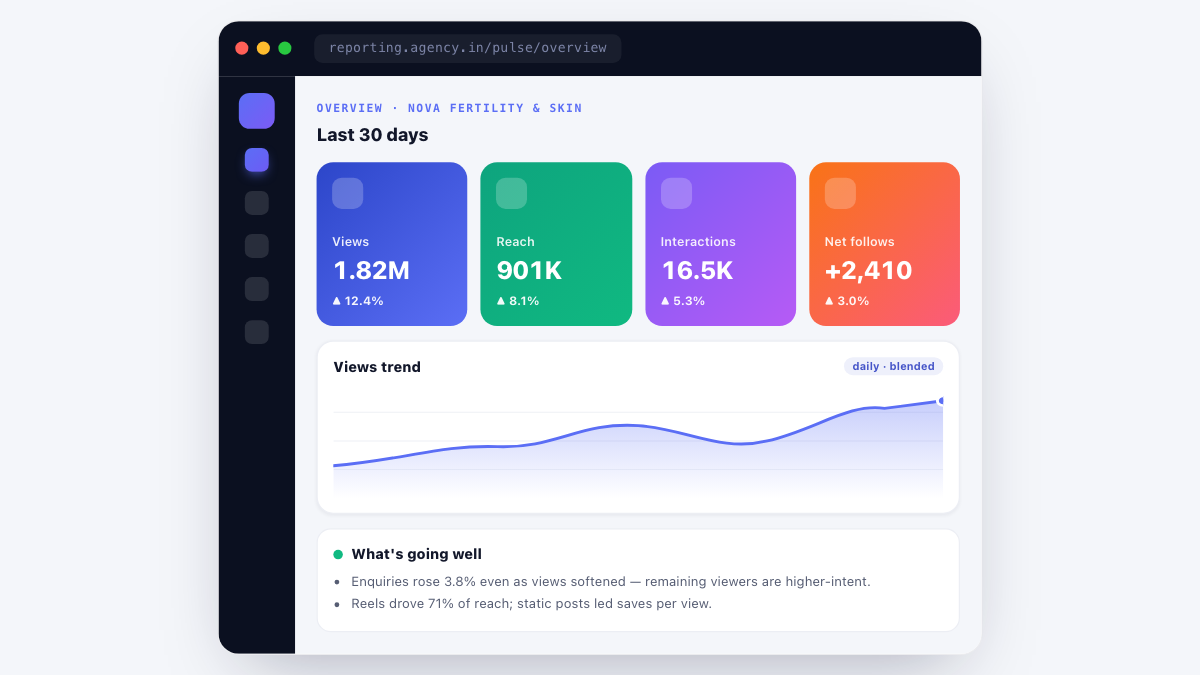
Instagram's algorithm does not treat a personal creator handle and a clinic brand handle equivalently. Personal handles that consistently post reels with a face in the first frame earn a higher save-rate per thousand accounts reached, especially in the healthcare category, because saves signal intent to act on medical information later. Clinic handles tend to earn better share-rates on carousels and better completion-rates on step-by-step process content, but weaker organic reel distribution. This is not a defect. It reflects how users bookmark information. The practical implication is that reels-first content plans favour the personal handle, carousel-first plans favour the clinic handle, and any healthcare account planning to compete seriously in an Indian metro needs both patterns running together, informed by an analytics view like Prism Pulse to see which format is actually earning saves for the practice's own audience rather than category averages.
Cross-service depth versus single-expertise depth
A single-doctor handle can only credibly speak to that doctor's clinical area. A gynaecologist's personal handle explaining orthodontics feels wrong to the audience and to the algorithm. A clinic handle, by contrast, is expected to cover everything on its service menu, which means an aesthetic dermatology plus hair restoration plus laser clinic has a natural editorial arc across three verticals. The hybrid model resolves this cleanly. The doctor handle stays deep on the founder's specialty. The clinic handle covers the rest, invites guest consultants into camera-facing roles, and prevents the founder from being cast as an authority on procedures they do not personally perform.
Lead capture, attribution and CRM handshake
A personal doctor handle usually funnels DMs directly to the doctor's phone, which is convenient but attribution-hostile. The doctor forgets which prospect came from which reel, which reel came from which campaign, and which campaign was funded. A clinic handle can be wired into a shared front-desk inbox, which flows into a CRM board with reel source, first-touch date, procedure of interest and consent status. In our own client stack, that hand-off usually lands in AtomCRM, though the principle applies to any properly configured healthcare CRM. In a hybrid setup, two inboxes need to feed one CRM view. That is a workflow design problem more than a technology problem, but it is worth solving because without it, the practice loses the ability to answer the single most important business question about social media: for every rupee spent, how many appointments did we book.
Cross-platform amplification
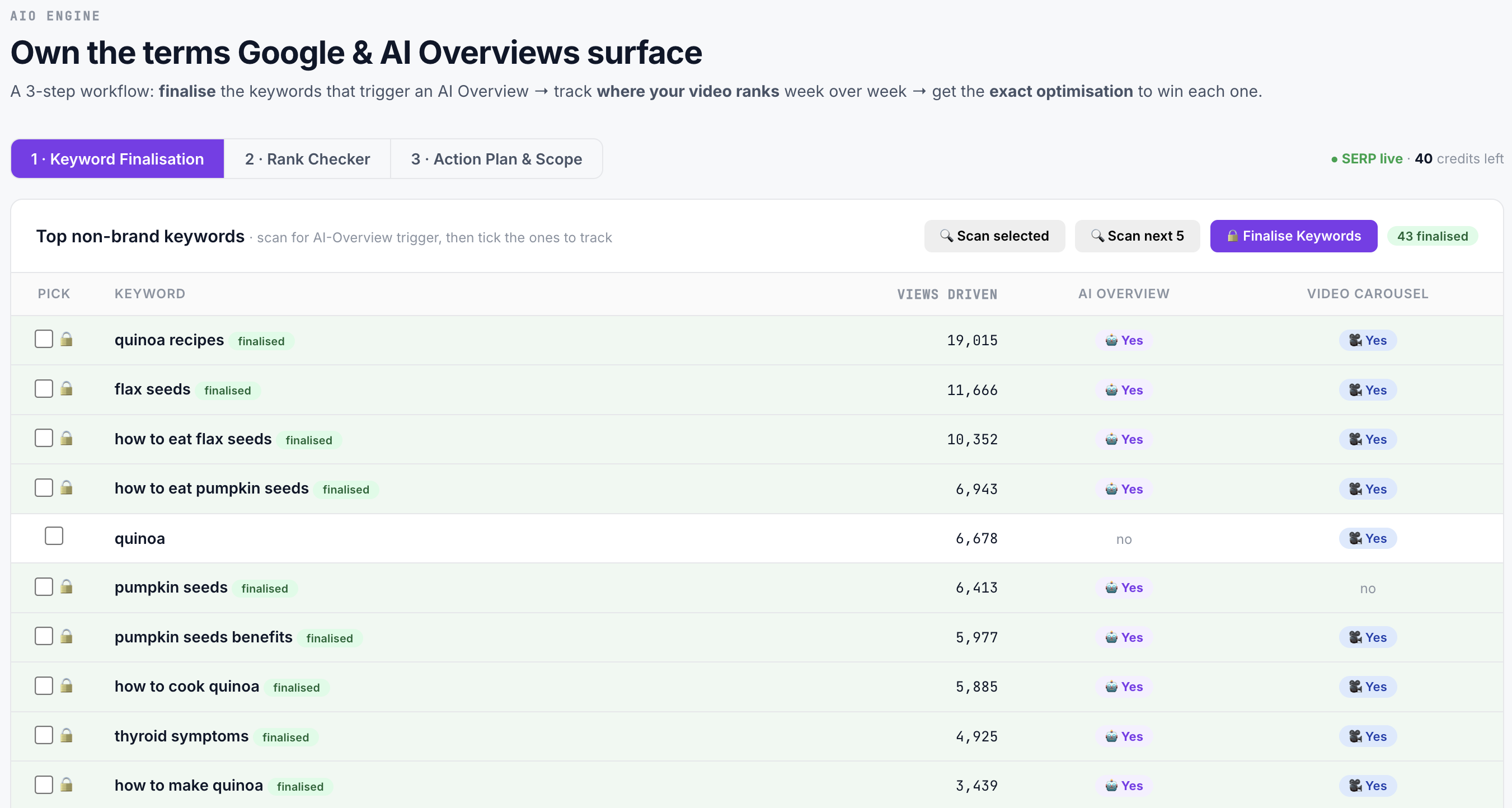
Instagram in isolation is a weak lead source for Indian healthcare. Instagram amplified into GMB, YouTube and WhatsApp is a very strong one. A personal doctor handle amplifies most naturally into YouTube long-form, which builds compounding search equity and pairs beautifully with a YouTube programme managed on top of an AI-native workflow like YODA. A clinic handle amplifies most naturally into GMB reviews, ratings and Q and A, which is where Angryturtle earns its keep as a GBP operating system across a multi-location practice. WhatsApp becomes the enquiry layer for both. The hybrid model is what makes all four platforms sing in the same key.
Monthly cost economics
The temptation for many Indian clinic owners is to try to run either a personal or a clinic handle at ₹15,000 to ₹25,000 a month. It never works. That budget covers a junior editor with a phone, a monthly meme calendar, and no compliance review. It produces motion, not traction. The real cost of a working personal handle sits between ₹35,000 and ₹60,000 a month, once you add a strategist, an editor, a shoot cadence and a light paid layer. A clinic handle lifts to ₹55,000 to ₹90,000 because the content mix is heavier. A hybrid ecosystem lands between ₹75,000 and ₹1.4 lakh depending on volume and paid amplification. A large hospital or chain crosses ₹1.25 lakh at the entry point and can move well past ₹3 lakh once paid distribution through a properly configured Meta Ads engine like Meta Catalyst IQ is layered on top, along with competitor intelligence from a tool like Prism Spy.
Which model fits which Indian buyer


Solo dentist or single-specialty clinic in a Tier 2 city
Think a single-chair dentist in Faridabad, an independent orthodontist in Indore, or a solo dermatologist in Coimbatore. The right answer here is almost always Tier A, single-doctor personal brand, for the first twelve to eighteen months. Trust velocity is the constraint, not scale. The founder is the practice. Investing in a full clinic handle at this stage dilutes the budget without building the trust the practice actually needs.
Mid-sized multi-doctor clinic, five to fifteen consultants
Think a five-chair dental clinic in Pune, a fifteen-consultant IVF centre in Ahmedabad, or a multi-specialty aesthetics practice in Gurgaon. Tier D, the hybrid model, is the fit. The founder needs the personal handle to keep referral density high among peers, colleagues and press. The clinic needs the institutional handle to hold cross-service depth, to survive any single consultant's departure, and to feed the CRM cleanly. This is the biggest, most under-served segment we work with in Indian healthcare.
Multi-location clinic chain across two to five cities
A tri-city cosmetic surgery brand, a four-city eye-care network, a five-city dental group. The pull is towards Tier B or Tier D. A single clinic handle is not enough because location-specific discovery matters, and per-city sub-handles risk fragmenting audience. The workable pattern is a master brand handle for the network, cross-tagged with founder-doctor personal handles and city-specific highlight covers, with location-level differentiation happening on GMB rather than Instagram.
Hospital, hundred beds or more, multi-specialty
Tier C is the correct primary vehicle. Institutional voice, structured intake, corporate credibility, and integration with the hospital's larger digital estate through a platform layer like HealthPro 360. Individual doctor handles operate independently and are cross-tagged for reach, but the hospital does not try to run their personal brands.
The compliance layer nobody talks about
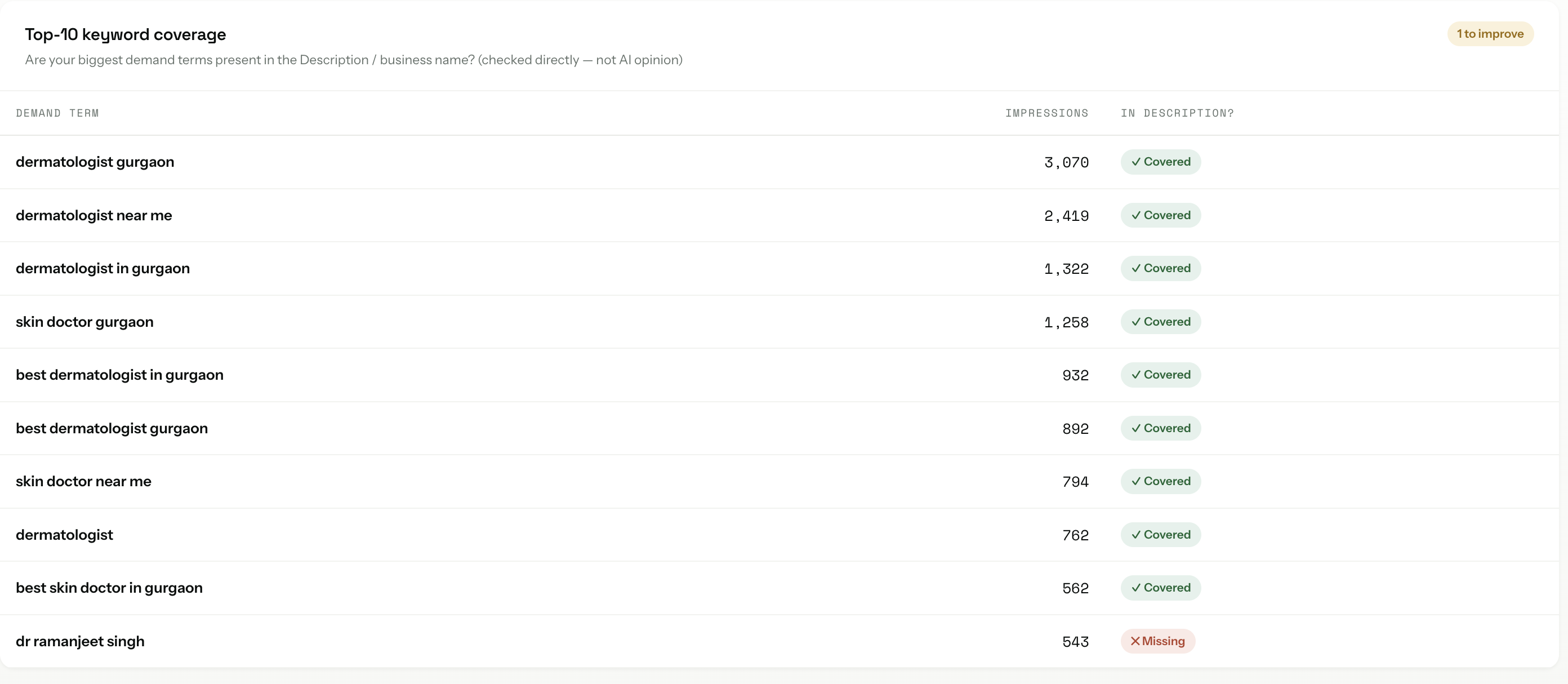
Because it recurs across every axis, worth pulling out separately. Any Indian healthcare Instagram account, whether personal or institutional, should have three artefacts in place before it publishes its next post. A written content policy that cites the NMC social media advisory and the DPDP Act 2023 by name and lists what will not be posted. A consent template for any patient-identifying imagery or story, with Instagram named as a publication channel. A grievance contact point published on the profile for the DPDP data-principal to raise concerns. These are inexpensive, one-time deliverables, and they are what separate an account that grows sustainably from one that grows until it does not.
How Ichelon Consulting Group helps you decide
Ichelon Consulting Group works with over three hundred Indian healthcare clients, including more than a hundred and fifty clinics, across dentistry, dermatology, IVF, orthopaedics, aesthetics, ophthalmology and multi-specialty hospitals. Our role in an Instagram engagement is not to sell any one handle model. It is to look at the practice's clinical mix, founder profile, city, compliance appetite and budget, and recommend the tier or tier-combination that fits. In most engagements we then run the content, compliance review and paid amplification, wire the analytics through Prism Pulse, feed leads into the practice's CRM of choice, and coordinate cross-platform with Angryturtle on GMB and YODA on YouTube. The recommendation stays feature-based, not vendor-based. If a personal doctor handle is the right call and a clinic handle would only dilute budget, that is the honest answer we give.
Pricing reality and the 70-30 model
Instagram-only engagements at ICG follow the same 70-30 pricing logic that runs across our SEO, YouTube and Google Ads work. Seventy per cent of the retainer is fixed and covers strategy, creative, editing, compliance review and reporting. Thirty per cent is performance-linked and moves against agreed outcomes such as reach, save-rate, DMs of buying intent and appointments booked through the handle. Retainers start from ₹20,000 a month and are custom-scoped, Goals-Driven engagements. A Foundation scope suits a focused personal or clinic handle. Growth supports a hybrid ecosystem with light paid amplification. Scale layers in stronger paid distribution, competitor intelligence and cross-platform coordination. Ads-only engagements on Instagram and Meta, and YouTube and AIO overlays, follow the same Performance-Linked Payout Model. Whatever the budget, any Indian healthcare practice evaluating a full-service Instagram plan should ask hard questions about compliance workflow, creative direction and paid support, and confirm all three are actually covered.
The honest closing view
The question the market keeps asking is single doctor versus clinic. The better question, once a practice has stopped competing with itself, is which combination of handles, at which tier, with which compliance workflow and which cross-platform amplification, produces the most booked appointments per rupee. For a solo dentist in a Tier 2 city that is a personal handle. For a fifteen-chair IVF centre it is a hybrid. For a hundred and fifty bed multi-specialty hospital it is an institutional handle with independent doctor handles feeding it. The answer changes with the practice. The framework stays the same. Pick the axes that matter, score the tiers honestly, and build the compliance layer before the first post ships.
Book a free Meta ads account audit.
Raman Soni's team pulls your account, checks CAPI/EMQ, reviews creative for NMC compliance, and shows where CPQL is leaking. 45 minutes, actionable output.
Questions readers ask
about this topic.
The three platforms
behind every ICG engagement.
Beacon
CAPI middleware that fixes Event Match Quality, translates CRM statuses to Meta-standard events, dedups across channels.
Agency OS
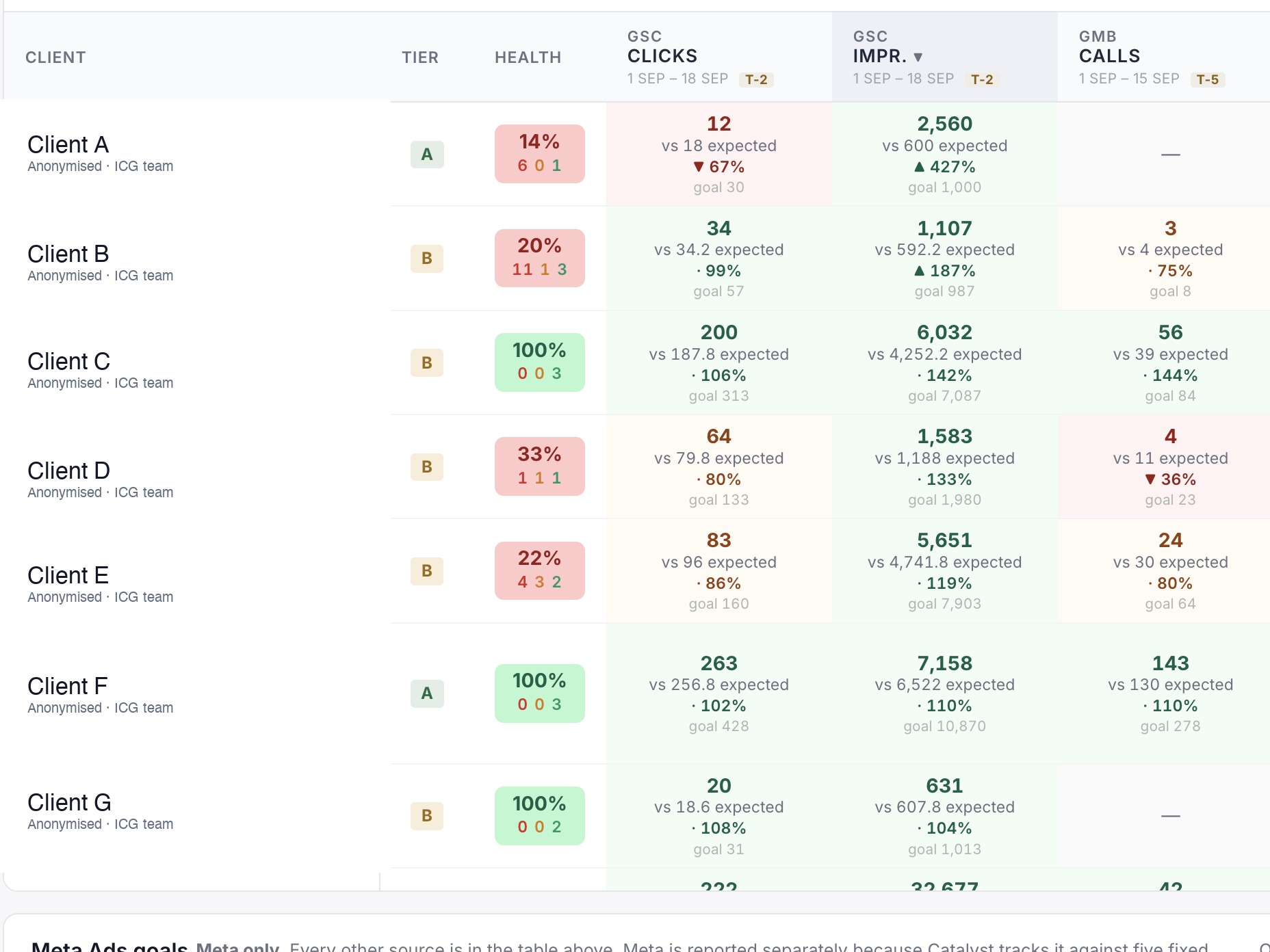
Live client dashboard. GSC, GA4, Google Ads, Meta Ads, IVR calls in one view. Login anytime, not monthly.
Phoenix
Clinic revenue intelligence over your PMS. Daily action queue: Prevent Loss, Maintain & Engage, Grow Revenue. Multi-centre rollout.
Or book a free 30-min audit to see all three in action on your account.
Healthcare brands
that already run on ICG.
A representative slice of the 150+ healthcare brands ICG has delivered for across India. Most engagements remain under NDA.


What ICG clients say · on video.
"Scale up of organic channels and business consulting. ICG has absolute domain authority in their field."
"Working with ICG transformed how we acquire IVF patients in Gurgaon. They understand the fertility journey from inquiry to consult..."
"What Ichelon accomplished — they got all my ideas and worked over 3-4 months to create an amazing, super-customised website."
Need help operationalising this?
Every ICG service is healthcare-only, NMC + DPDP-aware, and built around the patient-research patterns that drive Indian healthcare growth in 2026.
Every practice welcome — packages from ₹20,000/mo.
Goals-Driven engagements · Performance-Linked Payout Models available
More from
ICG.
Five trends shaping Indian healthcare marketing through 2027: AI-first patient research, Conversions API adoption, ABDM discovery, the AEO w...
Healthcare AIO is the discipline of getting your clinic or hospital cited inside Google AI Overviews, ChatGPT and Perplexity answers — not j...
Conversational-search advertising places brand messages inside AI chat answers — ChatGPT, Perplexity, Copilot — rather than beside a results...
Stop guessing.
Book a Diagnostic.
30 minutes. Free. With the AI-powered healthcare-only marketing agency 150+ brands already run on. No slides, no pitch, no hard close.


