


Search Ads vs Performance Max for Healthcare in India: When to Use Which
A feature-based, India-first buyer guide comparing Google Search Ads, Performance Max, and a hybrid layered approach for hospitals, clinics, IVF chains, and diagnostic labs. Includes NMC and DPDP compliance considerations, budget bands in rupees, and buyer archetype fit.
No pitch. Written root-cause diagnosis. AI-powered, healthcare only.
Direct answer
A feature-based, India-first buyer guide comparing Google Search Ads, Performance Max, and a hybrid layered approach for hospitals, clinics, IVF chains, and diagnostic labs. Includes NMC and DPDP compliance considerations, budget bands in rupees, and buyer archetype fit.
TL;DR

TL;DR
- Search Ads win on intent, cost per qualified lead, and NMC-safe copy control. If someone types "best cardiologist near Sector 14 Gurgaon," a keyword-intent campaign captures that demand cleanly.
- Performance Max wins on reach, remarketing scale, and lower-effort creative refresh once you have first-party audience signals and 30+ conversions per month feeding the model.
- For most Indian clinics under Rs 3 lakh monthly ad spend, start with Search Ads only. Performance Max needs volume to learn. Below the volume floor, you overspend on brand and irrelevant placements.
- For 100-bed and larger multi-speciality hospitals, run both in a hybrid layered structure where Search Ads own high-intent branded and non-branded queries, and Performance Max mops up display, YouTube, and remarketing without cannibalising.
- Neither format is compliant by default. NMC advertising guidelines and DPDP Act 2023 rules on consent still apply to the words, images, targeting, and landing pages regardless of campaign type.
Table of Contents
- Why this comparison matters for Indian healthcare buyers
- The eight axes to compare on
- Main comparison table
- Per-axis deep dives
- Which format fits which buyer
- How ICG helps you decide
- Our 70-30 pricing model for paid media
- Frequently asked questions
Why this comparison matters for Indian healthcare buyers
The Indian healthcare buyer journey has shifted faster than most marketing teams have caught up with. A patient who twelve months ago would have asked a neighbour for a paediatrician referral now runs three Google searches, watches two YouTube reviews, opens a map listing, reads the first four AI Overview citations, and only then picks up the phone. Most of that journey is happening on Google surfaces. Which is why the choice between a keyword-driven Search Ads campaign and an AI-driven Performance Max campaign is no longer a technical footnote — it decides whether your marketing rupee lands in front of a patient at the moment of intent, or gets sprayed across placements that never convert.
The comparison is also loaded with local complications that generic global playbooks quietly ignore. The National Medical Commission's advertising code forbids self-praise, guarantees of cure, and testimonials that cannot be independently verified. The Digital Personal Data Protection Act 2023 has turned "let us just upload our patient list as a Customer Match audience" from a growth hack into a legal exposure. The Ayushman Bharat Digital Mission is nudging providers toward interoperable records, which changes how you handle the phone number that comes in from a landing page. None of these constraints go away when you switch from one Google Ads campaign type to another — but each type stresses them differently.
Then there is the volume question. Performance Max is a machine learning product. It learns from conversion signals. A single dental clinic in a Tier-2 city that generates eight enquiries a week does not give the algorithm enough data to leave the exploration phase. A 100-bed hospital running six speciality departments and 400+ enquiries a month is a completely different animal. Recommending the same campaign type to both is the fastest way to burn a marketing budget while producing a slide deck full of green arrows.
This guide is written for the person making the call — a marketing director, a hospital administrator, a clinic owner, or an agency evaluator sitting on the other side of the table from three vendors who all promise the moon. It is deliberately feature-based. We do not think one campaign type is universally better. We think the honest answer is "it depends," and we want you to walk out with the criteria to answer "depends on what" for your specific situation.
The eight axes to compare on
Before the table, a quick word on the axes. Most vendor pitches collapse this comparison into "reach vs precision" and stop there. That framing is too shallow to protect a healthcare budget. We use eight axes because each of them can single-handedly change the recommendation:
- Query and placement control — how much say you have over where the ad shows and which words trigger it.
- Audience signals and first-party data usage — how the campaign learns, and what data you feed it.
- Creative asset requirements — what you have to produce before the campaign can even go live.
- Attribution and reporting granularity — what you get to see in the after-action report.
- NMC and DPDP compliance safety — how easy it is to keep the campaign inside Indian medical advertising and data protection rules.
- Budget floor and scaling economics — the minimum monthly spend below which the format actively wastes money, and the ceiling above which it stops improving.
- Speed to first meaningful result — how long between campaign live and the first defensible read on performance.
- Funnel stage fit — which part of the patient journey the format was actually designed to influence.
None of these axes are opinions. Every one of them is a factual capability, constraint, or trade-off you can verify against a live campaign inside a month.
Main comparison table
| Axis | Search Ads (Keyword-Intent tier) | Performance Max (AI-Signal tier) | Hybrid Layered (Portfolio approach) |
|---|---|---|---|
| Query and placement control | Full. You pick keywords, match types, negatives, and can exclude placements at the campaign level. | Partial. Audience signals guide the model but exact query and placement transparency is limited. | High. Search owns high-intent queries; Performance Max is fenced with brand exclusions and account-level negatives. |
| Audience signals and first-party data | Uses keyword intent as its primary signal; optional layering of remarketing lists and in-market audiences. | Heavily dependent on Customer Match, website visitors, and conversion history to leave exploration. | Search feeds first-party signal upstream that Performance Max then uses downstream. |
| Creative asset requirements | Low. Responsive Search Ads need 15 headlines and 4 descriptions plus sitelinks and callouts. | High. Needs image, video, logo, and headline assets across sizes; without video, YouTube inventory suffers. | Highest overall, but staggered — Search launches first, Performance Max ramps once creative is ready. |
| Attribution and reporting granularity | High. Query reports, keyword-level bidding, geo and device slices are all first-class. | Aggregated. Asset group and audience insights, limited query visibility, no per-placement bidding. | Search provides the granular read; Performance Max is measured on incremental lift and assisted conversions. |
| NMC and DPDP compliance safety | Easier to police because copy variants are explicit and negatives block risky terms. | Harder to police because assets recombine automatically and search themes are broader. | Manageable with strict asset review, uploaded audience consent trails, and monthly compliance audits. |
| Budget floor and scaling economics | Viable from Rs 40,000 to 60,000 per month per city cluster. | Meaningful learning typically needs Rs 2.5 to 3 lakh per month and 30+ conversions. | Designed for Rs 5 lakh plus, where the two formats stop competing and start compounding. |
| Speed to first meaningful result | 2 to 3 weeks to a defensible cost-per-lead read. | 4 to 6 weeks minimum through the exploration phase before you can trust the numbers. | Search reads by week three; Performance Max reads at week six; incrementality read by week eight. |
| Funnel stage fit | Bottom-funnel intent capture — the patient who is actively searching now. | Full-funnel including cold display and YouTube reach — awareness through conversion. | All stages, with clean handoffs between demand capture and demand generation. |
Per-axis deep dives
1. Query and placement control
This is the axis that trips up the most Indian healthcare marketers. Search Ads let you say "I want to show for cardiologist Bandra but not for cardiologist salary." Performance Max asks you to trust the algorithm to figure out that distinction on its own. In practice, a well-run Search Ads account for a hospital speciality department will accumulate 400 to 800 negative keywords in the first quarter alone — everything from job-seeker queries to competitor names to medical education searches that will never convert into a patient enquiry. Performance Max does honour account-level negatives, and that list is worth building carefully, but you lose the surgical control of keyword-level bidding and match-type discipline. For a cardiology, oncology, or IVF department where the average enquiry value justifies a Rs 400 to Rs 800 cost per lead, that surgical control is often worth more than the incremental reach.
2. Audience signals and first-party data usage
Performance Max is fundamentally a signal-hungry format. If you feed it strong audience signals — Customer Match lists of past enquirers, remarketing lists of high-intent website visitors, YouTube channel viewers, and consistent conversion data — it can genuinely produce breakthrough results. Feed it thin signals and it wastes budget on exploration. Search Ads, by contrast, use the query itself as the strongest signal in advertising. A patient typing "IVF cost second cycle Delhi" has told you almost everything you need to know. This is also where DPDP Act 2023 has changed the game. Uploading a patient list as a Customer Match audience without an unambiguous, purpose-specific consent record is now a real compliance risk. That risk affects Performance Max more than Search Ads because the former relies more heavily on such lists to accelerate learning.
3. Creative asset requirements
Search Ads can go live with text alone — fifteen responsive headlines, four descriptions, a handful of sitelinks, some callouts, structured snippets, and a set of images for the extension. Performance Max wants images at multiple aspect ratios, at least one video asset per asset group (Google will auto-generate a low-quality video if you skip this, which almost always underperforms), logos, and long-form and short-form copy. For a Tier-2 dental clinic with no in-house video capability, this is a non-trivial ask. It is one of the honest reasons Search Ads remains the default recommendation at the smaller end of the market. For hospitals with 12+ specialities, the creative production burden is real but distributes across departments and campaigns, so per-department it becomes manageable.
4. Attribution and reporting granularity
Search Ads produce a query report that tells you exactly what a patient typed to trigger your ad. Performance Max gives you asset group performance, audience insights, and campaign-level metrics, but the search terms report is significantly less detailed. For a marketing director who needs to defend spend line-by-line to a hospital board, that difference matters. This is also why the hybrid layered approach is often the answer for anyone above Rs 5 lakh in monthly spend — Search Ads carry the reporting burden and the accountability, while Performance Max is measured on incrementality against a Search-only baseline. Our own competitor-intelligence work through Prism Spy has taught us how much of a category's ad activity is now happening in less transparent placements, so if you want to reconstruct what your competitor set is doing, you need Search Ads granularity somewhere in your own account to keep your finger on the pulse.
5. NMC and DPDP compliance safety
Neither format is compliant out of the box. Both will happily approve a headline that promises "100% cure" or "best cardiac surgeon in India" — Google's editorial policy is not a substitute for NMC's advertising code. What changes between the two is how easy it is to keep your account clean. In Search Ads, every headline is explicit, every combination is finite, and you can audit them. In Performance Max, headlines, descriptions, images, and videos recombine on the fly across placements, which means you need a stricter upfront asset review and a more disciplined monthly compliance sweep. On the DPDP side, both formats can technically ingest first-party audiences, but Performance Max's dependence on them raises the stakes. A neutral rule of thumb we apply to every client account is: if you cannot show, on demand, the exact consent language collected for every phone number and email in an uploaded audience list, that list does not go into any campaign — Search or Performance Max.
6. Budget floor and scaling economics
This is where a lot of agencies quietly overpromise. Performance Max needs volume. Google's own documentation nudges toward at least 30 conversions in the last 30 days for meaningful smart bidding, and in healthcare where a conversion is a genuine patient enquiry (not a page view), that number often implies Rs 2.5 lakh to Rs 3 lakh in monthly spend as a working floor. Below that, you are effectively paying for the algorithm's education with no guarantee of graduation. Search Ads, by contrast, can generate defensible ROI from Rs 40,000 a month for a well-targeted single-clinic campaign in a single city. Any recommendation that pushes Performance Max on a Rs 60,000 budget deserves a raised eyebrow.
7. Speed to first meaningful result
Search Ads read faster because every keyword is a clean signal and negatives can be added in near-real time. In our experience running paid media for 100+ healthcare accounts, a well-structured Search Ads campaign gives you a defensible cost-per-qualified-lead number by week three. Performance Max spends the first four to six weeks in exploration. If you kill it before week six because early numbers look ugly, you have wasted the learning budget. If you let it run past week eight and it still hasn't stabilised, that is a real signal that the account is too thin for the format. Marketing directors under quarterly pressure need to understand this timeline before greenlighting Performance Max as their primary format.
8. Funnel stage fit
Search Ads were built for demand capture — the patient who has already decided to look for a doctor. Performance Max was built for demand generation across the full funnel, including cold display placements and YouTube inventory where the patient is not yet searching. If your growth constraint is "we get plenty of enquiries, we just want to close more of them" — you have a mid-funnel problem and neither format is the primary answer (that is a CRM and follow-up problem, and where our AtomCRM is often the missing piece). If your growth constraint is "we are invisible to patients who haven't heard of us" — you need a demand generation format and Performance Max earns its seat.
Which format fits which buyer


Buyer archetype 1: Single dental clinic in a Tier-2 city, one location, Rs 60,000 monthly ad budget
Recommendation: Search Ads only, layered with Google Business Profile optimisation. Skip Performance Max entirely at this stage. The clinic does not generate enough monthly enquiries for the algorithm to learn, does not have the creative production capability to feed asset groups, and does not have the attribution needs that justify a hybrid approach. A tight Search Ads campaign built around "dentist near me," speciality queries (root canal, aligners, implants), and locality modifiers will typically produce 40 to 90 qualified enquiries a month. Local visibility should be handled through a dedicated GBP layer — this is exactly what our Angryturtle product was built to run alongside a Search Ads campaign for smaller clinics.
Buyer archetype 2: Mid-tier IVF chain with 4 to 8 centres across metros, Rs 3 to 5 lakh monthly ad budget
Recommendation: Search Ads as the core, Performance Max as a fenced satellite. IVF is a high-consideration category where a patient will research for weeks before enquiring. Search Ads capture the intent moments (second cycle costs, success rate queries, protocol comparisons). Performance Max, once you have at least three months of clean Customer Match audiences and website visitor lists, can layer YouTube and display remarketing over that base. The fenced structure is non-negotiable — brand terms belong in Search Ads only, and Performance Max needs strict account-level negatives to avoid consuming demand that Search would have captured anyway at a lower cost.
Buyer archetype 3: 100-bed multi-speciality hospital, cardiology and oncology heavy, Rs 5 to 12 lakh monthly ad budget
Recommendation: Hybrid layered from day one. Split-fund departments by margin contribution. Cardiology and oncology get their own Search Ads campaigns with speciality-specific landing pages, dedicated ad groups per procedure, and per-consultant remarketing lists. A single Performance Max campaign at the hospital level absorbs YouTube, display, and cross-department remarketing. This is also the tier where the hospital's own EHR or RCM data (whether through an in-house system or a hospital operations overlay like our HealthPro 360) starts feeding meaningful first-party audiences into the ads account under a documented DPDP-compliant consent workflow.
Buyer archetype 4: Diagnostic lab chain with 40+ collection centres, Rs 8 lakh plus monthly ad budget
Recommendation: Hybrid layered, with Search Ads dominant on the top ten tests (thyroid, vitamin D, lipid, HbA1c and their branded package equivalents) and Performance Max scaling everything else. Diagnostics is a volume game with lower per-transaction values than surgical specialities, so cost discipline matters more than incremental reach. The right split is usually 65% Search, 25% Performance Max, 10% experimental formats (Demand Gen, YouTube specific campaigns). This is also the tier where competitor intelligence — the kind of daily ad-copy and offer tracking we do through Prism Spy — starts having material impact on your own bidding decisions.
How ICG helps you decide
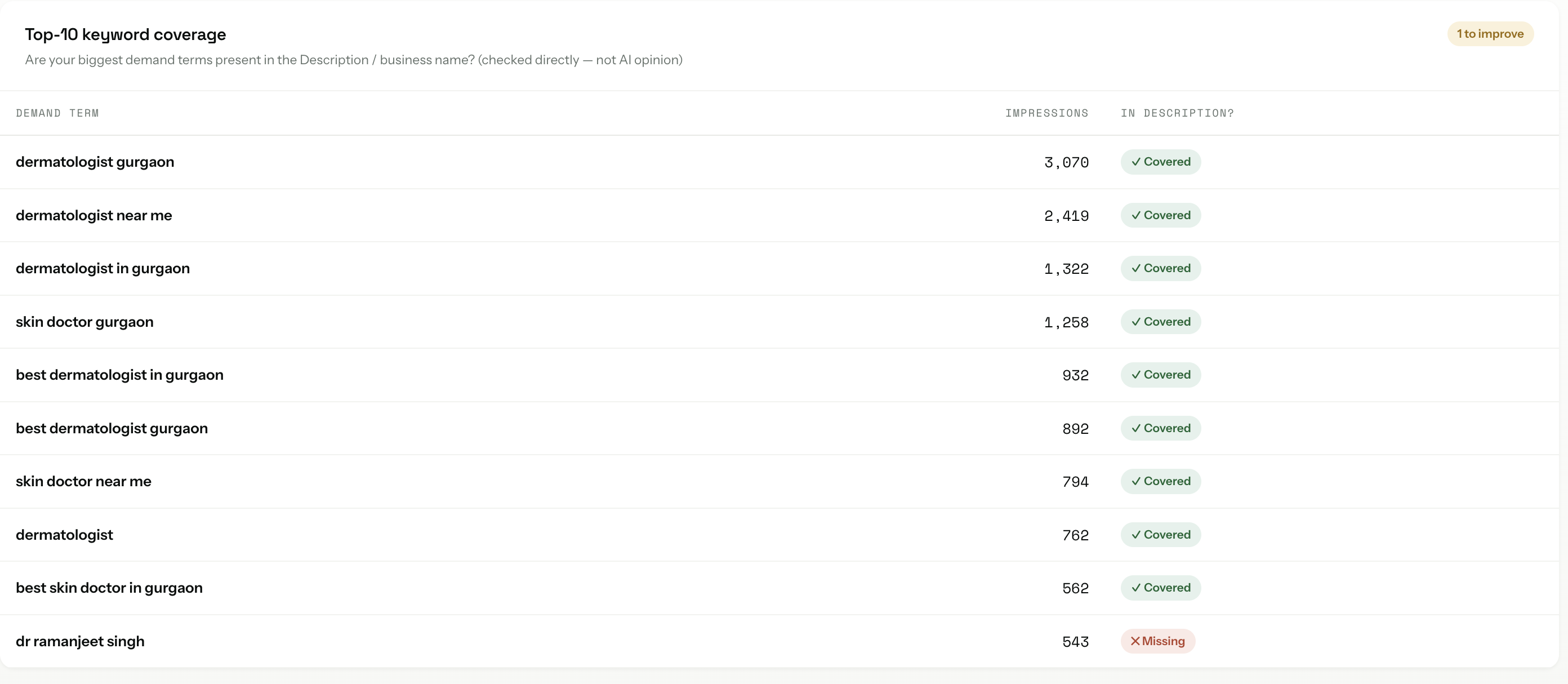
We built ICG as India's AI-first healthcare marketing agency because we watched too many good clinicians and hospital administrators get sold the wrong campaign type at the wrong stage of their growth curve. Today we work with 300+ live healthcare clients and have run paid media across all four of the buyer archetypes above. Our position on the Search Ads vs Performance Max question is deliberately vendor-neutral — we do not have a bias toward selling you the more complex product, because we make the same margin either way. What we do care about is that the first three months of your ad spend produce enough signal for us to prove or disprove a hypothesis. That discipline shapes every recommendation.
The way we typically start with a new healthcare paid media engagement is a structured 21-day diagnostic: a compliance sweep of all existing assets against NMC and DPDP rules, a competitor-set audit through Prism Spy to reconstruct what your category is actually doing on Google surfaces (not just what they claim), a landing page audit for conversion friction, and a straight-talk conversation about where your budget floor falls relative to the two formats. Only after that do we commit to a campaign type mix. If a founder-led clinic walks in with Rs 50,000 a month and we think Search Ads plus GBP is the honest recommendation, we say so — even if it means a smaller retainer.
Our 70-30 pricing model for paid media
Our SEO packages (Foundation Rs 49,999 per month, Growth Rs 74,999 per month, Scale Rs 99,999 per month) run on a 70-30 model — 70% of the fee is fixed, 30% is tied to a 12-month performance target on a sliding scale. We extend the same model to Google Ads and YouTube AIO engagements once the media budget crosses Rs 5 lakh per month (for Google Ads) or Rs 50,000 per month (for YouTube). The reason we mention it in a Search Ads vs Performance Max guide is that the choice of campaign type materially affects how the 30% variable is measured. Search Ads targets are typically cost per qualified lead and cost per booked consultation. Performance Max targets are usually incremental lift over a Search-only baseline and view-through assisted conversions. Hybrid layered targets are a blended CPQL plus a monthly incrementality read. The pricing model is designed so you are not paying for hope — you are paying for measurable outcomes tied to the format you chose.
Frequently asked questions
Can we just run Performance Max and skip Search Ads entirely?
Technically yes, and Google's own account managers will often suggest it. In practice, for Indian healthcare buyers below Rs 3 lakh monthly ad spend, this almost always underperforms a well-run Search Ads only campaign. Above that spend threshold, Performance Max works best when it has a Search Ads foundation to learn from, so a hybrid layered structure is usually the right answer rather than pure Performance Max.
Does NMC treat Search Ads and Performance Max differently?
NMC's advertising code is technology-neutral. It cares about what your ad says and shows, not which Google Ads campaign type serves it. The practical difference is that Performance Max makes it harder to catch a non-compliant asset combination before it goes live, because assets recombine automatically. That is why we insist on stricter asset-level compliance review for Performance Max clients.
How does DPDP Act 2023 affect Customer Match audience uploads?
Any phone number or email you upload as a Customer Match audience is personal data under DPDP. You need documented, purpose-specific consent for using that data for advertising, and the consent must be granular enough to cover the specific use case. In our engagements, we require clients to maintain a consent log that maps every uploaded audience list to the exact consent language collected. Without that log, we do not upload the list. This applies equally to Search Ads and Performance Max — the format does not change the compliance requirement.
What is the minimum monthly ad spend to make Performance Max worth trying?
For Indian healthcare, our working floor is Rs 2.5 lakh to Rs 3 lakh per month, and 30+ genuine patient enquiries per month feeding the account as conversions. Below that, you spend most of the budget in the algorithm's exploration phase without ever reaching the exploitation phase where returns compound. There are exceptions for very high enquiry-value specialities (oncology, cardiac surgery, complex IVF) where fewer conversions can still stabilise the model, but those are minority cases.
How long before we can trust Performance Max numbers?
Plan for a minimum of six weeks before drawing conclusions, and ideally eight to ten weeks before making major structural changes. Search Ads gives you a defensible read in three weeks. The gap in learning speed is real, and it should shape how you time your reporting cadence to internal stakeholders.
Should we run both Search Ads and Performance Max in the same account?
Yes, if your budget and buyer profile support it (Rs 5 lakh plus per month, hospital or multi-location chain). The critical setup detail is the fence. Brand keywords belong in Search Ads only. Performance Max needs account-level brand exclusions and thoughtful negatives to avoid cannibalising Search demand you would have captured anyway. Without the fence, Performance Max will happily consume your branded search traffic and take credit for it, and your blended cost per lead will quietly deteriorate.
What role does landing page quality play in the comparison?
A huge one. Both formats punish weak landing pages, but Performance Max punishes them harder because it will send traffic from a much wider set of placements including cold display and YouTube. If your speciality landing page has slow load times, no clear enquiry mechanism, or NMC-risky copy, Performance Max will amplify that weakness faster than Search Ads will. We usually insist on a landing page audit before we sign off on scaling any format.
How does the choice interact with our GBP and organic search presence?
Deeply. A strong Google Business Profile (with recent reviews, current photos, complete services, and posts) will lift the click-through rate of your Search Ads on locality queries by a measurable margin, and it will feed higher-quality first-party audiences into Performance Max through map visits and direction requests. This is one of the reasons we bundle GBP work into most healthcare paid media engagements — the two channels compound. Our Angryturtle GBP operating system exists specifically to keep that layer disciplined without stealing focus from ad campaign management.
What competitor intelligence should we be tracking regardless of format choice?
Weekly monitoring of your competitor set's ad copy, offers, landing page changes, and estimated share of voice on the top 20 queries in your category. This is the kind of work Prism Spy automates for Meta Ads and its Google Ads equivalent workflow we build custom for enterprise engagements. Without competitor intel you are optimising in a vacuum, and both Search Ads and Performance Max are unforgiving of that.
How do we know if we should be moving budget from Search to Performance Max, or the other way?
The clean answer is: measure incrementality. Run a controlled test where you hold one geography constant and vary the format mix in another comparable geography, then measure blended cost per qualified lead over an eight-week window. The messier but more common answer is: track the marginal cost per lead in each format weekly. When Search Ads marginal CPL starts to rise sharply above the average as you push budget in, you have saturated demand capture and the next incremental rupee is better spent on Performance Max for demand generation. When Performance Max is stuck in exploration past week eight, either your signals are too thin or the format is not the right fit for your current stage and you should redirect that spend back to Search.
Book a free 30-minute Brand & Growth Diagnostic.
It's a working session, not a sales pitch — you leave with a written root-cause analysis you can act on, whether or not you engage ICG.
Questions readers ask
about this topic.
The three platforms
behind every ICG engagement.
Beacon
CAPI middleware that fixes Event Match Quality, translates CRM statuses to Meta-standard events, dedups across channels.
Agency OS
Live client dashboard. GSC, GA4, Google Ads, Meta Ads, IVR calls in one view. Login anytime, not monthly.
Phoenix
Clinic revenue intelligence over your PMS. Daily action queue: Prevent Loss, Maintain & Engage, Grow Revenue. Multi-centre rollout.
Or book a free 30-min audit to see all three in action on your account.
Healthcare brands
that already run on ICG.
A representative slice of the 150+ healthcare brands ICG has delivered for across India. Most engagements remain under NDA.


What ICG clients say · on video.
"Scale up of organic channels and business consulting. ICG has absolute domain authority in their field."
"Working with ICG transformed how we acquire IVF patients in Gurgaon. They understand the fertility journey from inquiry to consult..."
"What Ichelon accomplished — they got all my ideas and worked over 3-4 months to create an amazing, super-customised website."
Need help operationalising this?
Every ICG service is healthcare-only, NMC + DPDP-aware, and built around the patient-research patterns that drive Indian healthcare growth in 2026.
Every practice welcome — packages from ₹20,000/mo.
Goals-Driven engagements · Performance-Linked Payout Models available


More from
ICG.
Five trends shaping Indian healthcare marketing through 2027: AI-first patient research, Conversions API adoption, ABDM discovery, the AEO w...
Healthcare AIO is the discipline of getting your clinic or hospital cited inside Google AI Overviews, ChatGPT and Perplexity answers — not j...
Conversational-search advertising places brand messages inside AI chat answers — ChatGPT, Perplexity, Copilot — rather than beside a results...
Stop guessing.
Book a Diagnostic.
30 minutes. Free. With the AI-powered healthcare-only marketing agency 150+ brands already run on. No slides, no pitch, no hard close.


