Healthcare Pharma & Life Sciences Other Industries
All Services Performance Marketing ChatGPT Ads India · NEW Social Media Marketing SEO & AEO / LLM YouTube Marketing LLM Optimization Brand & Growth Consulting AI Solutions Industries We Serve
Enterprise Hub · All Solutions + Services Growth Transformation AI Transformation Revenue Operations Fractional CGO Growth Operating System Executive Growth Advisory
Clinic Launch Programme (Hub) NABH Consulting India Healthcare Brand Launch Clinic SOP Creation Logo Design (Healthcare) Brand Book Creation Clinic Launch Marketing D2C Brand Launch Clinic Interior Design
Workforce Hub For Employers — post a requirement For Professionals — register Public Openings Training Academy AI Training Flagship
Hawk · CRM Intelligence (NEW) YODA · YouTube Intelligence Angryturtle · GBP Intelligence (NEW) Prism Pulse · Instagram Analytics (NEW) Beacon · Attribution Agency OS · Dashboards Phoenix · Clinic Revenue HealthPro 360 · PMS/HMS AI Patient Lifecycle Bots AI Lead Management System Smart Appointment System Healthcare CRM Patient Feedback System AI, Analytics & Automation Digital Transformation Calculators Free Digital Health Audit →
All 13 calculators → 🎯 Business Exploration Matrix (New) Dental Clinic Setup IVF Clinic + Lab Setup Multi-Specialty Hospital Setup Aesthetic / Cosmetology Clinic Dermatology Clinic Setup Generic Clinic Setup Physiotherapy Clinic Setup Diagnostic Centre Setup CAC Calculator CPQL Calculator Franchise ROI Calculator Revenue Leakage Calculator CRM ROI Calculator
All Events Workshop 1 · Jun 13 · AI in Clinical Practice Workshop 2 · Jun 27–28 · AI in Growth & Governance Hospital Ops Workshop · Jul 12 Pre-Summit Seminar · Aug 16 Grand Summit 2.0 · Oct 10–11 Bihar AI Summit · Recap AI Innovation Awards · Aug 22 Grand Summit 2.0 · Oct 2026 Aarambh 2026 Recap
Case Studies Insights & Blog Research Reports Calculators AI in Healthcare Digest
Our Story Leaders @ Ichelon · IN · US · AU Ichelon India · Gurgaon Ichelon Global · Dallas, TX Ichelon Australia · Sydney Speakers & Panelists Client Elevation Programme 🤝 Partner Connect 🇦🇪 ICG UAE Careers
Book a Growth Diagnostic
We Do It Right. The right diagnosis. The right strategy. The right systems. Giving healthcare leaders the confidence to make better decisions, build stronger operations, and achieve sustainable growth. — Team Ichelon
Trusted by 150+ healthcare & life-sciences brands
Johnson & Johnson
Mankind Pharma
Adonis Phyto
Narang Biotec
Medanta
Redcliffe Labs
Sitaram Bhartia
Metro Hospitals
Tulasi Hospital
Bloom IVF
Milann
Prime IVF
MedLinks
Handa
Bhardwaj
Eye Q
Johnson & Johnson
Mankind Pharma
Adonis Phyto
Narang Biotec
Medanta
Redcliffe Labs
Sitaram Bhartia
Metro Hospitals
Tulasi Hospital
Bloom IVF
Milann
Prime IVF
MedLinks
Handa
Bhardwaj
Eye Q
Johnson & Johnson
Mankind Pharma
Adonis Phyto
Narang Biotec
Medanta
Redcliffe Labs
Sitaram Bhartia
Metro Hospitals
Tulasi Hospital
Bloom IVF
Milann
Prime IVF
MedLinks
Handa
Bhardwaj
Eye Q
Pillar · Long read

Scientific Writing for Pharma India: CONSORT, PRISMA, STROBE 2026

CONSORT, PRISMA, STROBE and ICH E3 explained for Indian pharma teams — reporting checklists, journal-fit rules and rejection-avoidance moves for 2026 submissions.

ICG Editorial · · · 5 min read
Book a free 30-min Diagnostic Chat on WhatsApp

No pitch. Written root-cause diagnosis. AI-powered, healthcare only.

Editorial standards: This article was reviewed by the ICG Editorial Review Board for NMC Section 6 compliance, Schedule J screening, DPDP privacy, and source verification before publication. · Our editorial process →
ICG · AI-Powered Healthcare-Only Marketing Agency
Why are your CPQL numbers stuck? Talk to the team behind 150+ healthcare brands.
30-minute free diagnostic. Written, not pitched. CPQL benchmarks for your specialty, on the call.

Direct answer

CONSORT, PRISMA, STROBE and ICH E3 explained for Indian pharma teams — reporting checklists, journal-fit rules and rejection-avoidance moves for 2026 submissions.

TL;DR

CONSORT, PRISMA, STROBE and ICH E3 explained for Indian pharma teams — reporting checklists, journal-fit rules and rejection-avoidance moves for 2026 submissions.

Clinical credibility in the pharmaceutical industry ultimately rests on published evidence. A drug's efficacy and safety profile is established in peer-reviewed journals. A new formulation's equivalence to the reference product is demonstrated in bioequivalence studies. A device's performance advantage is documented in clinical series. And increasingly, the commercial performance of pharma brands — particularly specialty brands reaching oncologists, cardiologists, and neurologists — depends on the quality and volume of published clinical evidence.

ICG's pharma practice — built on IIT BHU pharmaceutical engineering foundations — provides scientific writing services that cover the full spectrum of pharmaceutical publication types. This guide covers the principal reporting standards for each major publication type.


CONSORT: Reporting Randomised Controlled Trials

The CONSORT (Consolidated Standards of Reporting Trials) statement is the foundational reporting guideline for randomised controlled trials (RCTs). Published and maintained by the CONSORT Group (consort-statement.org), it provides a 25-item checklist covering every element that must be reported in an RCT manuscript.

Key CONSORT elements for pharma writers:

Title and Abstract: CONSORT requires the abstract to identify the trial as randomised, describe the design, report the primary outcome result with 95% confidence interval (not just p-value), and include the trial registration number.

Randomisation: The method of sequence generation (e.g., computer-generated random numbers), allocation concealment mechanism, and implementation details must all be explicitly described. Vague statements ("patients were randomised") are a rejection risk.

Blinding: Whether and how participants, care providers, and outcome assessors were blinded must be stated. For trials where blinding was not possible, justification is required.

Statistical Methods: Primary and secondary outcomes must be pre-specified. Statistical analyses should include: intention-to-treat (ITT) analysis, per-protocol analysis where appropriate, and handling of missing data.

Flow Diagram: CONSORT requires a four-stage flow diagram (Enrolment → Allocation → Follow-Up → Analysis) that accounts for every screened, enrolled, and completed participant. Missing this diagram is the most common CONSORT violation in submitted manuscripts.

Adverse Events: All important adverse events or side effects in each intervention group must be reported. Selective reporting of adverse events is an integrity violation that leads to retraction.

ICG's Pharos Vigil platform supports adverse event data collection and visualisation — the source data for compliant CONSORT adverse event reporting.

ICG's CONSORT performance: First-submission acceptance rate for RCT manuscripts produced by ICG's Pharos Scribe: approximately 50-65%, against an industry average of 18-25%. The differential reflects the completeness and rigour of our manuscript production.


PRISMA: Systematic Reviews and Meta-Analyses

PRISMA (Preferred Reporting Items for Systematic Reviews and Meta-Analyses) governs the reporting of systematic literature reviews and meta-analyses. The 2020 updated PRISMA statement includes a 27-item checklist and a new flow diagram format.

Key PRISMA elements:

Protocol registration: PRISMA 2020 requires that the systematic review protocol is registered (PROSPERO is the standard registry) and that the registration number appears in the manuscript. Unregistered systematic reviews face increasing rejection.

Search strategy: The complete search strategy for at least one database must be included (usually as a supplementary appendix). The strategy must be reproducible — meaning another researcher should be able to run the identical search and get the identical results.

Study selection: The inclusion and exclusion criteria must be explicit and pre-specified. The PRISMA flow diagram tracks: records identified → duplicates removed → records screened → records excluded (with reason) → studies included.

Risk of bias assessment: Every included study must be assessed for risk of bias using a validated tool (Cochrane RoB 2 for RCTs, ROBINS-I for non-randomised studies).

Statistical pooling: If meta-analysis is performed, the statistical method (random effects or fixed effects), heterogeneity assessment (I² statistic), and forest plot presentation must all conform to PRISMA standards.

ICG's Pharos Scout (literature monitoring) provides the foundational search output for systematic reviews. Pharos Scribe builds the manuscript to PRISMA 2020 standards.


STROBE: Observational Studies

STROBE (Strengthening the Reporting of Observational Studies in Epidemiology) provides reporting guidelines for the three main types of observational study: cohort studies, case-control studies, and cross-sectional studies. The STROBE checklist has 22 items applicable to all observational study types, plus type-specific items.

Key STROBE elements:

Study design statement: The study design must be stated early in the abstract. "We conducted a prospective cohort study" — not "we conducted a study."

Setting: The setting, locations, and relevant dates of the study (study period, exposure, follow-up, data collection) must be clearly described.

Participants: Eligibility criteria, sources, and methods of selection — and for case-control studies, the rationale for the number of cases and controls.

Variables: Outcome, exposure, and predictor variables must be defined. For self-reported variables, the measurement method must be stated.

Confounding: The study must explain how confounding was addressed in the analysis — matching, stratification, restriction, multivariable adjustment.

Bias: The direction and magnitude of potential sources of bias must be discussed — not avoided.

For pharma companies building a real-world evidence (RWE) strategy — using retrospective EMR data, registry data, or prospective observation — STROBE is the reporting standard for the resulting manuscripts.


ICH E3: Clinical Study Reports

Clinical Study Reports (CSRs) are the comprehensive regulatory dossiers submitted to drug authorities (CDSCO, US FDA, EMA) supporting marketing authorisation applications. The ICH E3 guideline defines the structure and content of a complete CSR.

ICH E3 structure: A complete CSR runs 50-200+ pages and covers study synopsis, background, study objectives, investigational plan, study population, efficacy results (by endpoint), safety results, discussion, and comprehensive appendices (protocol, CRF, statistical analysis plan, listings).

CSR writing is the most technically demanding output in pharmaceutical scientific writing. ICG's Pharos Scribe team — with IIT BHU pharmaceutical engineering background and regulatory submission experience — produces CSRs to ICH E3 standard for CDSCO dossiers and global submissions.


Journal Submission Strategy

Beyond manuscript quality, strategic journal selection significantly affects time-to-publication and citation impact.

ICG's journal selection framework for pharma clients:

High-impact vs accessible journals: For data that represents genuine novel contribution to the field — first-in-class efficacy, unexpected safety signal, significant RCT — target high-impact journals (Impact Factor >5 in the therapeutic area) for maximum citation value.

For real-world evidence, post-hoc analyses, or regional data — target high-quality but accessible journals where first-submission acceptance rate is higher and review cycle is shorter.

Open access consideration: Open access publication (DOAJ-indexed, PubMed Central-indexed) maximises LLM and AI research tool accessibility. For ICG clients pursuing AEO/citation strategies, open access publication is the preferred path when quality journals with open access options are available.

Indian journal strategy: For certain data sets — particularly those demonstrating Indian-specific clinical findings — Indian peer-reviewed journals (published by Indian professional societies) are the appropriate primary target. These build domestic KOL credibility that international publication alone does not.


ICG's Scientific Writing Practice

ICG's pharma practice produces:

  • Clinical study reports (ICH E3)
  • RCT manuscripts (CONSORT)
  • Systematic reviews and meta-analyses (PRISMA)
  • Observational study manuscripts (STROBE)
  • PSUR/DSUR periodic safety reports (ICH E2C)
  • MSL-facing clinical summaries
  • CME scientific content

Read next on ICG
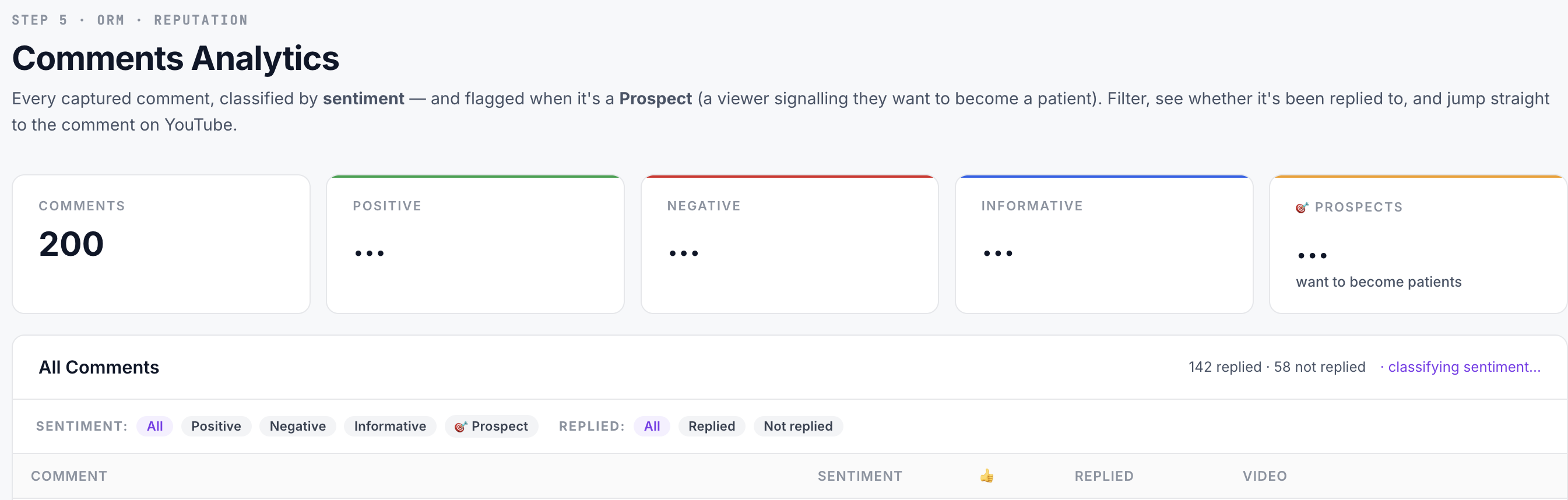
YODA Comment Analysis extracting sentiment, mined questions and competitor mentions from every video comment thread
YODA · Comment AnalysisComment sentiment · question mining · competitor mentions · patient-language surfacing. Every YouTube channel is a focus group; YODA reads it for you.

Common Reporting Mistakes That Get Indian Pharma Manuscripts Desk-Rejected

Across 40+ manuscripts our editorial desk has audited for Indian pharma sponsors and CROs in the last 18 months, the same handful of reporting gaps trigger 70-80% of desk-rejections — long before peer review begins. These are almost never scientific problems. They are compliance-with-guideline problems that a checklist pass would have caught.

  1. Missing trial registration ID in the abstract — CONSORT 2010 Item 23 is mandatory; CTRI or ClinicalTrials.gov numbers left out of the abstract get flagged by editors within minutes.
  2. PRISMA flow diagram totals that don't reconcile — records identified, screened, excluded, included must add up. Reviewers check the arithmetic first.
  3. STROBE Item 12 (statistical methods) collapsed into one paragraph — sub-items 12a-12e must each be addressed explicitly for observational studies.
  4. ICH E3 Section 12 (safety evaluation) written as a summary, not a data narrative — regulators expect adverse-event tables, dropout attribution, and dose-relationship discussion, not prose.
  5. Ethics statement missing the IEC/IRB approval number — Indian sponsors often cite the institution but omit the approval reference and date.

The pattern behind all five: teams treat reporting guidelines as post-hoc formatting rather than a submission-blocking checklist. Building the checklist into the writing brief — not the copy-edit stage — is the single highest-leverage fix.

How This Connects to Wider Pharma Marketing Compliance

Scientific writing sits inside a broader compliance stack for Indian pharma brands. If your team is also managing MR-facing content, KOL webinars, or HCP digital campaigns, the same rigour has to flow through the funnel. ICG's pharma digital marketing practice pairs scientific-writing QC with UCPMP-compliant campaign workflows, and our Client Elevation Programme gives sponsor teams a monthly editorial cadence rather than one-off manuscript sprints. For teams running HCP-facing YouTube education, YODA handles the AI-native video layer without breaching promotional-content rules.

Ready to move?

Book a free 30-minute Brand & Growth Diagnostic.

It's a working session, not a sales pitch — you leave with a written root-cause analysis you can act on, whether or not you engage ICG.

Frequently asked

Questions readers ask
about this topic.

Journal editors and peer reviewers use CONSORT as their primary structural checklist for RCT submissions. A manuscript missing the four-stage flow diagram, lacking explicit randomisation methodology, or with incomplete adverse event reporting triggers immediate revision requests — extending the publication cycle by 3-6 months. CONSORT-compliant manuscripts are reviewed on their scientific merits rather than their structural completeness. ICG's 50-65% first-submission acceptance rate reflects this.

Systematic reviews synthesise existing evidence — appropriate when 20+ relevant studies exist and a quantitative answer to a specific clinical question is needed. Original studies generate new evidence — appropriate when the literature gap is large or your data adds genuinely new information. For pharma brand teams: systematic reviews are often more cost-effective and faster than original studies (4-8 months vs 18-36 months) while delivering similar HCP credibility impact.

Yes. Pharos Scribe produces ICH E3 CSRs, ICH E2C PSURs/PBRERs, ICH E2F DSURs, and supporting clinical sections for CDSCO, US FDA, EMA, and other ICH-aligned submissions. The IIT BHU pharmaceutical engineering foundation of the scientific writing team makes ICG one of few Indian agencies producing regulatory-submission-quality writing for global pharma clients.

Post-Market Clinical Follow-Up (PMCF) under EU MDR generates real-world evidence on device performance after market launch. When this data is published in peer-reviewed journals (registry studies, case series, real-world cohorts), it becomes high-credibility marketing content for the device — particularly with surgeons who weight real-world evidence above pre-market trial data. Pharos Vigil supports PMCF data monitoring; Pharos Scribe produces the resulting publications.

Manuscript production cost varies significantly with type and complexity. Case reports: ₹50,000-1,50,000. Case series and observational studies: ₹2,00,000-5,00,000. Systematic reviews: ₹4,00,000-12,00,000. RCT manuscripts: ₹6,00,000-20,00,000+ depending on trial complexity. Clinical Study Reports (full ICH E3): ₹15,00,000-50,00,000+. Most pharma clients commission ICG scientific writing as part of an ongoing engagement rather than per-manuscript contracts.

Trusted by

Healthcare brands
that already run on ICG.

A representative slice of the 150+ healthcare brands ICG has delivered for across India. Most engagements remain under NDA.

Read full client case studies →

Client video stories

What ICG clients say · on video.

Dr. Tulika Bansal
Entrepreneur · Lil Chunks

"ICG's strategic clarity helped us position Lil Chunks for both consumer trust and healthcare credibility."

Dr. Samyak Dhawan
Co-Founder, Kayakalp Global · Kayakalp Global (D2C Derma)

"Scale up of organic channels and business consulting. ICG has absolute domain authority in their field."

Dr. Nishi Singh
Founder, Prime IVF · Prime IVF · Gurgaon

"Working with ICG transformed how we acquire IVF patients in Gurgaon. They understand the fertility journey from inquiry to consult..."

See all client video testimonials →
Healthcare growth services · explore the stack

Need help operationalising this?

Every ICG service is healthcare-only, NMC + DPDP-aware, and built around the patient-research patterns that drive Indian healthcare growth in 2026.

Healthcare SEO Healthcare PPC Meta Ads Content Marketing Local SEO + GMB AI Overview (AIO) Healthcare Branding Website Development YouTube Marketing

Stop guessing.
Book a Diagnostic.

30 minutes. Free. With the AI-powered healthcare-only marketing agency 150+ brands already run on. No slides, no pitch, no hard close.

The ICG technology stack

Nine tools. One compounding system. HealthApex OS
Built in-house. Deployed in every engagement.

ICG's results are reproducible because they are built on proprietary infrastructure — not agency intuition or generic tools. These nine HealthApex OS platforms are what power every ICG engagement.

Healthcare CRM

Nexus CRM

Healthcare CRM & Lead Management

ICG's healthcare-specific CRM and lead management system. Specialty-configured funnel stages for IVF, dental, aesthetic, ortho, hospital OPD. 1-click CAPI + GCLID via Beacon. Hawk intelligence built in. DPDP-compliant by architecture. Deployed across 300+ healthcare centres.

  • Specialty-specific funnel stages, not generic SaaS pipeline
  • 1-click CAPI + GCLID via Beacon attribution
  • Telecaller leaderboard + adherence scoring native
  • DPDP Act 2023 compliant by architecture
Explore Nexus CRM →
Business Layer

Hawk

CRM Intelligence & Lead-Ops MIS

Sits as the business intelligence layer above your CRM — Nexus, Salesforce, LeadSquared, HubSpot, Zoho, or any custom CRM. Shows where leads are leaking, which effort is wasted, and which good leads were quietly downgraded by automation — not by a human decision.

  • Sits above your existing LMS — no replacement
  • 83% of effort goes to dead leads — surfaced Day 1
  • ~75% qualified-lead downgrades by automation
  • Free Lead-Leak Audit in 48 hours
Explore Hawk + free audit →
Attribution Core

Beacon

Attribution Engine & CAPI Middleware

Sits at the centre of every ICG attribution architecture. CAPI middleware connecting Meta Ads, Google Ads, WhatsApp and IVR to your CRM. Lifts Event Match Quality from 2.5 to 6+, reducing CPM 30–40% from the same budget.

  • Server-side CAPI — bypasses iOS privacy changes
  • EMQ 2.5 → 6+ across portfolio
  • 30–40% CPM reduction from EMQ lift alone
  • Multi-touch: ad → consultation → revenue
Explore Beacon →
Practice Management

HealthPro 360

PMS with built-in revenue intelligence layer

The only PMS that tracks cross-sell and up-sell opportunities within your existing patient base. 12 modules covering OPD, IPD, Pharmacy, Labs, Billing, Inventory, Patient Portal, Smart Scheduling, RBAC, AES-256 encrypted storage.

  • Only PMS with built-in Revenue Intelligence
  • Cross-sell signal tracking within existing patients
  • 12 modules: OPD, IPD, Pharmacy, Labs, Billing+
  • Audit trails + RBAC + AES-256 encryption
Explore HealthPro 360 →
Revenue Layer

Phoenix

Revenue intelligence built over your existing PMS

If you already have a PMS — Akhil Systems, Practo, or any other — Phoenix builds the business intelligence layer on top of it without replacement. Currently live across 46 centres for a national chain.

  • Works over your existing PMS — no migration
  • Daily action queue: Prevent Loss / Maintain / Grow
  • Catches unbilled services, collection gaps, lapsing patients
  • CPQL variance ₹620–₹3,800 → ₹680–₹1,420
Explore Phoenix →
YouTube Intelligence

YODA

YouTube analytics that measures patients, not views

The only YouTube intelligence platform built for healthcare business outcomes. Connects video performance to actual consultation bookings — not views, not subscribers. Patient testimonial videos generate 6.9× more consultations per view than condition explainers.

  • Consultation attribution per video — not views
  • Demand-gap: what patients search that your channel misses
  • 50+ doctor channels tracked across India
  • AIO readiness scoring: which videos AI tools cite
Explore YODA →
Governance & Transparency

Agency OS

Full transparency. Instant diagnosis. Zero surprises.

ICG's centralised governance platform — every client sees everything in real time, and ICG's team sees every problem the moment it surfaces. 30+ real-time alert systems fire the moment a metric drifts outside its performance envelope.

  • GSC, GA4, Google Ads, Meta Ads, IVR — one live view
  • 30+ real-time alert systems per account
  • CPQL drift alert at >15% week-on-week change
  • Client login: full transparency on your account
Explore Agency OS →
AEO & LLM Intelligence

AIO Intel

AI Overview + LLM citation tracking, healthcare-tuned

Knows the moment ChatGPT, Perplexity, Google AI Overviews and Gemini cite your brand in patient answers — and which content drove the citation. Bot-aware dashboard with GA4-registered custom dims (AIO source, AIO referrer) and IndexNow + GSC API integration.

  • Live tracking across ChatGPT / Perplexity / Google AIO / Gemini
  • Bot-aware: knows human vs scraper traffic
  • Custom GA4 dims register AIO source + referrer
  • IndexNow + GSC API: content surfaced to LLMs within hours
View AIO Intel dashboard →
Competitor Intelligence

Prism Spy

Every Meta + Google ad your competitors run, watched daily

Tracks 75+ Indian healthcare brands, 2,150+ active ads, ₹50Cr+ aggregate ad spend visibility per month. Surfaces what's working, what's been killed, what offers are emerging. Powers every ICG Meta Ads brief, Performance Marketing diagnostic, and IVF / derm / dental specialty campaign with real competitive intelligence.

  • 75+ brands tracked across 30+ healthcare specialties
  • 2,150+ active ads · daily refresh
  • Activity Feed: every spend / hook / pause logged
  • Offers Intelligence: 250+ offers in market tracked
Explore Prism Spy →
GBP Intelligence Platform

Angryturtle

Every Google Business Profile scored, tracked, protected, and grown from one command centre

ICG's proprietary Google Business Profile intelligence platform. Scores every listing across 7 dimensions, tracks rank on a live geo-grid across your actual service area, audits NAP + citations, monitors 531 suspension-risk factors continuously, and drafts Google Posts on cadence. Currently managing 143 healthcare listings with 0 suspensions and 4.76★ portfolio average across 28,137 reviews.

  • 143 listings under management · 0 suspensions · 4.76★
  • 7-dimension Health Score + 5-factor Rank OS per listing
  • Geo-grid rank tracking + NAP + Citation audit + Profile Shield
  • NMC + NABH + ART Act + DPDP compliance built into every content + review workflow
Explore Angryturtle →

Every ICG engagement runs on some combination of these ten HealthApex OS tools. The diagnostic determines which combination is right for your practice.

Explore HealthApex OS → See the full stack live on your account — free 30-min audit
The team behind your account

Every diagnostic is led by a founder.
You'll know their names before the engagement begins.

ICG was built by three IIT BHU engineers who entered healthcare marketing with a specific intent: to build the tools that didn't exist and run the campaigns that most agencies couldn't. When you book a diagnostic, Rohit or Abhash leads it personally. Not an account manager. Not a senior executive. The people who built what you're evaluating.

The ICG team — 60+ healthcare marketing specialists at Gurgaon HQ

60+ specialists.
One growth engine.

Performance marketers, analysts, AI engineers, content strategists, and operations specialists — all healthcare-only. Headquartered in Gurgaon since 2018.

Rohit Gupta — Leader, ICG

Rohit Gupta

Business & Growth Lead & Director

IIT BHU · IIM Rohtak

Rohit's first question in every diagnostic: "When you ask your agency why patients aren't booking — what do they say?" He says the answer tells him more than any dashboard.

Full profile →
Abhash Kumar — Leader, ICG

Abhash Kumar

Strategy & Analytics Lead & Director

IIT BHU · IIM Bangalore

Abhash built Beacon because most agencies couldn't answer one question: "Which of my campaigns generated that consultation?" He decided the problem was solvable in code. It was.

Full profile →
Deep Das — Leader, ICG

Deep Das

Technology & AI Lead & Director

IIT BHU

Deep built the 4-Bot patient lifecycle system after watching a client lose 60+ qualified leads in one week to a 6-hour WhatsApp response window. He decided the problem was solvable in code. It was.

Full profile →
Chat with a Co-Founder