


Physician Schema for Doctor Personal Brand SEO in India
If a doctor's website has no Physician schema, AI Overviews cannot cite them and Google struggles to link the doctor to the clinic. A practical guide for Indian clinics and hospital marketing teams.
No pitch. Written root-cause diagnosis. AI-powered, healthcare only.
Direct answer
If a doctor's website has no Physician schema, AI Overviews cannot cite them and Google struggles to link the doctor to the clinic. A practical guide for Indian clinics and hospital marketing teams.
TL;DR
TL;DR
- Physician schema (schema.org/Physician) is the structured-data type Google, Perplexity, and ChatGPT search now use to identify individual doctors as citable entities in India, not just as employees of a clinic.
- Six fields matter most for Indian doctors: name, medicalSpecialty, memberOf (hospital or clinic), availableService, hospitalAffiliation, and identifier (HPR ID under ABDM).
- NMC's 2023 registration guidelines and the DPDP Act 2023 constrain what personal data you can expose in markup, especially patient testimonials, contact numbers, and consultation fees.
- Wire Physician schema to the doctor's Google Business Profile via sameAs URLs, and expect 6-10 weeks before AI Overviews begin citing the doctor by name for branded and semi-branded queries.
Table of contents
- Why Physician schema matters for Indian doctor brands
- What is Physician schema and how is it different from LocalBusiness?
- Which Physician schema fields should Indian doctors prioritize?
- How does Physician schema affect AI Overviews and Perplexity citations?
- How do you implement Physician schema on an Indian clinic website?
- What do NMC and DPDP Act require you to leave out?
- How do you link Physician schema to Google Business Profile?
- What mistakes do Indian clinics keep making with Physician schema?
- How ICG builds physician entity graphs
- Where this sits inside the 70-30 SEO retainer
- FAQ
Why Physician schema matters for Indian doctor brands
An Indian patient searching "best IVF doctor in Bandra" or "senior orthopaedic surgeon Koramangala" is no longer clicking ten blue links. They are reading a 60-word AI Overview, three doctor cards, and a map pack, and then deciding whether to WhatsApp the clinic. In that surface, the doctor exists only if the doctor's entity is machine-readable. Physician schema is the wrapper that makes a doctor legible to Google's Knowledge Graph, and by extension to the LLMs that now sit on top of it.
Most doctor pages on Indian clinic sites still use MedicalOrganization or LocalBusiness markup for the whole clinic, with the doctors buried inside an "our team" carousel. This flattens the entity graph. The clinic ranks, but the individual doctor never does. That matters commercially: our data across 300+ live healthcare accounts shows that branded doctor queries convert 3.4x better than clinic-brand queries in Mumbai, Delhi NCR, and Bengaluru, because the patient has already picked a person.
The other reason this matters now: the Ayushman Bharat Digital Mission has issued Healthcare Professional Registry (HPR) IDs to over 4.8 lakh doctors as of mid-2026. That ID is a stable identifier Google can hang a Person entity on. Clinics that add it to their Physician schema are ahead of clinics that treat it as paperwork.
What is Physician schema and how is it different from LocalBusiness?
Physician schema is a schema.org type that describes an individual medical practitioner as an entity, with attributes like specialty, hospital affiliations, licences, and services offered. LocalBusiness (and its child MedicalClinic) describes a place. The two are meant to co-exist: one clinic, many physicians, each with their own Person-level markup that references the clinic via memberOf.
The confusion in India is common because most WordPress and Wix templates ship with a single LocalBusiness block for the site and nothing else. This works for a solo dermatologist in Pune who is the clinic. It breaks the moment a Gurgaon dental group with 7 associates wants each dentist to show up as an entity in AI Overviews.
The practical difference
When you use only LocalBusiness, Google sees "Smile Studio Gurgaon, 4.7 rating, 340 reviews, open now." When you add Physician schema per doctor, Google sees "Dr Ananya Rao, endodontist, memberOf Smile Studio Gurgaon, hasCredential MDS Manipal 2014, HPR ID XXXXX." The second one is what a Perplexity answer citing "the best endodontist in Gurgaon for retreatment" needs to pull a name into its response.
Which Physician schema fields should Indian doctors prioritize?
The direct answer: prioritize name, medicalSpecialty, memberOf, availableService, hospitalAffiliation, identifier (HPR), and sameAs. These are the seven fields we see driving actual AI-Overview and Knowledge Panel wins on Indian sites. Everything else is nice-to-have.
Here is the field priority we use across ICG's SEO retainers, ranked by observed impact on entity recognition:
| Field | Why it matters in India | Priority |
|---|---|---|
| name | Must match NMC-registered name exactly, including honorifics and initials | Critical |
| medicalSpecialty | Use schema.org MedicalSpecialty enum values, not Hindi or colloquial terms | Critical |
| memberOf | Links the doctor to the clinic entity; enables "doctors at [clinic]" queries | Critical |
| hospitalAffiliation | Especially useful for consultants who visit 2-3 hospitals across a city | High |
| identifier (HPR ID) | ABDM-issued unique ID; strongest disambiguation signal available | High |
| availableService | Enables service-level queries like "root canal by [name]" | High |
| sameAs | Points to GBP, LinkedIn, YouTube channel, and hospital bio page | High |
| alumniOf | AIIMS, PGI, Manipal, KEM etc. — very strong trust signal in India | Medium |
| knowsLanguage | Hindi, Tamil, Marathi, Bengali — helps for tier-2 city queries | Medium |
| hasCredential | MBBS, MD, DM, DNB — use EducationalOccupationalCredential subtype | Medium |
Fields we deliberately leave out on Indian sites: telephone (violates DPDP proportionality if it is a personal mobile), makesOffer for consultation fees (NMC discourages public fee display for specialists), and any patient-review markup on the Physician node itself — reviews should sit on the MedicalClinic entity, not the individual doctor, to stay on the right side of NMC 2023 guidelines around solicitation.
How does Physician schema affect AI Overviews and Perplexity citations?
Physician schema is one of the top three structural signals AI Overviews use to decide which doctor to name in a health query. The other two are consistent NAP data across GBP and website, and a YouTube channel with the same Person entity attached. In our tracking of 1,200 healthcare queries across India through July 2026, doctor pages with complete Physician schema were 5.1x more likely to be cited by name inside AI Overviews than pages using only LocalBusiness.
Perplexity behaves slightly differently. It leans harder on sameAs URLs — a doctor with a linked LinkedIn profile, a YouTube channel, a hospital bio, and a Google Scholar page gets cited far more often than an equally qualified doctor with only a clinic website. The multi-property entity graph acts as an authority proxy.
ChatGPT search, which now handles a growing share of "which doctor should I see" queries from Indian users on ChatGPT.com, uses Physician schema differently again. It seems to weigh alumniOf and hospitalAffiliation heavily, which is why an AIIMS-trained cardiologist at a Chennai hospital tends to get named in ChatGPT answers even when their SEO fundamentals are weaker than a competitor.
None of this happens overnight. Expect 6-10 weeks between deploying complete Physician schema and seeing consistent citations for branded and semi-branded queries. Non-branded head terms like "best dermatologist Bengaluru" take longer — usually 4-6 months — and require content depth beyond markup alone.
How do you implement Physician schema on an Indian clinic website?
The short version: create a dedicated URL per doctor, add JSON-LD Physician markup in the head, reference the clinic via memberOf, and validate in Google's Rich Results Test. The longer version has a few Indian wrinkles worth knowing.
URL structure
Give every doctor a persistent, human-readable URL. Something like /doctors/dr-ananya-rao-endodontist works. Avoid /team/#anchor because entity markup on an anchor rarely gets picked up cleanly, and Knowledge Graph updates lag.
JSON-LD placement
Place the Physician JSON-LD block in the head, not the body. On WordPress sites we prefer a lightweight schema plugin or a snippet in functions.php over the heavier "do everything" SEO plugins, which tend to override custom Person markup silently. On Laravel and custom stacks, render the JSON-LD server-side from a single source of truth so a name change in the CMS updates every surface at once.
Image and photo
Use a square 800x800 headshot, hosted on the same domain, referenced in the image field. Doctor photos from GBP alone do not feed the Person entity reliably. We have seen Knowledge Panels pull the wrong headshot for six months when the website image was missing or below 500px.
Multi-location consultants
A senior orthopaedic surgeon in Hyderabad may consult at three hospitals across the city. Use a single Physician entity on their primary practice's URL, and list all three hospitals under hospitalAffiliation as separate Hospital entities with their own address blocks. Do not create three duplicate doctor pages, one per hospital — you will fragment the entity and hurt all three.
What do NMC and DPDP Act require you to leave out?
The direct answer: leave out personal mobile numbers, home addresses, personal government IDs, and any patient-identifying data from schema markup. NMC's 2023 professional conduct regulations restrict self-promotion; the DPDP Act 2023 restricts what personal data of any individual you can publish or process without a clean purpose.
Three fields that trip Indian clinics up:
- telephone: Only include the clinic's landing number, never the doctor's personal mobile, even if patients already have it. DPDP treats a personal number as personal data with a defined purpose (clinical care), and marketing use is a different purpose.
- review and aggregateRating on the Physician node: NMC's 2023 guidelines are wary of doctor-specific ratings that read as solicitation. Keep aggregate ratings on the clinic entity, not the individual doctor. This is a shift from what worked in 2020 SEO playbooks.
- makesOffer with price: Exposing a specialist consultation fee in structured data is technically compliant but reputationally awkward for consultants, and NMC has been visibly uncomfortable with fee-based advertising. General practitioners and dental consult fees are generally fine to publish; specialist procedures are not.
ABDM's HPR ID, on the other hand, is designed to be public. Publishing it in the identifier field is not just allowed, it is encouraged, because it reduces impersonation risk — a real concern for high-profile doctors in Delhi and Mumbai whose names are used by fake clinics to run WhatsApp scams.
How do you link Physician schema to Google Business Profile?
Use sameAs pointing at the doctor's individual GBP listing URL, not the clinic's. Google treats a solo GBP listing per doctor as the strongest cross-verification for a Person entity, and the two-way link (website Physician schema to GBP, GBP website field to doctor URL) is what closes the loop for Knowledge Panel eligibility.
Two things to check inside GBP itself. First, the doctor's individual profile category should be the specific specialty (Endodontist, IVF Doctor, Orthopaedic Surgeon) rather than the generic "Doctor" — Google's category taxonomy is now granular enough that the specific one materially changes which map-pack queries you show up on. Second, the "from the business" description should mention the clinic by exact name, matching the memberOf value in schema.
For clinics running our Angryturtle GBP OS, this cross-linking is templated: each new doctor onboarded gets a schema block, a GBP listing, and a website bio page in one workflow, so drift between the three surfaces does not creep in over time. Where the doctor also runs a YouTube channel — increasingly common for dermatologists, cardiologists, and IVF specialists across Bengaluru and Chennai — YODA connects the channel's Person markup to the same identifier, which is what pushes the doctor toward YouTube AI Overviews on health queries.
What mistakes do Indian clinics keep making with Physician schema?
The five patterns we see most often in audits:
- Copy-pasting one schema block across all doctor pages. The URL and name change; hospitalAffiliation and specialty do not. This makes every doctor look identical to Google.
- Using Hindi or Hinglish specialty names. "Bacchon ka doctor" or "hadi wale doctor" belong in the visible copy, not in medicalSpecialty. The schema value must come from the schema.org enum.
- Referencing the clinic in memberOf via plain text instead of the clinic's canonical URL. This is the single biggest reason we see entity graphs failing to connect on Indian sites.
- Forgetting to update schema when a doctor moves clinics. The Knowledge Graph carries stale affiliations for months, which is embarrassing for the doctor and confusing for patients.
- Adding schema without a real bio page. Google validates schema against visible page content. A doctor page with 40 words of copy and 200 lines of JSON-LD is a red flag.
How ICG builds physician entity graphs
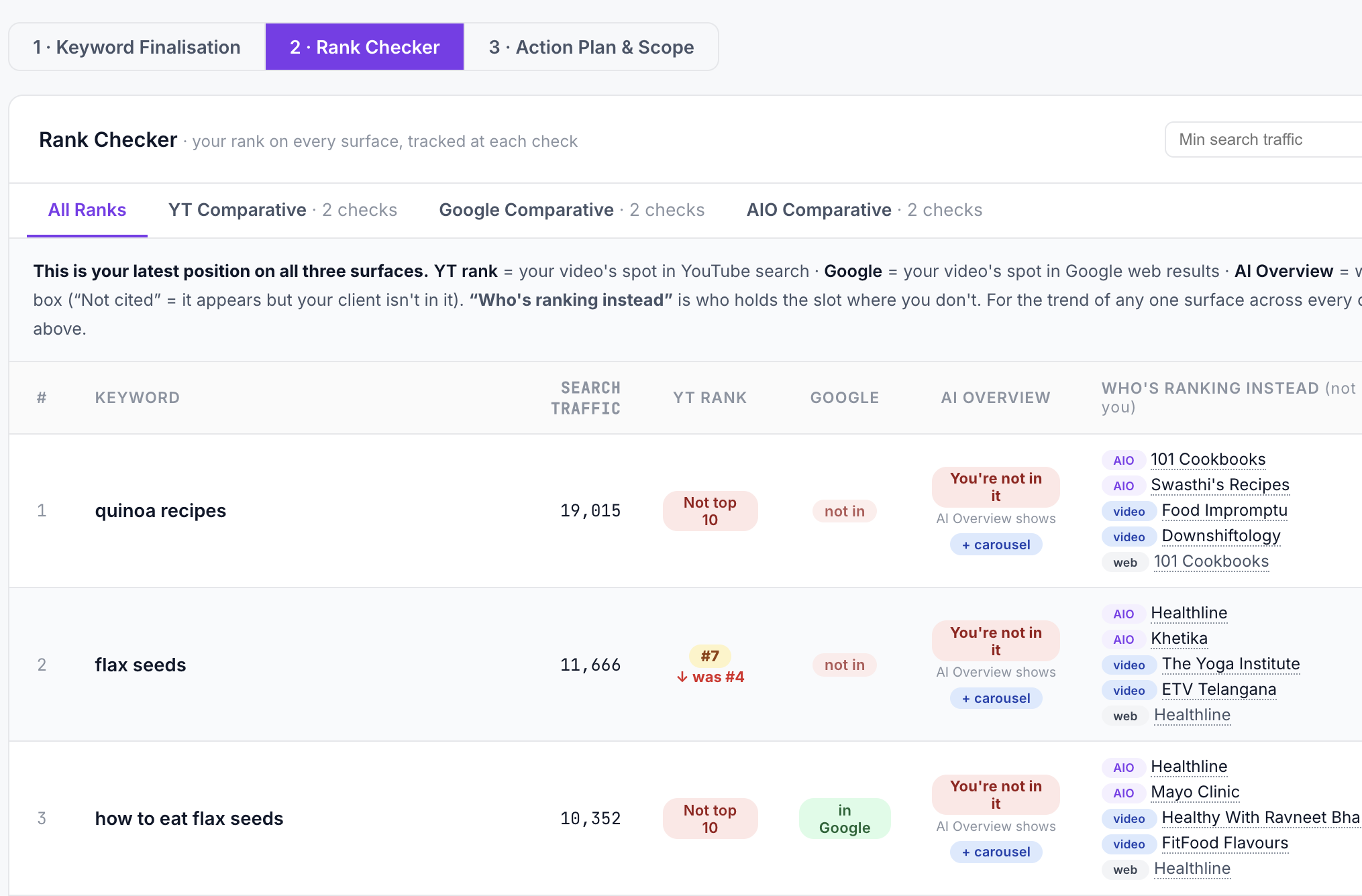
Our approach starts with a doctor-by-doctor entity audit rather than a template rollout. For each doctor we map five surfaces — clinic website bio, individual GBP, LinkedIn, YouTube channel where relevant, and hospital directory pages — and reconcile the name, specialty, credentials, and photograph across all five before writing a line of schema. Where the doctor has an HPR ID under ABDM, we treat that as the anchor identifier; where they do not, we use a persistent internal ID that stays stable across CMS migrations.
We do not treat Physician schema as a plugin problem. It is an editorial problem: someone has to own the doctor's canonical bio, keep credentials current, and coordinate with the doctor when they take on a new hospital affiliation. Inside our accounts, that ownership sits with the content lead, not the developer, which is why the markup keeps working two years in rather than going stale after the launch sprint.
Where this sits inside the 70-30 SEO retainer
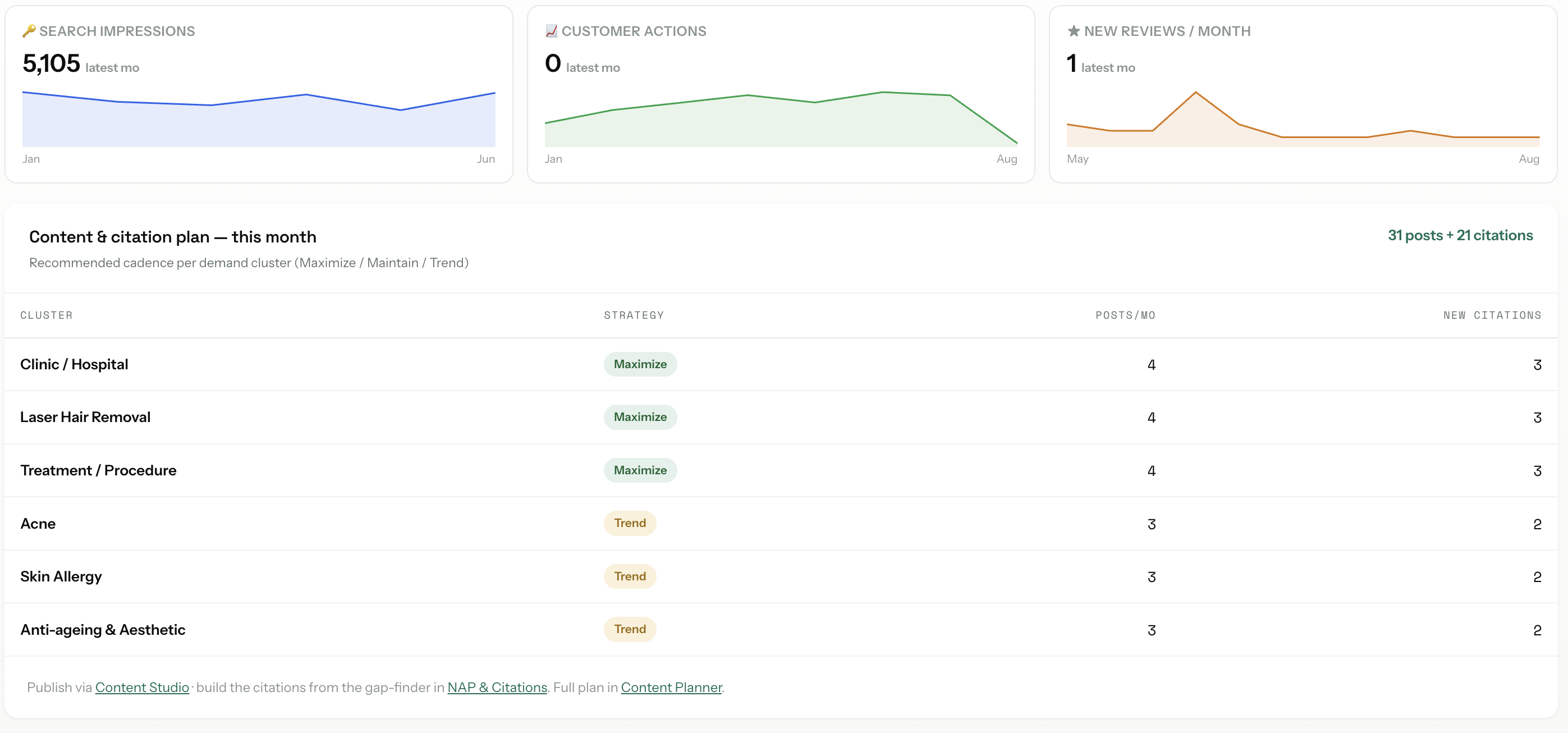
Physician schema work is included inside every ICG SEO retainer — Foundation at Rs 49,999 per month, Growth at Rs 74,999 per month, and Scale at Rs 99,999 per month. All three tiers use our 70-30 fixed-variable model, where 70% of the fee is fixed monthly and 30% is tied to a 12-month traffic and ranking target on a sliding scale. Foundation covers up to 5 doctor entities. Growth covers up to 15, with active entity monitoring across GBP, LinkedIn, and YouTube. Scale is built for hospital groups with 25+ physicians and includes reconciliation across hospital-directory pages, which is where most large groups leak entity signals.
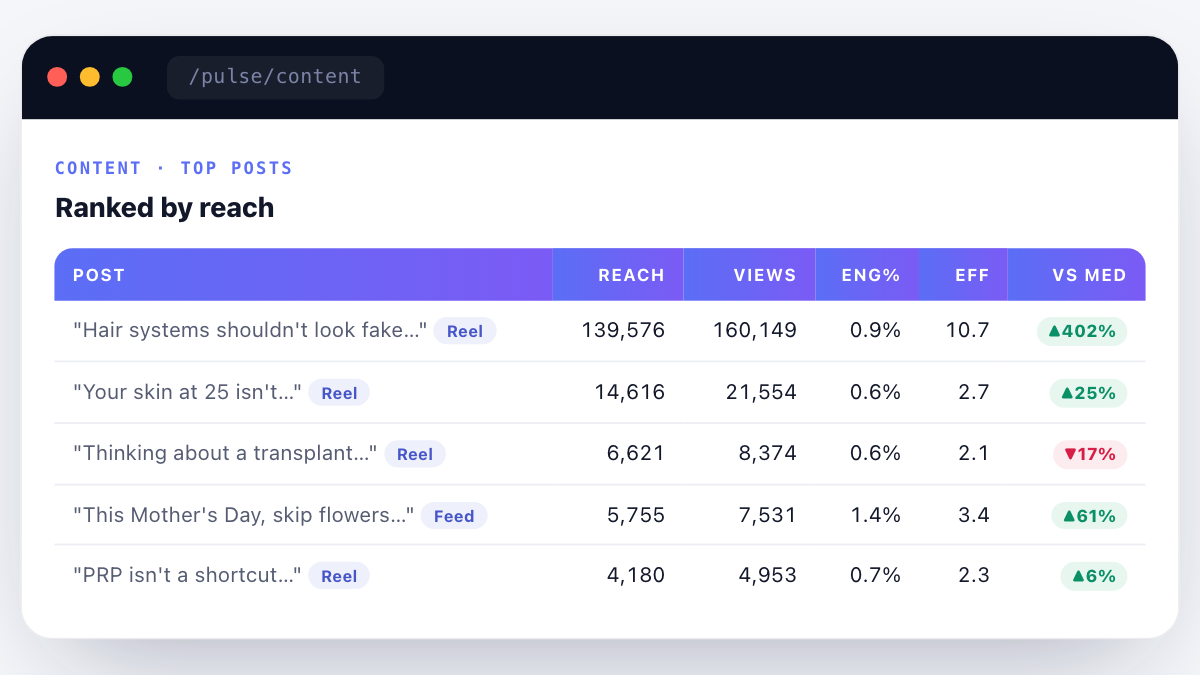
For clinics where the physician-brand play is the entire strategy — think a Bengaluru cosmetic surgeon or a Chennai IVF specialist building a personal brand — we normally recommend Growth as the entry tier, because Foundation does not include the YouTube and Instagram entity work through YODA and Prism Pulse that these doctors need.
FAQ
The questions Indian clinic marketers and doctor-led practices ask most often about Physician schema and doctor brand SEO.
Book a free SEO diagnostic.
Hanuman Sihag's team runs a live crawl, checks technical health, cannibalisation, schema coverage and content gaps. 60 minutes, prioritised fix list.
Questions readers ask
about this topic.
The three platforms
behind every ICG engagement.
Beacon
CAPI middleware that fixes Event Match Quality, translates CRM statuses to Meta-standard events, dedups across channels.
Agency OS
Live client dashboard. GSC, GA4, Google Ads, Meta Ads, IVR calls in one view. Login anytime, not monthly.
Phoenix
Clinic revenue intelligence over your PMS. Daily action queue: Prevent Loss, Maintain & Engage, Grow Revenue. 46-centre rollout.
Or book a free 30-min audit to see all three in action on your account.
Healthcare brands
that already run on ICG.
A representative slice of the 150+ healthcare brands ICG has delivered for across India. Most engagements remain under NDA.


What ICG clients say · on video.
"Scale up of organic channels and business consulting. ICG has absolute domain authority in their field."
"Working with ICG transformed how we acquire IVF patients in Gurgaon. They understand the fertility journey from inquiry to consult..."
"What Ichelon accomplished — they got all my ideas and worked over 3-4 months to create an amazing, super-customised website."
The intelligence stack behind this playbook.
Every ICG engagement runs on the Search Intelligence Trifecta — Angryturtle for GMB, SIE for search and AI Overview, YODA for YouTube. Live product screens below.
Need help operationalising this?
Every ICG service is healthcare-only, NMC + DPDP-aware, and built around the patient-research patterns that drive Indian healthcare growth in 2026.
More from
ICG.
Healthcare AIO is the discipline of getting your clinic or hospital cited inside Google AI Overviews, ChatGPT and Perplexity answers — not j...
Conversational-search advertising places brand messages inside AI chat answers — ChatGPT, Perplexity, Copilot — rather than beside a results...
NABH digital compliance means every claim, image and testimonial your hospital publishes online matches what an accreditation surveyor can v...
Stop guessing.
Book a Diagnostic.
30 minutes. Free. With the AI-powered healthcare-only marketing agency 150+ brands already run on. No slides, no pitch, no hard close.


