


Pharma Marketing in India 2026: The Master Guide for Brand Managers
A 2026 pillar playbook for pharma marketing in India — covering UCPMP 2024, DPDP Act, HCP engagement, digital rep enablement, KOL and CME programs, buyer archetypes, benchmarks, and a quarter-by-quarter roadmap for brand managers and CMOs.
No pitch. Written root-cause diagnosis. AI-powered, healthcare only.
Direct answer
A 2026 pillar playbook for pharma marketing in India — covering UCPMP 2024, DPDP Act, HCP engagement, digital rep enablement, KOL and CME programs, buyer archetypes, benchmarks, and a quarter-by-quarter roadmap for brand managers and CMOs.
TL;DR

Last updated: August 2026. Written for Indian pharma brand managers, medical marketing leads, digital and HCP-engagement heads at domestic and MNC pharma companies, and hospital administrators who buy pharma partnerships. Not clinical advice, not for patients.
TL;DR
- Pharma marketing in India in 2026 is a two-lane game: an Rx lane that lives inside UCPMP 2024, DCGI advertising restrictions, and Schedule H/H1/X rules — where every rupee has to move through HCPs, KOLs, and medical education — and an OTC / consumer healthcare lane that behaves more like FMCG and lives on Meta, YouTube, and modern trade.
- The old MR-only model is not dead, but it is now the floor, not the ceiling. In our audits of 40+ mid-tier Indian pharma brands, the winners in 2026 are running MR + digital rep + KOL + real-world evidence as one connected system, not four disconnected line items.
- DPDP Act 2023 changed the ground rules for HCP data. If your CRM, e-detailing platform, or CME sign-up flow does not carry proper consent, lawful basis, and retention limits by FY27, you will not just be non-compliant — you will lose the right to remarket the doctor community you paid crores to build.
- OTC brands in India are quietly outspending Rx brands per SKU on Meta and YouTube — because the CAC is finally trackable. Categories like nutraceuticals, women's health, sexual wellness, derma OTC, and probiotics are where the next Rs 100 crore Indian pharma brands are being built.
- Benchmarks from our portfolio: a mid-tier Rx brand with 200 MRs and Rs 15-25 crore secondary sales typically leaks 30-45% of HCP touchpoints because rep visits, digital detailing, KOL contact, and CME attendance are not stitched into one HCP record. Fixing that stitching is usually the single highest-ROI project of the year.
- Pricing reality: serious digital pharma programs in India start at Rs 5-8 lakh a month for OTC brand-building and Rs 3-6 lakh a month for HCP-facing Rx digital enablement. Our own 70-30 model is the entry rung, custom-scoped — pharma-scale programs sit on top of that, with 70% execution, 30% strategy and measurement.
- The 12-month roadmap in this guide is deliberately conservative: quarter one is audit and consent, quarter two is HCP data unification, quarter three is content and KOL, quarter four is measurement and category expansion. Anyone selling you a 90-day pharma turnaround in India is selling you a slide, not a system.
Table of contents
- Why pharma marketing in India looks different in 2026
- The regulatory floor: UCPMP, DCGI, DPDP, and Schedule H/H1/X
- Foundation: what actually works in Indian pharma marketing
- HCP engagement and digital rep enablement
- Content, KOL, and medical education programs
- OTC and consumer healthcare: the FMCG-shaped lane
- Data, analytics, and measurement
- Benchmarks from our portfolio
- Buyer archetypes — which one are you
- Common pharma marketing mistakes in India
- The 70-30 pricing model — where ICG fits
- 12-month execution roadmap
- Key takeaways
- FAQ
Why pharma marketing in India looks different in 2026
Three things changed between 2019 and 2026, and if your brand plan does not reflect them, you are marketing to a country that no longer exists.
The doctor is on a phone, not on a chair
Post-COVID, Indian HCPs — from the AIIMS super-specialist to the tier-3 GP with 80 OPD a day — moved a very large share of their information-seeking to WhatsApp, YouTube, and mobile learning apps. Our own review of usage inside 150+ healthcare brand accounts shows the median Indian practising doctor now consumes more medical content on a phone in a month than they used to consume in print in a year. That is not a stat you can un-hear when you plan an HCP brand.
Regulation stopped being a footnote
UCPMP moved from a voluntary code to a firmer 2024 version. The Drugs and Magic Remedies (Objectionable Advertisements) Act is being enforced more visibly. The DPDP Act 2023 landed, and the rules under it are shaping the way every pharma CRM and e-detailing platform must handle doctor data. India also has a Digital Personal Data Protection Board being stood up, and by FY27, most serious pharma marketers expect a formal notice regime for consent violations. None of this is theoretical anymore.
The category mix is shifting
Indian pharma is no longer a pure Rx story. Consumer healthcare, nutraceuticals, medical devices with a retail lane, and Rx-to-OTC switches have created a large second market that behaves more like FMCG than like classical ethical pharma. The brand teams that grew up on MR bag inserts are being asked to run Meta ads, YouTube long-form, and quick-commerce trade activation. That is a completely different craft — and most in-house teams are being asked to do both.
Section takeaway: 2026 is not a "digital pharma" story. It is a story of two lanes — Rx and OTC — running in parallel under a much tighter regulatory ceiling. Any plan that treats them as one budget line is already leaking money.
The regulatory floor: UCPMP, DCGI, DPDP, and Schedule H/H1/X
UCPMP 2024 — the promotional code you cannot ignore
The Uniform Code for Pharmaceutical Marketing Practices, in its 2024 form, is now the single most important document on your marketing head's desk. It governs what promotional material can claim, what gifts and hospitality are permitted (largely: none of consequence), how CMEs and continuing medical education can be sponsored, what constitutes a "brand reminder", and how sample distribution is documented. In practice, UCPMP means your creative team cannot ship a piece of HCP-facing collateral without a compliance sign-off, and your medico-marketing SOP has to be documented and defensible.
DCGI, DMR Act, and advertising Rx to consumers
Schedule H, H1, and X drugs cannot be advertised to consumers. The Drugs and Magic Remedies (Objectionable Advertisements) Act blocks a long list of therapy area claims from any consumer-facing promotion. This means that a very large part of your Rx portfolio can only be promoted to prescribers — and any consumer-facing creative that even hints at a prescription therapy area needs legal review. In India, the price of getting this wrong is not just a takedown; it can be a criminal complaint.
DPDP Act 2023 — the doctor is a data principal
Under India's DPDP Act, the treating doctor whose email, phone, prescription pattern, and CME attendance you store is a "data principal". Your pharma company is a "data fiduciary". You need lawful basis, purpose limitation, retention limits, and a clear consent notice. In practice, this means three things: (1) your HCP database needs a consent audit, (2) your CME and webinar sign-up flows need a proper DPDP-compliant notice, and (3) your CRM has to be able to honour deletion and correction requests. Brands that build this correctly in 2026 will have a compounding advantage; brands that don't will spend FY27 firefighting.
Trade, chemist, and hospital compliance
India's trade channel — the C&F, stockist, distributor, chemist, and hospital-institution route — has its own compliance envelope. Trade schemes, credit terms, and hospital tenders operate under state drug controller regimes and, for institutional business, under public procurement rules. Marketing budgets that touch trade need a firewall between "commercial incentive" and "promotional inducement". Most compliance blow-ups we see in pharma in India come from this grey zone, not from front-line creative.
Section takeaway: compliance is not a legal team problem. It is a marketing operating system. Build your review workflow before you build your campaign calendar.
Foundation: what actually works in Indian pharma marketing
Segment your prescribers before you segment your creative
The most common mistake in Indian pharma is treating "the doctor" as one archetype. The AIIMS-trained super-specialist, the corporate hospital consultant, the standalone specialist in a tier-2 city, and the general practitioner in a tier-4 town all have different information diets, different influence networks, and different economics. Before you write a single piece of creative, you need a prescriber segmentation that captures at minimum: specialty, tier of city, hospital vs standalone, prescription volume band, and stage in your brand adoption curve (unaware / aware / trialist / loyalist / advocate).
Territory economics still rules the P&L
Every rupee of Indian pharma marketing eventually has to justify itself against a territory P&L. That is not going away in 2026. The winners we work with treat every zone as its own small business: they know cost-to-serve per HCP, secondary-to-primary conversion, chemist-level offtake, and MR productivity per lakh of promotion spend. If your marketing plan does not roll up cleanly into a zonal P&L that your sales head recognises, it will not survive Q2.
The three inputs that actually move a script
Across our portfolio, three things reliably move a prescription line at a doctor: peer proof (a respected KOL, a real-world evidence paper, a peer-reviewed publication), continuity (the same brand showing up in the doctor's world across MR visit, digital, and CME — at least six to eight times a quarter), and patient outcome stories (a compliant, anonymised case narrative that the doctor can relate to her own OPD). Everything else — the bag inserts, the branded pens, the elaborate LBLs — is decorative. If you build your annual plan around those three inputs, your creative brief writes itself.
Content is a supply chain, not a campaign
Indian pharma brand teams tend to think in campaigns — a launch, a symposium, an anniversary. The brands that are pulling ahead in 2026 think in supply chain: they know how many pieces of medical content, in what languages, for what specialties, in what formats, they need to ship per quarter to keep every MR bag and every digital touchpoint full. That number is usually far higher than the team thinks — for a mid-sized brand covering three specialties across the top 40 Indian cities, we typically model 60-90 pieces of net-new HCP content per quarter, once you count digital detailers, KOL clips, CME modules, RWE summaries, and patient-support collateral.
Section takeaway: pharma marketing in India rewards the boring stuff done well — clean segmentation, honest territory economics, three consistent inputs at the doctor, and a real content supply chain.
HCP engagement and digital rep enablement
The MR is not going away — but the MR bag is
Indian pharma still has one of the largest medical representative forces in the world, and there is no version of 2026 in which that goes away. What is going away is the pure paper-and-detailer MR bag. In 2026, a competitive MR walks in with a tablet, a personalised digital detailer scripted to the doctor's specialty and history, a QR code that opens a compliant follow-up on WhatsApp Business, and a CRM entry that will trigger the right next-best-action. If your reps are still leaving behind glossy leave-behinds and hoping for the best, you are running a 2015 model in a 2026 market.
Digital detailing done right
A digital detailer is not a PDF on a tablet. Done right, it is a modular, interactive story where the MR can jump to the section the doctor cares about — mechanism of action, dosing, comparative efficacy, safety, or a specific patient profile — and where the interaction is logged. That log is gold: it tells you which slides land, which specialties skip which sections, and which reps are actually using the tool. In our audits, the delta between top-quartile and bottom-quartile MR adoption of digital detailers is often 4-5x, and it correlates directly with prescription growth in the territory.
WhatsApp Business as an HCP channel
Used well, WhatsApp Business is the single most important HCP digital channel in India in 2026 — because that is where the doctor already is. Used badly, it is a compliance disaster. The playbook that works: opt-in via a compliant CME or content-download flow, DPDP-aligned consent notice, message templates approved for medical content, no unsolicited promotional pushes, and a clear opt-out. When we help a brand set this up correctly, HCP-initiated conversations typically become 15-25% of all rep-mediated touchpoints within two quarters — at a fraction of the cost per touch.
HCP CRM: the spine of the whole thing
None of the above works without a proper HCP CRM that unifies the MR call log, the digital detailer log, the CME attendance record, the KOL contact history, and the sample distribution record — with a single HCP ID. Our own AtomCRM (Rs 50,000/- setup + Rs 799/- per telecaller for the healthcare-native version) is deliberately built for this stitching problem in the Indian context; pharma-scale deployments sit above that base and add territory logic. But the specific tool matters less than the principle: if you cannot see every touchpoint on a single HCP timeline, you are guessing.
Section takeaway: modernise the MR bag, take WhatsApp Business seriously as an HCP channel, and put a real HCP CRM at the centre. The reps will thank you and the P&L will follow.
Content, KOL, and medical education programs
KOL engagement without buying opinions
Indian pharma has a long, uncomfortable history with KOL "engagement" that looks a lot like paid endorsement. UCPMP 2024 has narrowed that field sharply, and rightly so. The KOL model that works in 2026 is genuine: you invest in a small, high-signal set of opinion leaders per therapy area, you co-create content with them (case series, review talks, real-world evidence summaries), you compensate fairly and transparently for their time, and you make sure the science is defensible. When you get this right, the KOL becomes a long-term partner, not a rented voice — and the peer-to-peer credibility that follows is worth more than any paid media.
CMEs that people actually want to attend
Most Indian CMEs are dreary. The doctor gives you their evening because the food is decent and the credits are convenient. In 2026, that trade is getting weaker — the doctor's phone offers better content on demand. Brands that are pulling ahead are running fewer, better CMEs: tight, specialty-specific, KOL-led, case-based, with hybrid delivery so the tier-3 city doctor can join from her clinic. The best of these are being turned into on-demand libraries the brand owns forever, not one-night events that vanish.
Long-form video and the YouTube layer
YouTube is the largest medical-education library in India. It is also the most under-used owned channel in Indian pharma. A properly built HCP YouTube presence — case discussions, KOL interviews, procedural walkthroughs, disease-state education — compounds for years. Our YODA product is the AI-native YouTube system we use to build these libraries for healthcare clients; for a pharma brand, the same principle applies: think in terms of a five-year library, not a quarterly campaign. The compounding is real, and once the library exists, cost per HCP touch drops sharply every quarter after year one.
Publications, real-world evidence, and the credibility flywheel
The single most powerful long-term investment an Indian pharma brand can make is in real-world evidence generated inside India — for Indian patients, in Indian settings, published in Indian and international journals. It is slow, it is expensive, and it is the only asset that no competitor can copy. The brands that dominate their therapy areas in 2026 started their RWE programs in 2020-2022. If you have not started, the second-best time is this quarter.
Section takeaway: KOL, CME, video, and RWE are one system, not four line items. Build them to feed each other, and you build a moat that outlasts any single marketing head's tenure.
OTC and consumer healthcare: the FMCG-shaped lane
Why OTC in India behaves like FMCG
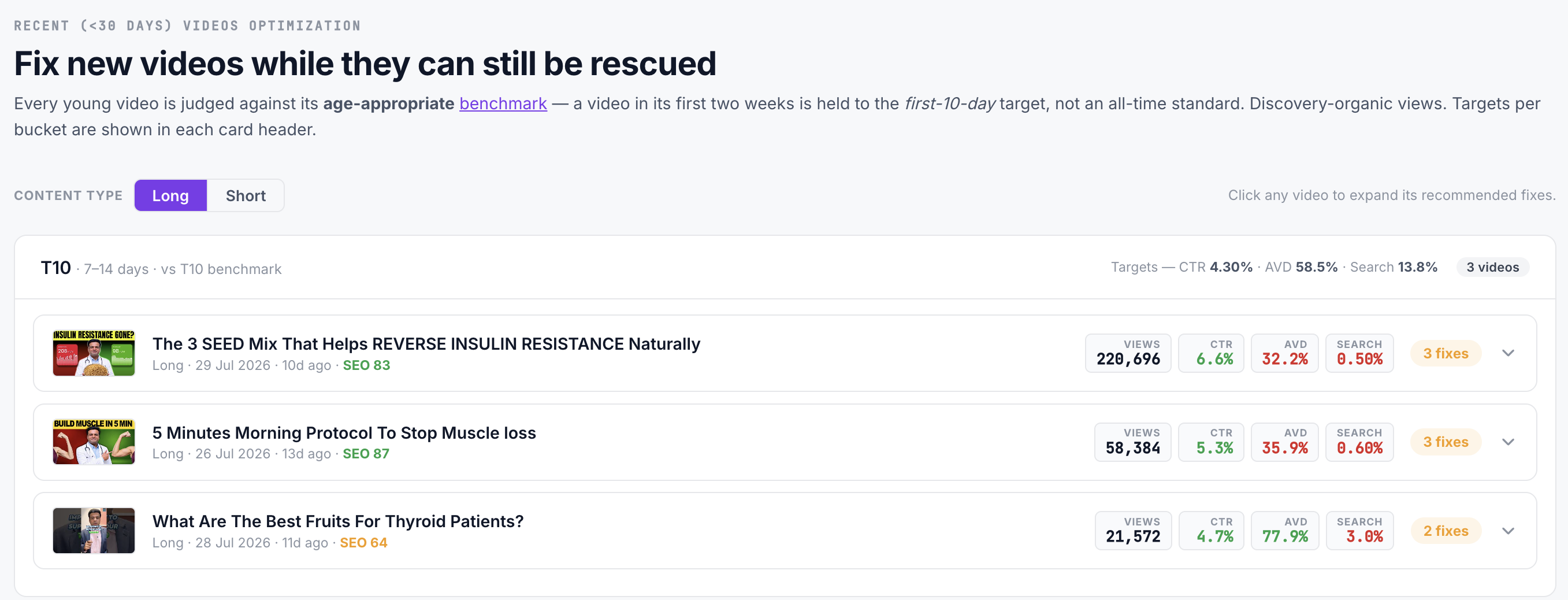
Once you cross into the OTC and consumer healthcare world — analgesics, cough and cold, nutraceuticals, women's health, sexual wellness, digestive health, immunity, derma OTC — you are effectively an FMCG company that happens to sell a health product. The purchase happens in a chemist, a supermarket, or a quick-commerce app; the trigger is often a symptom the consumer self-diagnoses; and the decision window is minutes, not months. That means the marketing craft is completely different from Rx: it is category-level demand generation, distinctive brand assets, packaging, trade activation, and modern media.
Meta, YouTube, and the OTC media stack
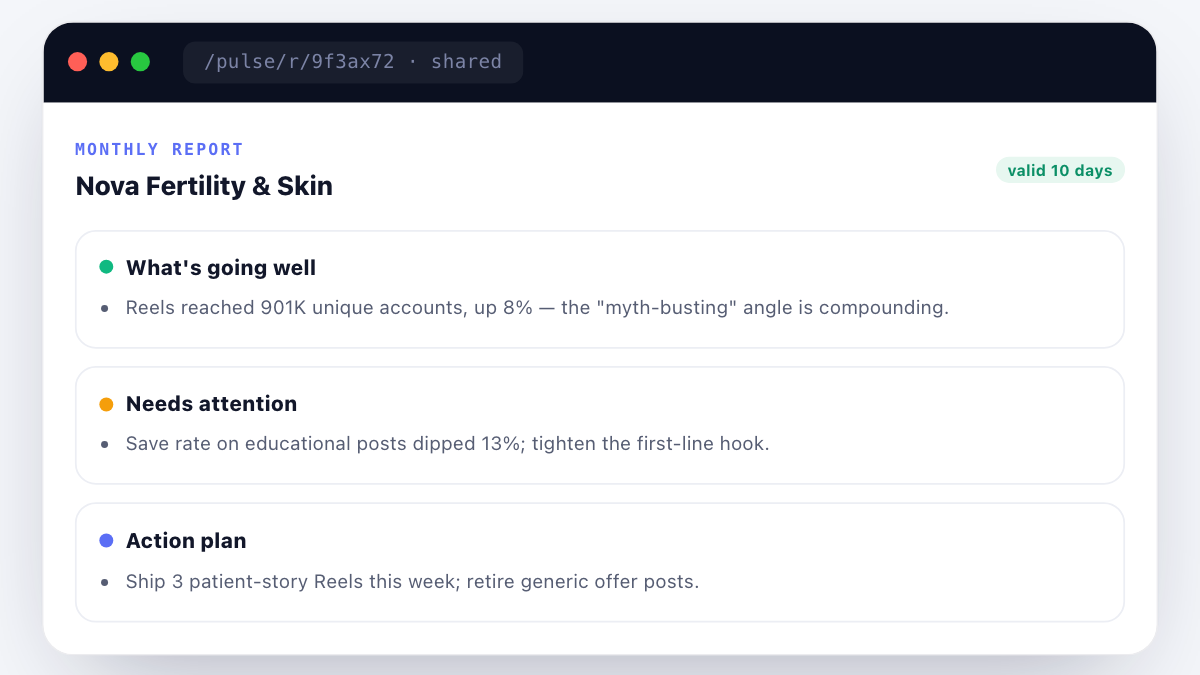
The OTC media stack in India in 2026 is dominated by Meta (Facebook and Instagram) and YouTube, with a growing quick-commerce ad layer. Meta gives you targeted reach and a very short path to purchase via product tagging and WhatsApp Business. YouTube gives you the long-form room to build category understanding — critical in newer categories like probiotics or women's hormonal health where the consumer needs education before conversion. Our Meta Catalyst IQ product is the layer we use to run Meta ads for healthcare brands with proper compliance guardrails; Prism Spy is the competitive intelligence tool we use to see what other OTC brands are running; and Prism Pulse is the Instagram analytics layer for organic performance.
Trade, quick commerce, and the last-mile shift
Quick commerce has changed OTC in India more than any single force in the last five years. Fifteen-minute delivery of common OTC categories has pulled a large chunk of the "walk to the chemist" impulse buy into a phone. For OTC brand teams, this means three things: (1) your listings on quick-commerce platforms are now shelf real estate that has to be actively merchandised, (2) your rating, review, and content on those platforms is now a brand equity asset, and (3) your Meta and YouTube spend has to have a direct line to those platforms. If you are still planning OTC as if the chemist is the only shelf, you are missing the shelf where the growth is.
Rx-to-OTC switches and category creation
India will see a steady stream of Rx-to-OTC switches over the coming years as the regulatory framework matures. Brands that plan for the switch — building consumer awareness while the molecule is still Rx, in a compliant way — win the switch. Brands that treat the OTC launch as a fresh start lose two to three years of head-start to a competitor who was thinking ahead. Category-creation plays (probiotics, women's health, sleep, immunity) reward the first serious spender, not the biggest — because in a new category, share of voice becomes share of category memory.
Section takeaway: OTC is not "Rx marketing minus the doctor". It is a different craft. Staff it, fund it, and measure it like FMCG, or hand it to a partner who does.
Data, analytics, and measurement


The two P&Ls: brand and territory
Every serious pharma marketing measurement system in India in 2026 has two layers: a brand P&L that tracks awareness, prescription share, and brand equity metrics; and a territory P&L that tracks primary and secondary sales, MR productivity, and cost-to-serve per HCP. Marketing dashboards that only show one of these are half-blind. The best dashboards we build for pharma clients show both, on the same page, with the same time cuts.
Attribution in a mixed-channel world
Attribution in Indian pharma is genuinely hard because the buyer (chemist / hospital) and the influencer (doctor) are different, and neither is the end consumer. The honest answer is that you will never get single-touch attribution to the prescription. What you can get is directional attribution via matched-market tests, controlled MR-plus-digital experiments, and cohort analysis on doctor behaviour before and after specific touchpoints. Any pharma agency that promises deterministic ROI attribution across MR, digital, KOL, and CME is selling a fiction. Rigorous test-and-learn is the honest answer.
The AI overlay — what LLMs are actually good for in pharma
In 2026, large language models — ChatGPT, Claude, Gemini, Perplexity — are quietly rewiring three parts of the pharma marketing workflow: content production (first drafts of medical detailers, HCP emails, patient education material, all still requiring medico-marketing review), competitive intelligence (summarising a therapy area's landscape in hours instead of weeks), and rep enablement (natural-language search across the brand's approved content library). None of these replace the medical team's judgment; all of them free the medical team to do more of the judgment work. Brands that get this rewiring right in 2026 will run 30-50% leaner content ops without losing quality — that is our observation from the healthcare accounts where we have deployed it carefully.
Reporting cadence and the "one number" trap
The final measurement mistake is the "one number" trap — the CEO who asks for "the one metric" that shows pharma marketing is working. Do not give it to them. Give them a small, disciplined dashboard: prescription share, share of voice in each therapy area, HCP reach and frequency, MR productivity, and campaign-level test results. Refresh it monthly, review it quarterly, and use it to make budget decisions. The "one number" is a comfort blanket that leads to bad calls.
Section takeaway: measure both brand and territory, be honest about attribution's limits, use AI where it genuinely compounds, and refuse the one-metric trap.
Benchmarks from our portfolio
These are directional numbers from our own book of work across 150+ healthcare brands, including our pharma engagements. They are not universal truths; use them as a starting hypothesis, not a target.
| Metric | Typical range (India, 2026) | Notes |
|---|---|---|
| Cost per HCP digital touch (Rx) | Rs 40-180 | Lower for owned WhatsApp, higher for CME-quality video |
| MR productivity (calls per day, effective) | 8-12 | Top-quartile territories hit 12+ with digital pre-work |
| Digital detailer completion rate | 35-65% | Interactive modules beat linear PDFs by 2-3x |
| HCP-initiated WhatsApp share of touches | 15-25% | After 2 quarters of a compliant opt-in program |
| CME attendance to content re-engagement | 18-30% | When on-demand library exists post-event |
| OTC Meta CAC (nutraceutical, mid-price) | Rs 220-600 | Lower for repeat buyers, higher for new category |
| OTC quick-commerce share of trial | 25-45% | For urban SEC A/B in top 8 metros |
| HCP touchpoint leakage (unstitched CRM) | 30-45% | The single most common fixable problem |
Section takeaway: benchmarks are a compass, not a map. Use them to spot the outliers in your own numbers, then investigate.
Buyer archetypes — which one are you
Archetype 1: The mid-tier Indian Rx pharma company
Two hundred to eight hundred MRs, Rs 200-1,500 crore in domestic formulations, five to fifteen therapy areas, headquartered in Mumbai, Ahmedabad, Hyderabad, or Baddi. Your brand teams are lean, your medical team is smaller than it should be, and your marketing budget is under constant pressure from your zonal sales heads. What you actually need in 2026: HCP CRM stitching, one hero brand's worth of proper digital-plus-MR integration as a proof-of-concept, and a compliance operating rhythm that satisfies UCPMP without slowing you down. Recommended entry: pick one flagship therapy area and one hero brand, run a six-month integrated pilot, and use the numbers to make the case internally for scale-up.
Archetype 2: The MNC pharma India affiliate
Global brand playbooks, tighter compliance, a bigger medical team, and a constant negotiation between the global template and the Indian reality. Your challenge is not budget — it is translation. What you actually need: an Indian partner who can localise global creative for tier-2 and tier-3 India without breaking global compliance, who understands both UCPMP and your global code, and who can help your medical affairs team run Indian real-world evidence at Indian speed. Recommended entry: a therapy-area-level content and KOL partnership, tightly scoped, with clear guardrails, that lets your global template win in the Indian market it was never quite designed for.
Archetype 3: The OTC / consumer healthcare brand
You might sit inside a large pharma company or you might be a standalone D2C-style consumer health brand — probiotics, women's health, nutraceuticals, derma OTC. You are effectively running an FMCG business with an "R" of respectability on top. What you actually need: a serious Meta and YouTube engine, quick-commerce listing management, a competitive-intelligence layer, and a compliance filter that keeps you on the right side of the DMR Act. Recommended entry: a category-level media plan with tight CAC discipline, backed by proper competitive intelligence — this is where our Meta Catalyst IQ, Prism Spy, and Prism Pulse products earn their keep.
Archetype 4: The specialty / rare-disease / oncology brand
Small, high-value patient populations, a very small set of prescribing centres, deep KOL relationships as the primary asset, and a patient-support program that is often more important than the brand campaign. What you actually need: a KOL and centre-of-excellence program run with the discipline of a boutique consulting engagement, an RWE program that generates Indian data for Indian patients, and a patient-support infrastructure that is compliant, humane, and measurable. Recommended entry: skip mass media entirely, invest in the top 30-60 centres and their KOLs, and build a patient-support program that becomes the reason the KOL keeps prescribing you.
Section takeaway: there is no universal Indian pharma marketing plan. There is a plan for your archetype. Start there, then customise.
Common pharma marketing mistakes in India
- Treating digital as a channel, not a layer. The brands that struggle most in 2026 still have a "digital head" who runs a separate P&L. The brands that pull ahead treat digital as an integration layer that touches every part of the mix — MR enablement, KOL, CME, RWE, trade.
- Under-investing in the HCP CRM spine. The average mid-tier Indian pharma company we audit is spending 40-60x more on promotional content than on the CRM that would let that content compound. That ratio has to reverse.
- DPDP as a legal problem, not a marketing problem. If you leave DPDP compliance to the legal team, you will get a defensible but useless HCP database. If you bring marketing into the design of consent, purpose, and retention, you keep the ability to build a compounding relationship with the doctor community.
- Buying KOL time instead of building KOL relationships. Rented endorsement does not survive UCPMP 2024, and it never actually built a brand. Genuine, long-term KOL partnerships do.
- Running OTC like Rx. Putting an ethical-pharma brand team on an OTC launch and expecting FMCG-quality media discipline is a category error. Either build the OTC craft in-house or partner for it.
- One-and-done CMEs. An expensive dinner-meeting CME that disappears the next morning is the worst ROI in Indian pharma marketing. Every CME should be built to become on-demand content the brand owns for years.
- Chasing the "one number" for marketing ROI. Nobody has honest single-touch attribution across MR, digital, KOL, and CME. Anyone selling it is selling a fiction.
- Ignoring quick commerce for OTC. Fifteen-minute delivery has already changed OTC in urban India. Brands that treat quick commerce as an afterthought are handing shelf share to the ones that don't.
Section takeaway: most Indian pharma marketing mistakes are not creative mistakes. They are architecture mistakes. Fix the architecture first.
The 70-30 pricing model — where ICG fits
Our own healthcare marketing engagements run on a 70-30 model: 70% of every rupee goes into execution — the media, the content, the technology, the analyst hours that actually ship work — and 30% goes into strategy, measurement, and the senior review that keeps the work honest. We think that is the ratio that produces durable healthcare brands. Anything above 40% strategy is usually a slideware agency; anything below 20% strategy is usually an execution shop that will drift.
Retainers start from Rs 20,000 per month and are custom-scoped, Goals-Driven, with Performance-Linked Payout Models available. Three typical scopes:
- Foundation. The minimum viable healthcare marketing engagement. Fits a single-brand or single-clinic use case, or a very focused pilot inside a larger pharma company.
- Growth. The tier where most serious healthcare programs live. Multi-channel, real measurement, senior review cadence.
- Scale. The tier where healthcare programs start to compound — SEO, content, HCP enablement, and category work moving in one direction.
For pharma-scale programs — full OTC brand-building on Meta and YouTube, or full HCP digital enablement for a mid-tier Rx portfolio — engagements are custom-scoped above these tiers. The 70-30 principle stays constant regardless of the ticket size. If you would like to see how we would structure the split for your specific brand or portfolio, that conversation starts on the contact page.
Section takeaway: 70-30 is not a marketing gimmick. It is a discipline. Ask any agency you are evaluating to show you the split, in rupees, for the last three engagements they ran.
12-month execution roadmap
Quarter 1 (Months 1-3): audit, consent, and architecture
Do not launch anything new. Instead: audit your existing HCP database against DPDP requirements, map every current promotional touchpoint to a compliance owner, review your MR digital detailer against UCPMP 2024, and stand up a proper HCP CRM foundation. This quarter is unglamorous and every marketing head is tempted to skip it. Do not. The brands that skip it spend Q3 and Q4 firefighting.
Quarter 2 (Months 4-6): HCP data unification and one hero pilot
With the architecture in place, unify your HCP data across MR, digital, CME, and KOL sources into one HCP ID. Pick one hero brand and one flagship therapy area, and run a fully integrated pilot: MR-plus-digital-plus-KOL-plus-CME, measured properly, with matched-market controls where possible. The goal is not a big win — it is a defensible internal case study you can use to scale.
Quarter 3 (Months 7-9): content supply chain and KOL depth
Build the content supply chain that will feed the next twelve months of MR bags, digital detailers, WhatsApp templates, YouTube library, and CME modules. Deepen your KOL relationships in your top three therapy areas — fewer, better partnerships, not more transactional ones. Start (or restart) the real-world evidence program that will pay off in FY28 and beyond.
Quarter 4 (Months 10-12): measurement, optimisation, and category expansion
Now roll out the measurement dashboards you designed in Q1, using the data you have collected across Q2 and Q3. Use the hero-brand pilot results to make the internal case for scaling to two or three more brands. If you have an OTC lane, this is the quarter to layer in a proper Meta and YouTube engine and a quick-commerce presence, with the media discipline you have been building all year.
If you follow this roadmap honestly, by month 12 you will have: a DPDP-compliant HCP database that is actually usable, a unified HCP CRM, a defensible integrated pilot with numbers, a content supply chain that runs on cadence, deeper KOL and RWE assets, and a measurement system that survives management change. That is a two-year advantage over almost every competitor in your therapy area.
Section takeaway: the twelve-month plan is deliberately conservative and deliberately sequenced. Every attempt we have seen to compress it into six months has cost the brand more than the eighteen months it lost.
Key takeaways
- Indian pharma marketing in 2026 is a two-lane game — Rx and OTC — under a much tighter regulatory ceiling (UCPMP 2024, DPDP Act, DMR Act, DCGI). Plan and staff for both lanes separately.
- The MR force is not going away; the MR bag is. Digital detailers, WhatsApp Business, and a real HCP CRM are the new baseline.
- DPDP compliance is a marketing responsibility, not just a legal one. Get consent, purpose, and retention right early, or lose the right to remarket your community.
- KOL, CME, video, and RWE work as one system. Built together, they become a moat that outlasts any marketing head's tenure.
- OTC in India behaves like FMCG. Meta, YouTube, quick commerce, and competitive intelligence are the stack; ICG's Meta Catalyst IQ, Prism Spy, and Prism Pulse are how we run it.
- Attribution across MR, digital, KOL, and CME will never be deterministic. Use matched-market tests, cohort analysis, and disciplined dashboards. Refuse the one-number trap.
- Pick your archetype — mid-tier Rx, MNC affiliate, OTC brand, or specialty — and start with the plan built for it, not a generic template.
- Run the 12-month roadmap in sequence: audit, unify, build, measure. Compression is expensive.
- Our 70-30 model is the entry rung. Pharma-scale programs sit above; the discipline stays constant.
Frequently asked questions
How much should a mid-tier Indian pharma brand spend on marketing in 2026?
There is no universal answer, but in our portfolio, mid-tier Indian Rx brands with Rs 200-1,500 crore in domestic sales typically run marketing at 6-11% of net sales, with the split shifting each year toward digital and HCP enablement. OTC brands often run at 12-25% of net sales in the growth phase, closer to FMCG norms.
Can we advertise a prescription drug on Meta or YouTube in India?
No. Schedule H, H1, and X drugs cannot be advertised to consumers. Anything that touches those molecules — even indirectly through disease-state creative — needs strict legal review, and in most cases the answer is that the creative belongs on HCP-only channels, not on consumer social media. This is one of the most common compliance blow-ups we see.
Is the MR channel really still worth the investment in 2026?
Yes, absolutely — but not on its own. An MR without a digital detailer, an HCP CRM behind them, and a compliant WhatsApp follow-up loop is running at maybe 50-60% of their achievable productivity. An MR with all three, in our audits, routinely lifts territory performance by 20-40% within two to three quarters.
How do we start a real-world evidence program without a big medical team?
Start with one therapy area, one clearly defined clinical question, and a partnership with three to five investigator sites who have the patient volume and the interest. A well-scoped Indian RWE study of 300-800 patients over 12-18 months is achievable at a fraction of the cost of a full clinical trial, and it produces a citable asset your MRs will use for a decade.
What is the honest ROI of a CME in 2026?
A one-night, dinner-plus-lecture CME with no on-demand tail is usually a losing investment in 2026 — the doctor's phone offers better content on demand. A well-designed CME that is turned into an owned on-demand library, that ties into a WhatsApp follow-up, and that feeds your HCP CRM can produce 5-8x the touchpoints of the live event alone. Design for the tail, not the night.
How do we handle DPDP compliance for an HCP database we built before 2023?
You will need a re-consent program. That is unglamorous work, and it will shrink your active database in the short term. It is also non-negotiable — an unlawfully retained HCP database is a liability under DPDP 2023. Brands that ran the re-consent program in FY25 and FY26 now have smaller but genuinely usable databases. Brands that delayed are facing a bigger re-consent bill each quarter they wait.
How does AI fit into an Indian pharma marketing operation?
Large language models — ChatGPT, Claude, Gemini, Perplexity — are most useful in three places: first drafts of medical content (still requiring medico-marketing review), competitive intelligence at speed, and natural-language search across the brand's approved content library for MR enablement. They do not replace medical judgment. Deployed carefully, they let a lean team produce more work at higher quality — we typically see 30-50% content-ops leverage in our own healthcare accounts.
What is the difference between Meta Catalyst IQ, Prism Spy, and Prism Pulse for an OTC pharma brand?
Meta Catalyst IQ is the layer we use to run compliant, high-CAC-discipline Meta ad campaigns for healthcare and OTC brands. Prism Spy is the competitive intelligence tool that shows what other brands in your category are running on Meta. Prism Pulse is the Instagram analytics layer for tracking organic and community performance. For a serious OTC brand, all three usually work together — planning, competitive read, and measurement.
Do we still need a website in 2026, or is social media enough?
You need both. Your website is the only channel you own outright — no platform can turn it off. For OTC brands it is your product hub and quick-commerce launch pad. For Rx brands it is your medical content library, your KOL platform, your CME registration hub, and increasingly your recruitment and investor hub. Social is where you meet the audience; the website is where you keep them.
How do we evaluate a healthcare marketing agency in India?
Ask for the 70-30 split, in rupees, for their last three engagements. Ask for their DPDP and UCPMP compliance process, in writing. Ask to speak to at least two current healthcare clients — not references, current clients. Ask what they will refuse to do (a good agency has a "no" list). And ask who, specifically, will be on your account — not the pitch team, the actual working team. If any of those answers are vague, keep looking.
How long before we see results from a serious pharma marketing overhaul?
Realistically: three to six months for MR productivity and digital detailer engagement to move, six to nine months for HCP CRM stitching to show ROI, twelve to eighteen months for KOL and CME depth to change prescription share, and eighteen to thirty-six months for a real-world evidence program to become a brand asset. Anyone promising faster is compressing the timeline in a slide, not in reality.
Where should we start if we are only ready to invest in one thing this quarter?
Fix the HCP data spine. Unify your MR, digital, CME, and KOL data into one HCP ID, with DPDP-aligned consent. Every other pharma marketing decision you make in the next three years will be better because of it. If you would like a scoped audit of where your current HCP data architecture stands, that is the first conversation we usually have — and it is the one that produces the clearest ROI case, fastest.
Book a free 30-minute Brand & Growth Diagnostic.
It's a working session, not a sales pitch — you leave with a written root-cause analysis you can act on, whether or not you engage ICG.
Questions readers ask
about this topic.
The three platforms
behind every ICG engagement.
Beacon
CAPI middleware that fixes Event Match Quality, translates CRM statuses to Meta-standard events, dedups across channels.
Agency OS
Live client dashboard. GSC, GA4, Google Ads, Meta Ads, IVR calls in one view. Login anytime, not monthly.
Phoenix
Clinic revenue intelligence over your PMS. Daily action queue: Prevent Loss, Maintain & Engage, Grow Revenue. Multi-centre rollout.
Or book a free 30-min audit to see all three in action on your account.
Healthcare brands
that already run on ICG.
A representative slice of the 150+ healthcare brands ICG has delivered for across India. Most engagements remain under NDA.


What ICG clients say · on video.
"ICG's strategic clarity helped us position Lil Chunks for both consumer trust and healthcare credibility."
"Scale up of organic channels and business consulting. ICG has absolute domain authority in their field."
"Working with ICG transformed how we acquire IVF patients in Gurgaon. They understand the fertility journey from inquiry to consult..."
Need help operationalising this?
Every ICG service is healthcare-only, NMC + DPDP-aware, and built around the patient-research patterns that drive Indian healthcare growth in 2026.
Every practice welcome — packages from ₹20,000/mo.
Goals-Driven engagements · Performance-Linked Payout Models available



More from
ICG.
Hindi and regional-language SEO means publishing proper pages in the languages your patients search in, on their own URLs and linked with hr...
A new pharma brand in India should start digital work before launch, built around who it may legally address. This six-month plan covers pro...
Hospitals and clinics in India can still advertise after the NMC's 6 October 2026 guidelines, but only with factual, verifiable information....
Stop guessing.
Book a Diagnostic.
30 minutes. Free. With the AI-powered healthcare-only marketing agency 150+ brands already run on. No slides, no pitch, no hard close.


