


Medical Tourism YouTube Content Strategy for India 2026
Medical value travel to India is now a YouTube-first buying decision. Bangladeshi, Iraqi, Nigerian and Omani families watch 8 to 14 videos before enquiring. Here is how Indian hospitals build a channel that books international patients in 2026.
No pitch. Written root-cause diagnosis. AI-powered, healthcare only.
Direct answer
Medical value travel to India is now a YouTube-first buying decision. Bangladeshi, Iraqi, Nigerian and Omani families watch 8 to 14 videos before enquiring. Here is how Indian hospitals build a channel that books international patients in 2026.
TL;DR

TL;DR
- Medical tourism to India is now a YouTube-first buying decision. Bangladeshi, Iraqi, Nigerian and Omani families watch 8 to 14 videos before they even fill out a hospital enquiry form.
- Brand films underperform. The formats that convert in 2026 are 6 to 12 minute doctor explainer videos, patient outcome stories with subtitles, and honest cost-breakdown videos.
- Shorts drive discovery. Long-form drives the actual booking. Google AI Overviews now quote YouTube transcripts for queries like "best hospital for liver transplant India cost".
- A serious medical-tourism YouTube channel costs roughly Rs 1.8 lakh to Rs 4 lakh per month to run properly and starts producing international enquiries by month three or four.
Table of contents
- Why medical tourism YouTube matters for Indian hospitals in 2026
- Who is actually watching medical tourism videos about India?
- Which video formats convert international patients into enquiries?
- How should a hospital structure its YouTube channel for medical tourism?
- How do you rank medical tourism videos on YouTube search in 2026?
- What are the NMC and DPDP Act rules for showing patients on YouTube?
- How do AI Overviews change YouTube discovery for medical tourism?
- How much should Indian hospitals budget for medical tourism YouTube?
- How do you measure ROI on medical tourism YouTube content?
- The ICG way of running a medical tourism YouTube channel
- FAQ
Why medical tourism YouTube matters for Indian hospitals in 2026
Direct answer: Medical value travel to India crossed 7 lakh foreign patients in 2023, and the Ayush ministry's Heal in India push means 2026 will be bigger. But international patients no longer trust a hospital website with a stock-image hero and a Contact Us form. They watch. They compare doctors on YouTube first, then decide who gets the WhatsApp message.
We work with hospitals in Chennai, Delhi NCR, Hyderabad, Ahmedabad and Kochi that run active medical value travel desks. The pattern is now consistent. A family in Dhaka, Baghdad, Lagos or Muscat starts on YouTube. They type things like "liver transplant India cost", "IVF success rate Bengaluru", or "spine surgery best hospital India". They watch four to six videos in one sitting. They narrow the shortlist to two or three hospitals. Only then do they reach out on WhatsApp or the international patient services email.
If your hospital has no videos, or three-year-old brand films with orchestra music and slow-motion smiles, you simply do not make the shortlist. This is not a nice-to-have anymore. It is the top of the funnel.
Who is actually watching medical tourism videos about India?
Direct answer: The top source markets watching medical tourism content about India on YouTube in 2026 are Bangladesh, Iraq, Oman, Maldives, Afghanistan, Nigeria, Kenya, Ethiopia, UAE, Yemen and the CIS countries. The languages that matter for subtitles are English, Bangla, Arabic, Swahili and Russian.
Government of India data on medical value travel visa arrivals shows Bangladesh consistently the number one source, at roughly 55 to 60 per cent of total MVT arrivals across recent years. Iraq, Oman, Maldives and Afghanistan cluster together as the Gulf and neighbouring bloc. Africa — Nigeria, Kenya, Tanzania, Ethiopia — is the fastest-growing segment. CIS countries like Uzbekistan and Kazakhstan are showing double-digit year-on-year growth off a smaller base.
Practical implication for your YouTube channel: your subtitle track cannot be English-only. If you are a tier-1 cardiac hospital in Chennai chasing African patients, you need Swahili and French. If you are an oncology centre in Kolkata or Delhi targeting Bangladesh, Bangla subtitles are non-negotiable. If you are an IVF chain in Mumbai chasing Gulf traffic, Arabic subtitles have converted five to seven times better than English alone in the cohorts we manage.
Which video formats convert international patients into enquiries?
Direct answer: Five formats consistently produce international enquiries in 2026 — doctor explainer videos on specific procedures, patient outcome stories that name the patient's city of origin, honest cost and package breakdown videos, hospital walk-through and infrastructure tours, and post-treatment recovery and travel logistics videos. Brand anthem films are the format that almost never converts.
Corporate anthem videos with drone shots look impressive in a boardroom. They do nothing for a family in Dhaka trying to decide between two hospitals for a paediatric cardiac procedure. If your annual video budget still has a brand film line item, cut it and redeploy the money into 12 doctor explainer videos.
What we tell hospital clients running with YODA, ICG's AI-native YouTube product for healthcare: 80 per cent of your video shelf should be information-first, doctor-led and medium-length, sitting in the 6 to 12 minute band. Twelve per cent should be genuine patient outcome stories with the patient's city of origin openly stated. The remaining eight per cent can be infrastructure, hospital-day-in-the-life and softer brand content.
The cost-transparency video is your unfair advantage
Indian hospitals are terrified of publishing procedure costs on video. Foreign hospitals in Turkey, Thailand and South Korea have no such fear. They post cost ranges in USD directly, on screen, in the thumbnail. Result: a patient searching "hair transplant cost India vs Turkey" sees a Turkish clinic's video with a clear number, and an Indian hospital's video that says "call for a quote". Guess who wins the click.
You do not have to publish one fixed number. Publish a range with clear inclusions and exclusions and a caveat that the final quote depends on tests. That is still better than nothing. In our tracked accounts, a video with a price range in the title gets three to five times the click-through of the same video that hides the number.
How should a hospital structure its YouTube channel for medical tourism?
Direct answer: Build the channel around specialties, not around your hospital brand. Use playlists as sub-brands. Each playlist should have a pinned welcome video with subtitles in its top two source-country languages, then a stack of 15 to 30 procedure explainers, patient stories and cost videos underneath it.
A pattern that works for tier-1 multispecialty hospitals in India: separate playlists for Cardiac Surgery, Liver Transplant, Oncology, Orthopaedics, IVF and Fertility, Cosmetic and Reconstructive, and Neurosurgery. Each playlist is effectively its own micro-channel with its own SEO logic and its own thumbnail visual language.
The mistake we see repeatedly: hospitals dump everything into one long undifferentiated feed. A cardiac patient searching for a Delhi liver transplant video lands on your channel and sees a random gynaecology thumbnail next to a hospital brand film. They bounce inside 15 seconds. Playlists give the algorithm and the human viewer a clean path to stay on your channel and go deeper.
Shorts and long-form do two different jobs
YouTube Shorts should drive top-of-funnel discovery. A 45-second Short titled "3 things to know before your India cardiac surgery journey" is discovery. It is not meant to close. It exists so a Bangladeshi student scrolling on the metro remembers your hospital name three weeks later when her uncle needs a valve replacement.
Long-form is where the decision happens. A nine-minute video where your senior cardiac surgeon walks through what actually happens on day 1, day 3 and day 7 of a valve replacement, with a real patient at the end speaking in her own Bangla, is what closes the shortlist decision. Both formats matter. Treat them as two different products with two different briefs.
How do you rank medical tourism videos on YouTube search in 2026?
Direct answer: Optimise for the exact search intent phrases foreign patients use, not for medical-textbook titles. Put procedure name plus cost plus country of origin in the title and first 30 words of the description. Upload human-checked closed captions in three languages minimum. Chapter every video with question-format labels.
A concrete example. A cardiac video titled "Coronary Artery Bypass Grafting — Comprehensive Guide" does badly on search. Rename it to "Heart Bypass Surgery in India — Cost, Recovery and Success Rate (for Patients from Bangladesh and the Middle East)" and the same video, unchanged in content, pulls 8 to 12 times more organic YouTube search traffic in our tracked accounts. The medical accuracy did not change. Only the discoverability did.
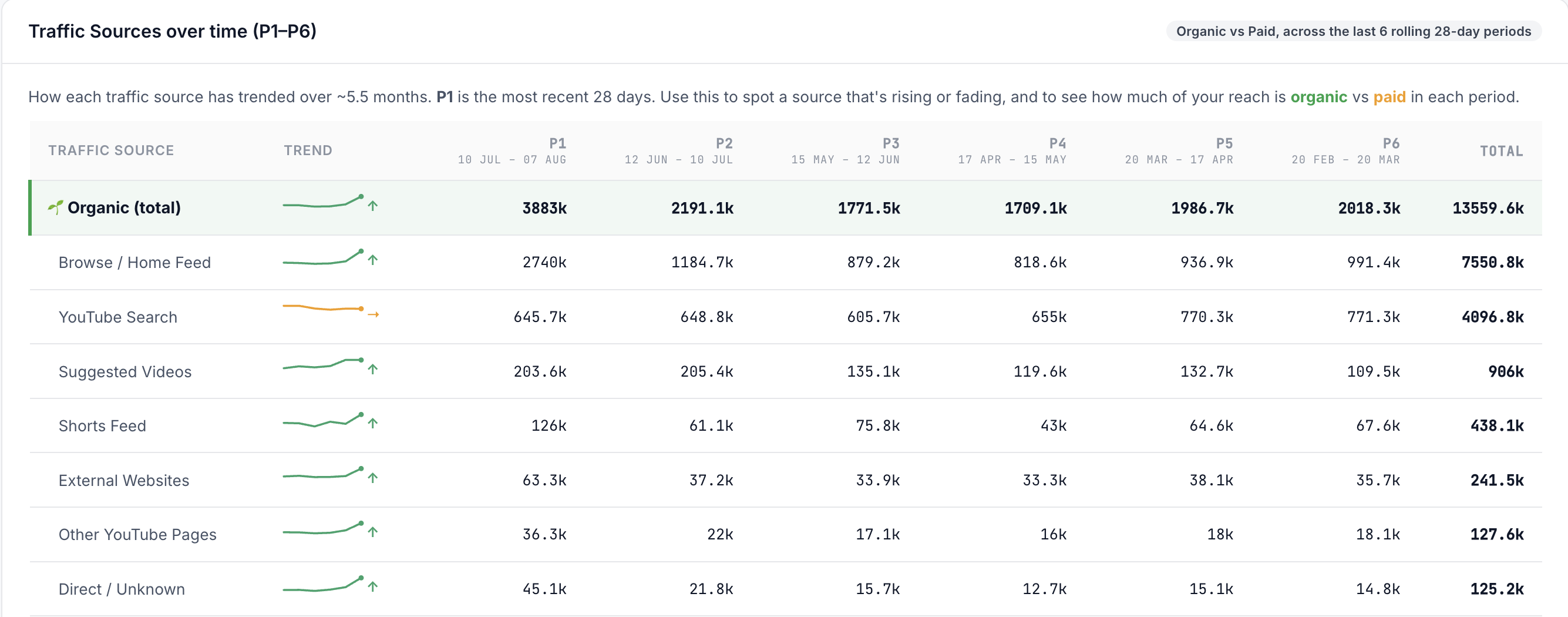
YouTube's ranking system in 2026 rewards session watch time, not just individual video watch time. That is why playlists matter so much. A viewer who watches your cost video and then your patient story back-to-back tells the algorithm you are a serious channel for that specialty. Ranking follows session behaviour.
What are the NMC and DPDP Act rules for showing patients on YouTube?
Direct answer: Under National Medical Commission advertising rules for registered medical practitioners, doctors cannot solicit patients directly or claim superiority. Under the Digital Personal Data Protection Act 2023, showing an identifiable patient on video requires clear consent for that specific purpose. Practical rule: get written and video-recorded consent that names YouTube, Instagram and Meta platforms explicitly.
Three practical guardrails our compliance team applies to every hospital YouTube channel we run:
- Doctors on video must speak about procedures, techniques and outcomes in educational language. They cannot say "we are the best" or promise cure rates. Comparative superlatives against other hospitals are a red line.
- Patient consent must be specific. A generic in-patient consent form does not cover YouTube. You need a separate release that names the platforms, states the geographies the content will run in, and includes a clear option for the patient to revoke consent later.
- Before-after imagery — especially in cosmetic, dental, hair transplant, dermatology and IVF — needs the patient's separate dated consent and should never be positioned as a guaranteed outcome.
The DPDP Act's data principal rights mean a patient can ask for a video to be taken down later. Build a takedown workflow into your channel process from day one, not as a legal afterthought.
How do AI Overviews change YouTube discovery for medical tourism?
Direct answer: Google's AI Overviews and generative answers on Perplexity, ChatGPT search and Gemini are now pulling YouTube video transcripts as citation sources for medical tourism queries. A video with a clean transcript, chapter markers and a question-format title is three to five times more likely to be cited than a text-only page on the same topic.
What this means in practice. A family in Nairobi asks Gemini "what is the average cost of a knee replacement in India for a foreign patient". The AI Overview may quote a two-line answer straight from your YouTube video transcript and link to the video. That is a new discovery surface that did not exist two years ago and it is being under-used by almost every Indian hospital we audit.
To be citation-eligible, your video needs three things. First, an accurate closed caption file, uploaded manually, not the auto-generated one. Second, chapter markers with question-format labels like "How long does recovery take" and "What is the cost range in Indian rupees". Third, a description that opens with a plain-English one-paragraph answer to the video's central question.
YODA's script workflow embeds this AI Overview readiness at the script stage itself. Every doctor script for a YODA-managed channel is pre-structured with question-heading segments, numeric answers stated explicitly on camera and on caption, and a closing summary the AI extractor can lift cleanly.
How much should Indian hospitals budget for medical tourism YouTube?
Direct answer: A serious medical-tourism YouTube channel needs roughly Rs 1.8 lakh to Rs 4 lakh per month at production pace to produce 6 to 12 long-form videos plus 12 to 20 Shorts monthly, with subtitles in three languages and full channel-side SEO. Below Rs 1.5 lakh per month, you are running a hobby channel, not a lead engine.
The honest breakdown for a Growth-tier YouTube programme in 2026 for an Indian hospital chasing international patients:
| Line item | Monthly cost (INR) | Notes |
|---|---|---|
| Content strategy, script, SEO | Rs 55,000 - 90,000 | Cluster planning, keyword mapping, doctor briefing |
| Production, 6 to 12 long-form videos | Rs 60,000 - 1,40,000 | Small crew; doctor time is separate |
| Editing, subtitles in 3 languages, thumbnails | Rs 35,000 - 65,000 | Human-checked captions, not auto-generated |
| Shorts production, 12 to 20 monthly | Rs 25,000 - 45,000 | Cutdowns plus originals |
| Channel management, analytics, community | Rs 20,000 - 40,000 | Comments moderation, playlists, end screens |
This lines up cleanly with how we price at ICG. Our Foundation retainer at Rs 49,999 per month works for hospitals just starting a channel. Growth at Rs 74,999 covers a full specialty programme with subtitles and Shorts. Scale at Rs 99,999 makes sense for tier-1 multispecialty chains running two or three specialty verticals in parallel with separate playlist teams.
The 70-30 model applied to YouTube
Every ICG YouTube retainer follows our 70-30 fixed-variable structure. Seventy per cent of the monthly fee is fixed and pays for strategy, production and channel operations. Thirty per cent is tied to a 12-month channel target agreed upfront — qualified international enquiries, watch hours, or subscriber growth, whichever is the leading indicator for your specialty. The agency has real skin in the game for the outcomes you actually care about, not just for shipping video files on a calendar.
How do you measure ROI on medical tourism YouTube content?
Direct answer: Track four metrics — qualified international enquiry volume, cost per qualified international enquiry, average watch time on decision-stage long-form videos above six minutes, and share of YouTube traffic in your hospital's total international enquiry mix. Vanity metrics like subscribers and total views are secondary.
A cardiac and orthopaedic hospital in Chennai we started working with in early 2026 tracks this monthly. Baseline before the programme: 40 international enquiries per month across all channels. After 90 days of a structured YouTube programme with 22 long-form videos published and subtitle tracks in English, Bangla and Arabic: 92 enquiries per month, of which 38 could be attributed to a YouTube video watch, with an average of 11 videos watched per converting enquiry. That is the signal to look for. Not "we hit 100k subscribers".
Cross-channel attribution is genuinely the hard part. A patient watches your YouTube video, saves your Google Business Profile listing managed through Angryturtle, scrolls your Instagram grid tracked in Prism Pulse, sees a retargeting ad served through Meta Catalyst IQ and informed by Prism Spy competitor intel, then finally messages your WhatsApp desk. Every touchpoint matters. AtomCRM, our healthcare CRM at Rs 50,000/- setup + Rs 799/- per telecaller, is built to stitch these touchpoints into a single patient journey view so the marketing team can see which video actually earned the enquiry.
The ICG way of running a medical tourism YouTube channel
Our approach differs from a general-purpose video agency in three specific ways. First, every script is built by a medical content specialist working directly with the doctor, not adapted from a marketing brief written by someone who has never scrubbed in. Second, every video is structured for AI Overview extraction from the script stage — question headings, direct answers in the opening line, human-checked transcripts, chapter markers with question labels. Third, we treat YouTube as one channel inside a stitched funnel that also includes Google Business Profile through Angryturtle, Meta and Instagram Ads through Meta Catalyst IQ, competitor Meta ad intelligence through Prism Spy, Instagram analytics through Prism Pulse, and CRM through AtomCRM. The videos never sit in a silo.
For hospitals also running heavy operations, HealthPro 360 at Rs 14,999 per month handles the RCM and EHR overlay so the marketing team is not fighting the operations team for patient data every month. That single stack — YODA plus Angryturtle plus Meta Catalyst IQ plus AtomCRM plus HealthPro 360 — is how a serious medical value travel programme runs in 2026.
FAQ


How many months does medical tourism YouTube take to generate international enquiries?
A structured channel with 6 to 12 long-form videos and Shorts published monthly typically starts producing traceable international enquiries in month three or four. Full impact — measurable share of total international enquiries — usually shows in months six to nine. Below three videos a month, you should not expect enquiry lift.
Which languages should we subtitle medical tourism videos in for the Indian market?
English is the baseline. Add Bangla if you are targeting Bangladesh, which is India's largest medical value travel source market. Add Arabic for Gulf and Iraq traffic, Swahili or French for East and West Africa, and Russian for CIS countries. Human-checked subtitles convert far better than auto-generated captions.
Does the DPDP Act require special patient consent for a YouTube video?
Yes. A generic in-patient consent form does not cover YouTube publication. Under the Digital Personal Data Protection Act 2023, you need a specific, dated, written and video-recorded consent that names YouTube and any social platforms, states the geographies the content will run in, and includes a revocation option. Build a takedown workflow into your channel process from day one.
Should Indian hospitals invest in YouTube Ads or focus on organic content?
Both, in sequence. Publish six to eight months of organic long-form and Shorts first to build a shelf. Then layer YouTube Ads on top, using your best-performing organic videos as ad creative. Ads without an organic base burn budget. Organic without ads leaves reach on the table by month six.
What is the best video length for international patients researching hospitals in India?
Long-form decision videos work best at 6 to 12 minutes. Under six minutes rarely earns trust for a serious procedure. Over 14 minutes loses viewers unless the video is a full patient journey. Shorts should sit at 30 to 55 seconds for maximum completion rate on the mobile feed.
How do AI Overviews affect medical tourism YouTube discovery in 2026?
AI Overviews on Google, Perplexity, ChatGPT search and Gemini now cite YouTube video transcripts as sources for medical tourism queries. Videos with clean human-checked transcripts, chaptered timestamps with question-format labels, and question-style titles are three to five times more likely to be pulled into an AI answer than a plain text page on the same topic.
Can smaller Indian hospitals compete with large chains on medical tourism YouTube?
Yes, and often more effectively. Specialty focus beats scale on YouTube. A single-specialty IVF centre in Pune or an oncology day-care in Ahmedabad publishing 8 to 10 focused doctor videos per month outranks generic multispecialty channels on specific procedure searches. Depth beats breadth in specialty video search.
What is the biggest mistake Indian hospitals make on medical tourism YouTube?
Spending the annual video budget on one glossy brand film instead of 15 to 20 doctor-led explainer videos. The brand film gets watched twice in a boardroom presentation. The explainer videos work for years, rank on search, get quoted by AI Overviews, and produce actual patient enquiries. Cut the anthem film. Fund the shelf.
Book a free 30-minute Brand & Growth Diagnostic.
It's a working session, not a sales pitch — you leave with a written root-cause analysis you can act on, whether or not you engage ICG.
Questions readers ask
about this topic.
The three platforms
behind every ICG engagement.
Beacon
CAPI middleware that fixes Event Match Quality, translates CRM statuses to Meta-standard events, dedups across channels.
Agency OS
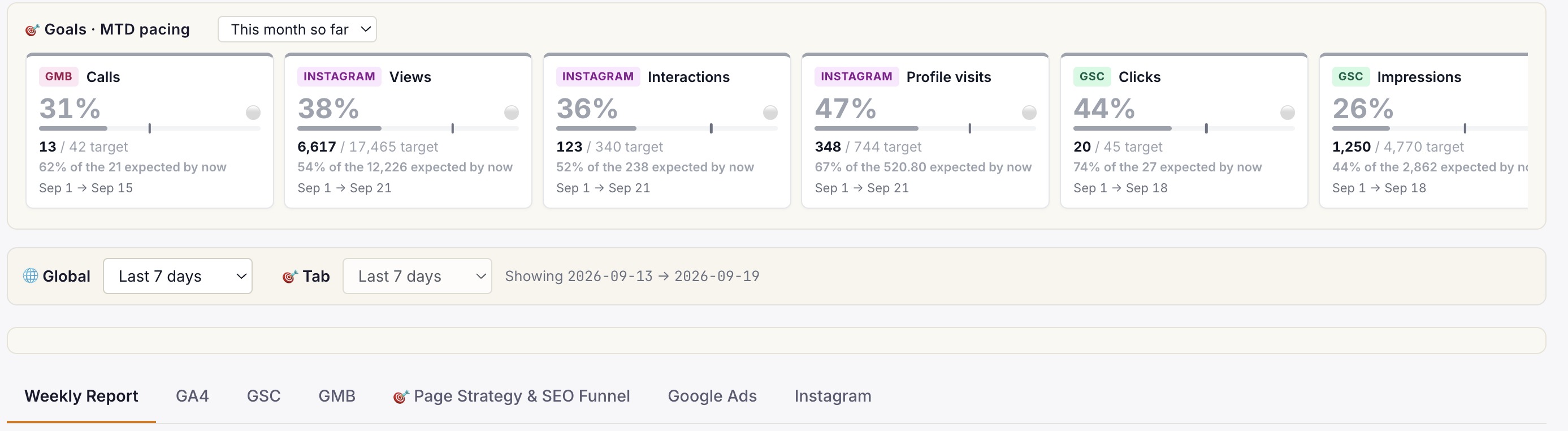
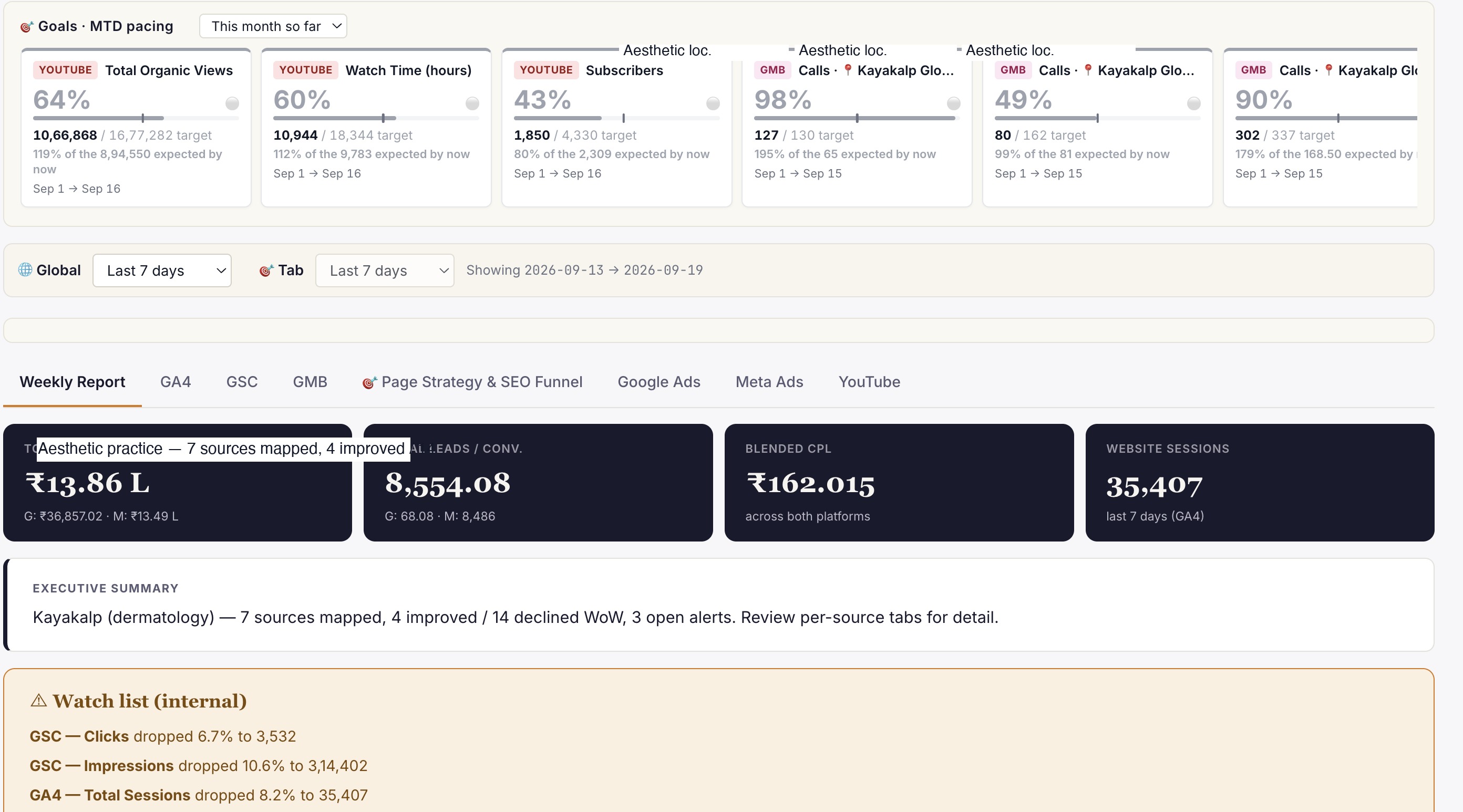
Live client dashboard. GSC, GA4, Google Ads, Meta Ads, IVR calls in one view. Login anytime, not monthly.
Phoenix
Clinic revenue intelligence over your PMS. Daily action queue: Prevent Loss, Maintain & Engage, Grow Revenue. Multi-centre rollout.
Or book a free 30-min audit to see all three in action on your account.
Healthcare brands
that already run on ICG.
A representative slice of the 150+ healthcare brands ICG has delivered for across India. Most engagements remain under NDA.


What ICG clients say · on video.
"Scale up of organic channels and business consulting. ICG has absolute domain authority in their field."
"Working with ICG transformed how we acquire IVF patients in Gurgaon. They understand the fertility journey from inquiry to consult..."
"What Ichelon accomplished — they got all my ideas and worked over 3-4 months to create an amazing, super-customised website."
Need help operationalising this?
Every ICG service is healthcare-only, NMC + DPDP-aware, and built around the patient-research patterns that drive Indian healthcare growth in 2026.
Every practice welcome — packages from ₹20,000/mo.
Goals-Driven engagements · Performance-Linked Payout Models available
More from
ICG.
Five trends shaping Indian healthcare marketing through 2027: AI-first patient research, Conversions API adoption, ABDM discovery, the AEO w...
Healthcare AIO is the discipline of getting your clinic or hospital cited inside Google AI Overviews, ChatGPT and Perplexity answers — not j...
Conversational-search advertising places brand messages inside AI chat answers — ChatGPT, Perplexity, Copilot — rather than beside a results...
Stop guessing.
Book a Diagnostic.
30 minutes. Free. With the AI-powered healthcare-only marketing agency 150+ brands already run on. No slides, no pitch, no hard close.


