


Instagram Influencer vs Doctor-Created Content: Indian Healthcare Buyer Guide
A feature-by-feature comparison of Instagram influencer content and doctor-created content for Indian hospitals, clinics and pharma brands, mapped against NMC guidelines, DPDP Act 2023, cost per reach, and appointment conversion.
No pitch. Written root-cause diagnosis. AI-powered, healthcare only.
Direct answer
A feature-by-feature comparison of Instagram influencer content and doctor-created content for Indian hospitals, clinics and pharma brands, mapped against NMC guidelines, DPDP Act 2023, cost per reach, and appointment conversion.
TL;DR

Written for marketing directors at 100-bed hospitals, single-clinic owners, IVF and dental chain leads, and agency evaluators trying to allocate a finite Instagram budget between paid creator amplification and doctor-led owned content.
TL;DR
- Instagram influencer content buys you reach and cultural relevance fast, but it carries regulatory risk under ASCI health guidelines and does very little for search or long-term equity.
- Doctor-created content buys you trust, NMC-alignment, and E-E-A-T, and it compounds into YouTube, Google Search and GBP surfaces, but it is slower and needs a production pipeline.
- For Indian healthcare buyers, a 70-30 split favouring doctor-led owned content almost always outperforms an influencer-heavy plan on cost per qualified appointment beyond month three.
- Category tiers matter more than the binary: a celebrity influencer, a health micro-influencer, a solo doctor creator, and a hospital doctor panel behave very differently on cost, compliance and conversion.
- Use influencer content to seed awareness in a launch window; use doctor content to hold the category once the launch fades.
Table of Contents
- Why this comparison matters for Indian healthcare buyers
- The eight axes to compare on
- Main comparison table
- Per-axis deep dives
- Which approach fits which buyer
- How ICG helps you decide
- The 70-30 model when this becomes a retainer
- FAQ
Why this comparison matters for Indian healthcare buyers
Every marketing head at an Indian hospital or clinic has sat through the same pitch. A creator agency walks in with a slide showing 4 lakh followers, an aspirational reel loop, and a proposed rate card. On the same day, a content lead inside the hospital sends a WhatsApp of a paediatrician doing a two-minute vaccine explainer on a borrowed iPhone that just crossed 82,000 organic views. Both are labelled "Instagram content." They are not the same product.
The choice matters more in India than in most markets. The National Medical Commission's Professional Conduct Regulations have historically restricted how registered medical practitioners can market themselves, and the 2023 draft update tightened language around endorsement, testimonials and paid promotion by doctors. The Advertising Standards Council of India requires clear disclosures on paid health content and prohibits certain therapeutic claims by non-qualified voices. The Digital Personal Data Protection Act, 2023 changed how patient-derived content, before-after imagery and testimonial consent must be documented. Layer on top the Drugs and Magic Remedies Act for anything touching prescription medicine, and you have a compliance surface that most creator agencies simply do not price for.
The practical question, then, is not "influencer or doctor." It is: for a given rupee, at a given stage of the funnel, for a given specialty and buyer archetype, which content category returns the most qualified footfall without creating a regulatory or brand-safety incident? This guide answers that question feature by feature.
The eight axes to compare on
We rank content options for healthcare Instagram on eight axes. Each one is measurable and each one maps to a real line item in a hospital or clinic marketing plan.
- NMC and ASCI compliance headroom — how likely is the format to survive a regulator review or a competitor complaint?
- DPDP Act 2023 alignment — how easily can consent, patient anonymisation and data trails be maintained?
- Trust and E-E-A-T signal — how strongly does the content signal genuine medical expertise to a viewer and to Google?
- Cost per thousand reached (CPM economics) — how much do you pay to place the content in front of a target audience?
- Conversion to booked appointment — how well does the format move a viewer to a call or booking?
- Content velocity and scale — how many pieces per month can you sustainably ship?
- Long-term brand equity — what happens to the value of the content 12 and 24 months later?
- Cross-surface repurpose value — how well does the same asset travel to YouTube Shorts, long-form YouTube, Google Business Profile posts, blog embeds and WhatsApp broadcast?
Notice that only two of these eight axes are about Instagram itself. The other six are about compliance, economics and the wider surface area. That is the trap in most creator pitches — they optimise for the two Instagram axes and ignore the six that decide whether the money actually returns a patient.
Main comparison table
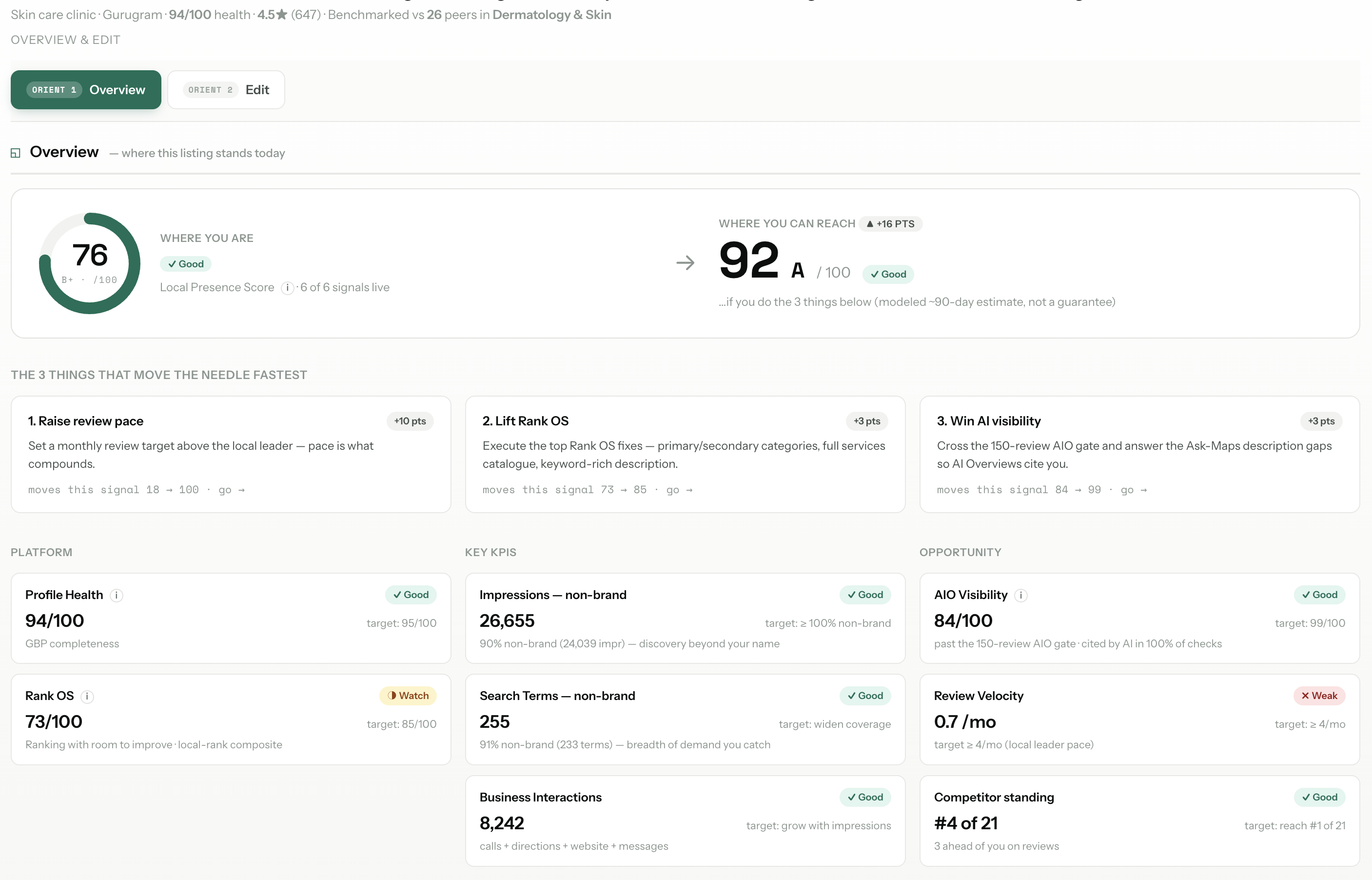
Four category tiers show up in most Indian healthcare Instagram plans. We compare them across all eight axes below. Read the columns as archetypes, not as vendors — inside each tier there is a range of quality.
| Axis | Celebrity / lifestyle influencer | Health micro-influencer (non-registered) | Solo doctor creator | Hospital doctor panel (institutional) |
|---|---|---|---|---|
| NMC / ASCI compliance headroom | Low. Cannot make therapeutic claims. Easy to breach with a script edit. | Low to medium. Fitness and nutrition are grey; anything clinical is risky. | High. Registered practitioner speaks within scope of specialty. | Highest. Institution vets script, disclosures and disclaimers. |
| DPDP Act 2023 alignment | Weak. Rarely handles patient data at all. | Weak. Consent trails are informal. | Strong when the doctor uses stock cases or anonymised imagery. | Strongest. Consent workflows already exist in the hospital. |
| Trust and E-E-A-T signal | Aspirational, not authoritative. Viewer discounts medical claims. | Moderate. Trusted for lifestyle, not for clinical decisions. | Very strong for the specialty of that doctor. | Very strong and transferable across specialties in the same brand. |
| CPM (paid amplification cost) | Highest fee, lower earned reach. | Middle fee, decent earned reach. | Zero creator fee, higher production cost. | Production cost only, amortised across many doctors. |
| Conversion to booked appointment | Weak. Follower intent is entertainment. | Weak to moderate. Depends on niche fit. | Strong. Viewer arrives with clinical intent. | Strongest. Institutional trust closes the loop. |
| Content velocity per month (sustainable) | 2 to 4 pieces. | 4 to 8 pieces. | 4 to 6 pieces per doctor. | 20 to 60 pieces across a panel. |
| 12-month brand equity | Decays fast when contract ends. | Modest carry-over. | Compounds heavily. | Compounds and becomes an institutional moat. |
| Cross-surface repurpose value | Low. Rights and likeness clauses restrict reuse. | Low to medium. Watermarking is common. | High. Owned rights, cross-cuts to YouTube, blogs and GBP. | Highest. Feeds YouTube long-form, AIO answers and internal training. |
Two patterns stand out. First, compliance and equity axes lean strongly toward doctor-led categories. Second, only the two "reach" axes — CPM headline fee and initial content velocity per creator — favour influencer categories in any meaningful way. That imbalance is why the finance office and the marketing office often disagree on this line item.
Per-axis deep dives
1. NMC and ASCI compliance headroom
The NMC's conduct regulations for registered medical practitioners restrict solicitation, testimonials that promise cures, and any content that could mislead. ASCI's influencer guidelines require prominent disclosure of paid partnerships and prohibit non-qualified voices from making therapeutic claims. When a lifestyle creator says "this hair-growth serum saved my scalp," you now carry two risks in one caption: an undisclosed material connection and a non-qualified therapeutic claim. Doctor-created content, when it stays inside the specialty of the practitioner and includes standard disclaimers, sits inside a much larger safe harbour. Hospital panel content sits inside the largest safe harbour of all, because scripts pass through the medical superintendent or compliance officer before recording.
2. DPDP Act 2023 alignment
The DPDP Act treats health data as sensitive personal data with strict consent, purpose limitation and breach-notification rules. Any Instagram content that features an identifiable patient, before-after imagery, or a testimonial that links a person to a diagnosis now needs written, informed, purpose-specific consent that the brand can produce on request. Influencer contracts rarely include this layer. Doctor-led content, filmed inside a hospital that already runs an OPD consent workflow, can extend that workflow into a media-consent form. That is a paperwork advantage that translates into a real cost of risk delta over 24 months.
3. Trust and E-E-A-T signal
Google's Search Quality guidance treats health information as Your Money or Your Life content, requiring the highest bar for expertise, experience, authoritativeness and trust. Instagram is not Google Search, but the same viewer psychology applies. A patient watching a reel about knee-replacement recovery discounts a lifestyle influencer's claim and accepts a Head of Orthopaedics' explanation. When that reel is then repurposed as a YouTube Short and a blog embed, the E-E-A-T signal carries into search rankings. Influencer content rarely earns this transfer because the byline does not carry medical authority.
4. Cost per thousand reached
The headline fee for a top-tier lifestyle creator in India runs from Rs 3 lakh to Rs 25 lakh per post depending on category and follower quality. Health micro-influencers typically sit between Rs 40,000 and Rs 3 lakh per post. Doctor-created content has no creator fee — the doctor is the brand — but it does carry a production cost of roughly Rs 8,000 to Rs 25,000 per finished reel when produced properly, plus the amortised cost of a script editor and a compliance reviewer. Once you add paid amplification (a Meta Ads spend of Rs 30,000 to Rs 2 lakh a month is typical for a growing clinic), the CPM comparison shifts further in favour of owned doctor content because the same amplification budget lifts an asset you fully own.
5. Conversion to booked appointment
This is where the two approaches diverge most sharply. Influencer reels drive vanity metrics — saves, shares, follower growth — but do not typically produce a measurable spike in appointment bookings for clinical services. A viewer who follows a lifestyle creator has entertainment intent. A viewer who watches a two-minute explainer from a cardiologist about chest-pain red flags has clinical intent, and a small percentage of those viewers will click through to book. Across our internal benchmarks on Indian healthcare accounts, appointment conversion from doctor-led reels runs three to eight times higher than from influencer reels for the same specialty spend.
6. Content velocity and scale
An influencer contract typically delivers two to four pieces per month per creator, gated by their content calendar. A single doctor with a coached workflow ships four to six pieces per month sustainably. A hospital panel of eight to twelve doctors, run through a shared production and compliance pipeline, can ship 40 to 60 pieces a month — and each piece has a specific specialty and a specific patient question behind it. Scale, in the doctor model, is a function of pipeline design, not creator negotiation.
7. Long-term brand equity
When an influencer contract ends, so does the equity. The follower base belongs to the creator, not to the brand. When a hospital ships 400 doctor-led explainers over 24 months, that library is a permanent asset. It shows up in the hospital's YouTube channel, in AI Overview answers on Google, in WhatsApp broadcasts to referring GPs, in orientation decks for new doctors, and in the training material for the front office. Ten years from now, the influencer reels are unusable. The doctor library is still working.
8. Cross-surface repurpose value
A single 90-second doctor reel filmed vertically can be re-cut into a YouTube Short, a horizontal explainer for the hospital's YouTube channel, a GBP post, a WhatsApp status, a blog embed, an AI Overview citation candidate, and a slide for an internal CME. Owned rights make that graph possible. Influencer contracts almost always limit usage to a defined window and defined surfaces. This is a hidden cost of the influencer route that shows up as either paying for extension rights or losing the asset entirely.
Which approach fits which buyer

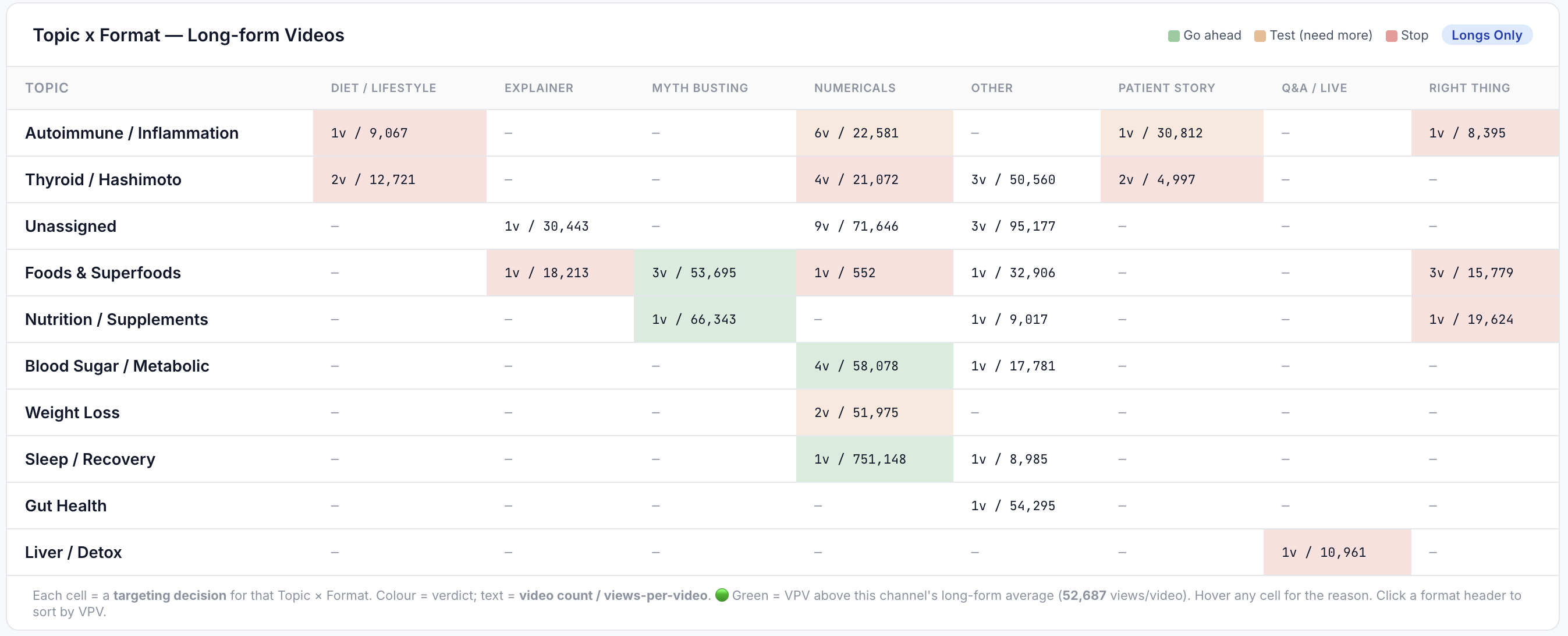
The right split depends on your archetype, your funnel stage, and your specialty mix. Four archetypes cover most Indian healthcare buyers who ask us this question.
Archetype 1: Single-doctor dental or aesthetic clinic in a Tier 1 city
Monthly marketing budget typically Rs 50,000 to Rs 2 lakh. Founder-doctor is the brand. The right allocation here is roughly 85 percent doctor-created content and 15 percent selective micro-influencer collaboration for smile-makeover categories where a real patient story with proper consent adds credibility. Celebrity creators almost never make sense at this budget band because a single post exceeds the monthly plan.
Archetype 2: 100-bed multi-speciality hospital in a Tier 2 city
Monthly marketing budget typically Rs 3 lakh to Rs 10 lakh, with cardiology, orthopaedics and obstetrics as the revenue anchors. The right shape is a hospital doctor panel spanning six to ten specialists, producing 40-plus reels a month, amplified through a Meta Ads budget of Rs 60,000 to Rs 2 lakh. Reserve 10 to 15 percent for occasional health micro-influencer partnerships when launching a preventive-health package. Skip celebrity creators unless you are launching a wing.
Archetype 3: Mid-tier IVF chain across three to six cities
Category is emotionally loaded, decision cycles are long, and trust is the only currency. Doctor-led content is not optional here — it is the entire strategy. Add carefully vetted patient-journey testimonials with explicit DPDP-compliant consent for the emotional-proof layer. Influencer content is almost always the wrong tool because the audience treats IVF creators as either sales or spectacle.
Archetype 4: Pharma or medical-device brand with a national footprint
Regulatory ceiling is the lowest of all four archetypes. The Drugs and Magic Remedies Act and Schedule H restrictions rule out most consumer-facing claims. The workable shape is doctor-created educational content in partnership with the brand, disclosed properly, plus condition-awareness campaigns that never name a molecule. Influencer content is rarely legally defensible unless it is a nutraceutical or a wellness adjacency.
How ICG helps you decide
ICG runs healthcare marketing for 150+ healthcare brands across dental, IVF, cardiology, orthopaedics, aesthetics, mental health, pharma and medical devices. We do not sell you influencer talent and we do not sell you a doctor-creator SaaS. We sit on your side of the table and design the split. That usually looks like a paid audit of your last four quarters of Instagram spend against booked appointments, a category-fit assessment against NMC, ASCI and DPDP, and a 90-day pilot on the mix we recommend, tracked in a shared dashboard.
Where we do bring product, we bring it neutrally. Our Instagram analytics stack surfaces which of your existing reels earned meaningful save-to-appointment behaviour so you double down on the format that already works. Our Meta Ads engine amplifies the winners with creative iteration cycles that ship weekly, not monthly. Our competitor Meta Ads intel layer shows which of your rivals is running which reel against which audience, which usually accelerates the strategy conversation by a full quarter. None of these tools change the answer to the doctor-versus-influencer question — they only make the answer cheaper to prove.
The 70-30 model when this becomes a retainer
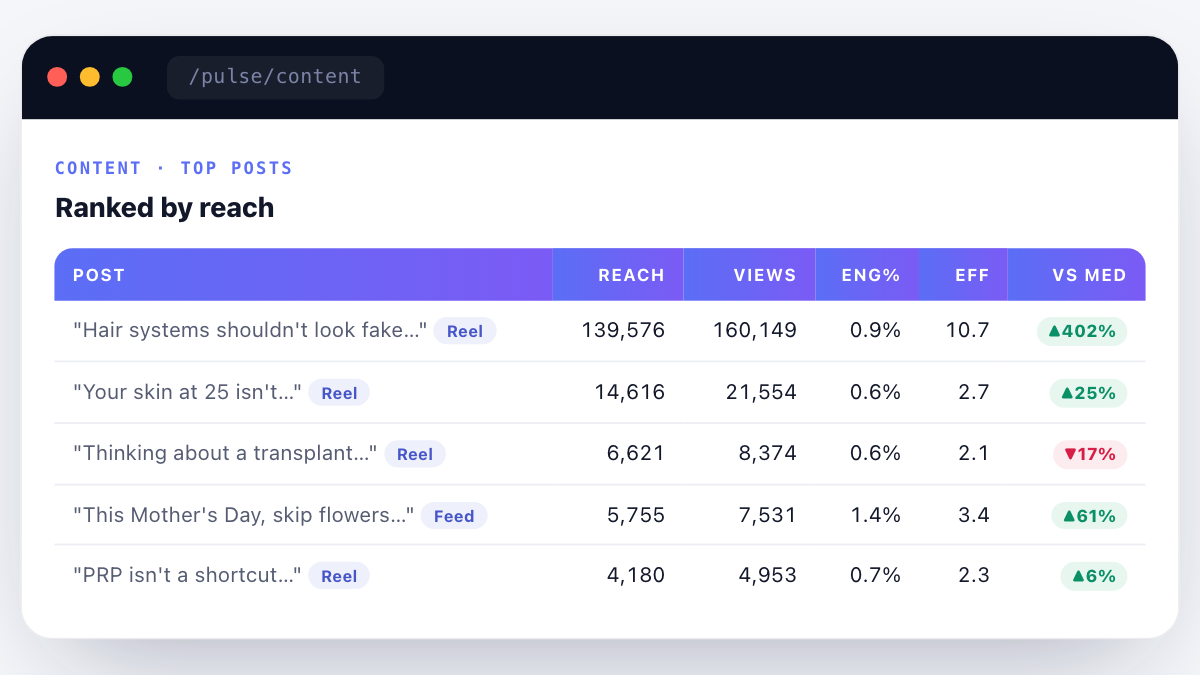
When the Instagram content plan becomes a retained engagement, ICG structures it under our 70-30 model. Seventy percent of the monthly fee is fixed retainer for the always-on work — doctor coaching, script editing, compliance review, production management, amplification and analytics. Thirty percent is performance-linked, tied to a metric your finance office actually respects: booked appointments attributed to Instagram, cost per qualified lead against a pre-agreed band, or specialty-level revenue lift depending on your reporting maturity.
Retainers start from Rs 20,000 per month and are custom-scoped, Goals-Driven engagements. Where Instagram is a large part of the mix, the fee sits inside the Meta Ads engagement. YouTube and AI-Overview production, which almost always ride on the same doctor library, follow the same Performance-Linked Payout Model. The split you actually spend depends on the audit and the archetype, not on a package sheet.
FAQ
Can a registered doctor in India legally appear on Instagram at all?
Yes. The NMC restricts solicitation and misleading claims, not education. A registered practitioner can publish factual, educational content within the scope of their specialty, with appropriate disclaimers, and can share the hospital or clinic affiliation. The line to watch is any content that promises outcomes, offers testimonials of cure, or crosses into paid endorsement of a specific product without proper disclosure.
Do we need written consent for every patient who appears in a reel?
Under the DPDP Act 2023, yes, if the patient is identifiable or if the content links them to a diagnosis, procedure or treatment outcome. Consent must be informed, specific to the media use, and retained in a form you can produce during a regulator inquiry. The safer default is to use stock footage or anonymised imagery unless the patient story is central to the message.
Is it cheaper to hire one big influencer or ten doctor-created reels?
For almost every Indian healthcare budget band under Rs 25 lakh a month, the doctor library is cheaper on a per-qualified-appointment basis after month three. Influencer spend often looks cheaper on a per-view basis in month one and much more expensive on a per-appointment basis by month six.
How many doctors do we need on a panel to make the pipeline economics work?
The break-even for a shared production, script and compliance pipeline sits at around five to six participating doctors. Below that, the fixed cost of the pipeline eats the savings. Above that, each additional doctor adds volume at a marginal cost, which is where the economics start compounding in your favour.
What happens to our influencer content if ASCI issues a notice?
ASCI enforcement typically starts with a takedown recommendation and can escalate through complaints to platforms and, for certain health categories, referral to the relevant regulator. The financial cost is usually the wasted spend and any renegotiated rights. The reputational cost, especially for a hospital brand, is harder to price and is the reason most legal teams prefer the doctor-led route.
Can we mix doctor content with influencer amplification?
Yes, and this is often the smartest hybrid. The doctor writes and appears in the content. A relevant health micro-influencer, with proper disclosure, shares or duets the reel to their audience. Editorial control stays with the hospital. This structure preserves compliance headroom while borrowing the influencer's reach curve.
Does doctor-created content actually help our Google rankings?
Indirectly, yes. The reel itself lives on Instagram, but the transcript, the same doctor as a byline on your blog, the YouTube version on your channel, the schema on your service pages, and the AI Overview citations that reference your named clinician are all lift factors for your organic presence. This is the compounding value the influencer route rarely provides.
How do we measure ROI on Instagram content for a clinical service line?
Move from vanity metrics to a three-layer view. Layer one is engagement quality — saves and shares, not likes. Layer two is intent handoff — profile visits, WhatsApp clicks, appointment-page views. Layer three is booked appointments attributed to Instagram, tracked in your CRM against a UTM or a call-tracking number. Most Indian hospitals stop at layer one, which is why the Instagram line looks unaccountable at budget-review time.
Where should a first-time Indian healthcare Instagram plan start?
Start with a four-doctor pilot from your existing panel, one reel a week per doctor, a compliance-reviewed script template, a modest amplification budget of Rs 30,000 to Rs 60,000 a month, and a 90-day scorecard. If the appointment-attribution numbers show a clear signal, expand the panel and layer selective influencer collaboration on top. If they do not, the audit will tell you exactly which axis is broken before you scale the spend.
Book a free Meta ads account audit.
Raman Soni's team pulls your account, checks CAPI/EMQ, reviews creative for NMC compliance, and shows where CPQL is leaking. 45 minutes, actionable output.
Questions readers ask
about this topic.
The three platforms
behind every ICG engagement.
Beacon
CAPI middleware that fixes Event Match Quality, translates CRM statuses to Meta-standard events, dedups across channels.
Agency OS
Live client dashboard. GSC, GA4, Google Ads, Meta Ads, IVR calls in one view. Login anytime, not monthly.
Phoenix
Clinic revenue intelligence over your PMS. Daily action queue: Prevent Loss, Maintain & Engage, Grow Revenue. Multi-centre rollout.
Or book a free 30-min audit to see all three in action on your account.
Healthcare brands
that already run on ICG.
A representative slice of the 150+ healthcare brands ICG has delivered for across India. Most engagements remain under NDA.


What ICG clients say · on video.
"Scale up of organic channels and business consulting. ICG has absolute domain authority in their field."
"Working with ICG transformed how we acquire IVF patients in Gurgaon. They understand the fertility journey from inquiry to consult..."
"What Ichelon accomplished — they got all my ideas and worked over 3-4 months to create an amazing, super-customised website."
Need help operationalising this?
Every ICG service is healthcare-only, NMC + DPDP-aware, and built around the patient-research patterns that drive Indian healthcare growth in 2026.
Every practice welcome — packages from ₹20,000/mo.
Goals-Driven engagements · Performance-Linked Payout Models available



More from
ICG.
Five trends shaping Indian healthcare marketing through 2027: AI-first patient research, Conversions API adoption, ABDM discovery, the AEO w...
Healthcare AIO is the discipline of getting your clinic or hospital cited inside Google AI Overviews, ChatGPT and Perplexity answers — not j...
Conversational-search advertising places brand messages inside AI chat answers — ChatGPT, Perplexity, Copilot — rather than beside a results...
Stop guessing.
Book a Diagnostic.
30 minutes. Free. With the AI-powered healthcare-only marketing agency 150+ brands already run on. No slides, no pitch, no hard close.


