


How to Choose a NABH Consultant in India: 2026 Buyer Guide
Choosing a NABH consultant in India for 2026? Compare programme scope, fee bands, red flags, preparedness scoring and the questions to ask before you sign.
No pitch. Written root-cause diagnosis. AI-powered, healthcare only.
Direct answer
Choosing a NABH consultant in India for 2026? Compare programme scope, fee bands, red flags, preparedness scoring and the questions to ask before you sign.
TL;DR

TL;DR: A consultant cannot make a hospital compliant. NABH accreditation measures what the hospital actually does — infection control practice, medication safety, documentation discipline, staff training, incident reporting — and a consultant can only build the system, train the staff and prepare the evidence for it. The practice underneath has to be real. Budget three separate costs, not two: NABH's own fee, the consultant's fee, and remediation. Be suspicious of anyone who guarantees the outcome.
Contents
- Which NABH programme you're actually applying for
- What preparedness actually looks like: the scoring framework
- Red flags: the guarantee nobody can give
- The fee table, and the two costs it doesn't cover
- The accreditation-stage sequence and the cycle it sits inside
- Which kind of NABH consultant actually fits your hospital
- FAQ
Which NABH programme you're actually applying for
Choosing a NABH consultant starts with a decision the hospital has to make first, before any consultant enters the conversation: which programme are you actually applying for. NABH runs distinct programmes with genuinely different requirements. Entry-level certification is a materially smaller undertaking than full hospital accreditation, and there are separate standards again for small healthcare organisations, clinics, dental facilities and other categories. The nabh entry level certification process in particular is built around a fixed, published fee schedule and a defined scope, which is one reason it's the programme most first-time applicants start with.
Getting the scope wrong wastes money and months. A hospital that hires a consultant for full accreditation when entry-level certification would have matched its size and ambition pays for work it didn't need. A hospital that goes the other way — treating entry-level certification as the finish line when its real goal is full NABH accreditation — ends up redoing documentation it thought was done. NABH's own entry-level certification programme page confirms the fee structure and the certification's two-year cycle; it doesn't itself lay out every requirement of the other programmes, so treat comparisons between programmes as directional rather than exhaustive until you've read the specific standard your hospital falls under.
This is a decision the hospital has to make before it can even write a useful brief for a consultant, because "help us get NABH accredited" means something different depending on which standard applies.
What preparedness actually looks like: the scoring framework
Three consultants can all say "full support" and mean three different scopes of work. One means documentation and a folder of templates. Another means documentation plus staff training plus a genuine pre-assessment audit. The third means all of that plus a plan for what happens after the certificate arrives. The words on the proposal don't tell you which is which — a scoring exercise does.
Score each candidate 0, 1 or 2 against the following, and total them against a stated maximum of 16.
Documentation and system-build capacity
- Experience with your specific programme. 0 if they can't name which programme or standard edition the quote covers. 1 if they name it but haven't worked on it recently. 2 if they've run it for a hospital of comparable size in the last two years.
- Genuine gap analysis before quoting. 0 if the quote was written without visiting the hospital. 1 if a walkthrough happened but no written gap report followed. 2 if a documented gap analysis preceded the number they gave you.
Assessment and compliance experience
- Track record of assessments actually passed, not just documentation produced. 0 if they can't answer. 1 if they cite general experience. 2 if they name specific completed engagements and the outcome.
- Transparency about what your own staff must still do. 0 if the pitch implies the consultant does the work. 1 if it's mentioned in passing. 2 if it's written into the proposal as a defined staff commitment.
- Whether training is included or documentation-only. 0 for documentation-only with no training line item. 1 for training offered as an add-on. 2 for training built into the base scope.
Sustainability and post-certification support
- Designed to survive surveillance and re-accreditation, or built only to pass one assessment. 0 if the proposal stops at the assessment date. 1 if it mentions ongoing support vaguely. 2 if it defines what happens in year two and beyond.
- Remediation guidance included or excluded. 0 if remediation (equipment, signage, fire safety, biomedical waste handling, staffing ratios) is explicitly out of scope with no referral. 1 if it's flagged as the hospital's separate problem to solve. 2 if the consultant scopes remediation planning as part of the engagement, even if execution is separate.
| Total score | What it means |
|---|---|
| 12-16 | The candidate mostly needs execution support — your hospital is close to ready and the consultant's job is finishing what's already underway. |
| 6-11 | A mixed picture — press on the specific criteria that scored 0 before signing anything. |
| 0-5 | The hospital needs a consultant who will start from a genuine gap analysis and build training from zero, not one who assumes the groundwork is already there. |
A hospital walking into these conversations with nabh consultant india selection already narrowed to two or three names will still find the scoring useful — it's a way to compare quotes that all sound identical on paper.
Red flags: the guarantee nobody can give
Start with the caveat, because it changes how you should read everything else in this section: no consultant controls the judgment of the NABH assessor who eventually walks your hospital's floors. That single fact is why a guarantee of outcome is the clearest red flag in this entire process.
Ask directly: "Will you guarantee we pass?" A correct answer is a qualified no — something like "we can guarantee the system is built and the evidence is prepared; the assessment outcome depends on what the assessor finds on the day." A flat "yes, guaranteed" is either meaningless marketing or it implies something worse, like an inappropriate relationship with an assessor that no legitimate consultant would admit to and no hospital should want anywhere near its accreditation.
A few smaller flags worth watching for alongside the guarantee:
- Refusal to name which programme or standard edition the quote actually covers.
- No mention anywhere of what happens after the certificate — surveillance visits, re-accreditation cycles, ongoing maintenance of the system.
- Documentation delivered with no accompanying staff training, so the binder exists but nobody on the floor knows what's in it.
The fee table, and the two costs it doesn't cover
₹21,000 is what NABH charges a hospital with up to 5 beds for entry-level certification — and it is the only genuinely published figure in the whole NABH accreditation cost India question, and it's worth walking through in full before talking about the two costs that number does not include.
NABH's own entry-level certification programme page publishes a fee schedule by bed slab, for a two-year certification cycle: ₹21,000 up to 5 beds, ₹40,000 for 6-20 beds, ₹80,000 for 21-50 beds, ₹1,60,000 for 51-100 beds, ₹2,00,000 for 101-300 beds, ₹2,00,000 for 301-500 beds, and ₹2,50,000 for 501 beds and above. A discounted fee is quoted for the same slabs — ₹30,000, ₹48,000, ₹96,000 and ₹1,20,000 for the lower bands — until 30 September 2026, and there's a flat ₹15,000 focus-assessment fee that applies regardless of bed count. Confirm those figures and that date are still current at NABH's own source before relying on them, since the discount window is close to the present as you're reading this.
Here's the distinction that trips up most first-time buyers: this fee table is the accreditation body's fee. It is not the consultant's fee. NABH charges the hospital directly for the certification process itself; the consultant who helps you prepare for it charges separately, on top of that. Conflating the two is probably the single most common budgeting mistake a hospital makes going into this.
The third cost is usually the largest and it's the one nobody quotes upfront: remediation. A gap analysis routinely turns up equipment gaps, signage that doesn't meet the standard, fire safety shortfalls, biomedical waste handling that needs rework, staffing ratios below what's required, records systems that need rebuilding, and sometimes physical modifications to the building itself. None of that is bounded by a published schedule — it depends entirely on how far the hospital's starting practice is from what the standard requires. A hospital that budgets only NABH's fee and the consultant's fee has budgeted the smallest of the three costs and left the largest one unaccounted for.
Two related pages on hospital setup cost cite this same NABH fee table if you want the full picture alongside construction and equipment budgeting — oncology centre setup cost in India and cardiac hospital setup cost in India are due to publish alongside this one.
The accreditation-stage sequence and the cycle it sits inside
Each stage in the accreditation process depends on what the last one produced, which is why the whole thing resists being compressed into a fixed calendar. Gap analysis has to happen before documentation and system build can start, because you can't write procedures for a gap you haven't identified. Documentation and system build has to be substantially in place before staff training makes sense, because training people on a system that doesn't exist yet just wastes their time. Staff training then feeds internal audit, which is the hospital's own check on whether the system holds up under scrutiny before an outsider sees it. Only after internal audit closes out its findings does the application to NABH make sense, and the assessment itself follows the application. Closure of non-conformities — fixing whatever the assessor flags — is the final stage, and it can loop back to earlier stages if the gaps found are substantial.
That's why nobody can honestly hand you a fixed nabh accreditation timeline in months upfront. The sequence's total length depends entirely on the size of the gap a hospital starts with — a hospital that's already close to standard moves through these stages quickly, and one starting from a weak documentation base and thin staff training moves through them slowly, sometimes cycling back through a stage more than once.
The cycle doesn't end at the assessment either. NABH certification carries surveillance visits and a re-accreditation requirement, so a system that exists only in a binder produced for one assessment fails at the next cycle. The question worth asking any consultant is what their engagement covers after the certificate arrives — do they disappear, or is there a plan for the surveillance visit that's coming.
Which kind of NABH consultant actually fits your hospital
One honest note before the archetypes below: ICG publishes this page and advises healthcare clients on marketing and growth. ICG is not a NABH consultancy and doesn't appear among the options here. Accreditation status affects a hospital's empanelment and referral position, which is a marketing and growth question — that's the reason ICG is writing this at all, and nothing more is claimed than that. If you're separately evaluating marketing support, our framework for choosing a healthcare marketing agency covers that decision on its own terms.
Full-service NABH consultancy. This is the highest-cost, most complete option, and it earns that cost when a hospital has no internal quality function at all and needs someone to run gap analysis, documentation, training and assessment prep end to end. It suits hospitals attempting full accreditation for the first time, where the internal team genuinely doesn't know what "good" looks like yet. When this fails: when the hospital treats the consultancy's presence as removing its own responsibility for the underlying practice, and lets the floor drift away from what the paperwork says.
A hospital that has already been through one failed survey often finds the most value in a retired-assessor individual consultant — someone who has sat on the other side of the table and knows exactly what an assessor looks for, at a fraction of a full consultancy's cost. This fits a hospital that has most of the system built already and needs a sharp, experienced eye on the specific gaps that sank the last attempt. When this fails: when the hospital's gaps are broad rather than narrow, and one person's time simply isn't enough to rebuild documentation, retrain staff and prepare evidence across every department at once.
Someone on payroll owns the system daily rather than visiting monthly, which changes what gets caught between assessments — that's the case for an in-house quality manager, and it's the only archetype here that persists past the certificate. A dedicated hire notices a slipping practice in week three rather than at the next scheduled visit, and can carry institutional memory through re-accreditation cycles that outside consultants restart from scratch on. This works for hospitals with enough scale to justify a full-time role and the internal appetite to build quality as a permanent function rather than a project. It's also the honest answer to the nabh consultant vs in-house quality manager question that smaller hospitals ask most often — the choice usually comes down to whether the hospital is large enough to keep someone busy on this full-time. When this fails: when the hospital is too small to justify a full-time hire and the role becomes part-time-in-name-only with no real authority to push back on department heads.
The caveat comes before the recommendation on this last one: if the practice on the floor doesn't match the paperwork, a documentation-only vendor produces exactly the outcome this whole page warns against — a complete, well-formatted binder that has nothing underneath it. This archetype can still be the right, cheaper choice for a hospital that already has strong internal practice and genuinely just needs help translating existing routines into the specific documentation format NABH expects. When this fails: when the hospital is hiring the vendor precisely because its practice isn't there yet, and hoping the paperwork will somehow cover for that.
None of these four is automatically the right answer. The right one depends on how much of the underlying practice already exists inside the hospital and how much of it still needs to be built.
FAQ
Can a NABH consultant guarantee accreditation? No, and anyone who says otherwise should be treated as a red flag rather than a selling point. NABH assessors evaluate the hospital's actual practice, and no consultant controls that judgment. A consultant can prepare documentation and train staff, but the outcome depends on what the assessor finds on the day.
What is NABH's fee versus the consultant's fee? NABH charges the hospital directly, on a published schedule that runs from ₹21,000 for up to 5 beds to ₹2,50,000 for 501 beds and above, plus a flat ₹15,000 focus-assessment fee. The consultant's fee is separate and isn't published anywhere — get it in writing before signing, since it's the number most often left vague in early conversations.
Do we need a consultant at all, or can an in-house team manage it? It depends on scale and existing gap. A hospital with enough size to justify a full-time quality hire and a reasonably strong starting practice can often manage with an in-house quality manager. A hospital with a broad gap between current practice and the standard, or one attempting accreditation for the first time, usually benefits from outside expertise at least for the first cycle.
What happens after we're accredited — is the work over? No. NABH accreditation carries surveillance visits and a re-accreditation requirement, so the system has to keep functioning after the certificate is issued, not just on assessment day. A system that exists only in a binder tends to fail at the next cycle.
How long does entry-level NABH certification actually take? There's no fixed timeline that applies to every hospital — the process runs through gap analysis, documentation and system build, staff training, internal audit, application and assessment, and each stage depends on the one before it. A hospital close to the standard already moves through faster than one starting from a wide gap.
What's the difference between entry-level certification and full accreditation? Entry-level certification is a smaller, more defined undertaking with its own published fee schedule and standard. Full hospital accreditation is a larger undertaking with broader requirements. Choosing between them is the first decision a hospital has to make, before it can even brief a consultant properly.
What should a NABH consultant's proposal include before we sign? Look for a documented gap analysis that preceded the quote, a defined training component rather than documentation alone, clarity on what stays the hospital's own responsibility, and some statement of what support continues after the assessment. A proposal missing all four is a proposal that hasn't actually looked at your hospital yet.
Is the discounted NABH fee window still open? NABH's entry-level certification page quotes a discounted fee running until 30 September 2026. Confirm that date directly on NABH's own page before budgeting around it, since windows like this can close or extend without much notice.
Reviewed by: Abhash Kumar, Co-Founder, Strategy
If your hospital is separately evaluating how accreditation status affects patient acquisition and empanelment, ICG's benchmark data across active healthcare engagements is drawn from 46 active healthcare client engagements over a rolling 12-month window (Jul 2025 to Jul 2026) across Delhi NCR, Mumbai, Bangalore, Chennai, Hyderabad and Kolkata, last verified 2026-07-26 — relevant to hospitals in our industries/hospitals coverage thinking about accreditation as a growth lever rather than a compliance checkbox alone.
Six mistakes hospitals make when hiring a NABH consultant (and how to avoid them in 2026)
Most NABH engagements that stall don't fail on the standard — they fail on how the consultant was scoped in the first place. After sitting in on scoping calls across hospital groups and single-site facilities, the same six patterns repeat. Treat this as a pre-signing checklist before your Letter of Intent goes out.
- Buying a template pack instead of an operating rhythm. A binder of SOPs isn't preparedness. Ask for the consultant's weekly cadence — who runs the mock rounds, who owns non-conformity closure, and how QIP data is reviewed month-on-month.
- Assuming the consultant will fix clinical culture. Infection control, medication safety and patient identification live with your clinical leads. The consultant designs the system; your CMO and Nursing Superintendent own the practice.
- Signing without a written scope for post-Assessment support. The 60-90 day window after Final Assessment is where non-conformity closure lives. If it's not costed in, you'll be renegotiating under pressure.
- Ignoring digital readiness. HIS logs, medication reconciliation records, and incident reporting trails are what assessors sample. A consultant who can't read your HIS is a consultant who'll surprise you at Final.
- Confusing Entry-Level with Full Accreditation cost curves. Entry-Level is not a discount version of Full — the gap between the two is where most rebadging projects lose 6-9 months.
- No named accountability on the consultant side. Ask which senior assessor-empanelled professional will actually attend your mock rounds — not just sign the proposal.
The five questions to ask on the first call
- Which NABH programme have you closed in the last 12 months, and can we speak to the Quality Head?
- What does your weekly on-site or virtual cadence look like between LOI and Final Assessment?
- How do you handle non-conformity closure — flat fee, retainer, or T&M?
- What's your position on digital evidence (HIS extracts, e-MAR, incident logs)?
- Who from your team is assessor-empanelled, and will they be on our mock rounds?
Getting clear answers here saves the six-figure surprise later. If you'd like a second pair of eyes on a proposal before you sign, WhatsApp Rohit — we run a 30-minute review as part of our Client Elevation Programme onboarding. For hospitals already accredited and preparing for the surveillance cycle, our NABH surveillance and reassessment playbooks cover the sampling patterns assessors are using in 2026.
Book a free 60-minute NABH readiness diagnostic.
Adrito Basu (15+ years, NABH specialist) walks through your facility's current gaps and the fastest path to certification.
The three platforms
behind every ICG engagement.
Beacon
CAPI middleware that fixes Event Match Quality, translates CRM statuses to Meta-standard events, dedups across channels.
Agency OS
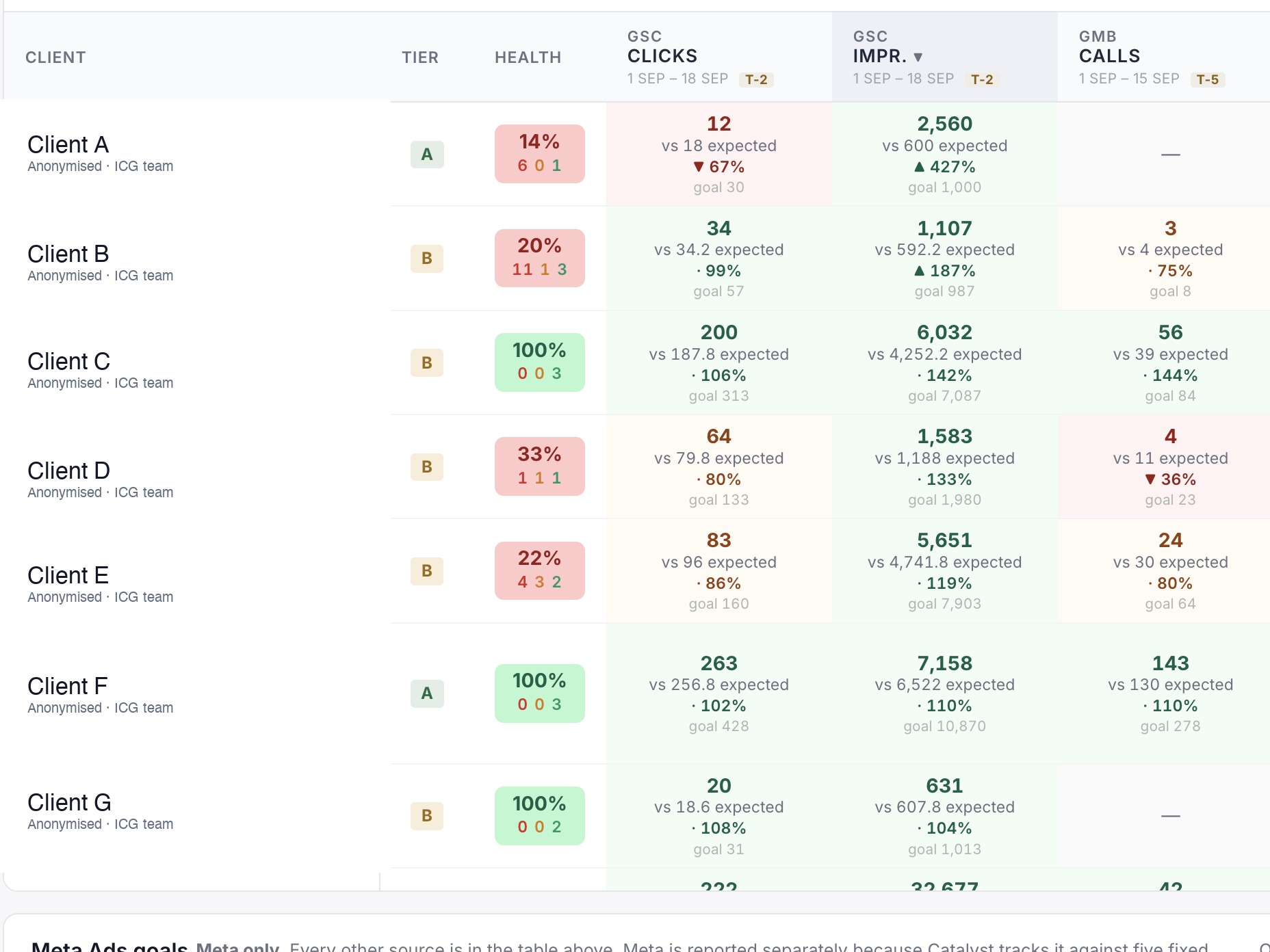
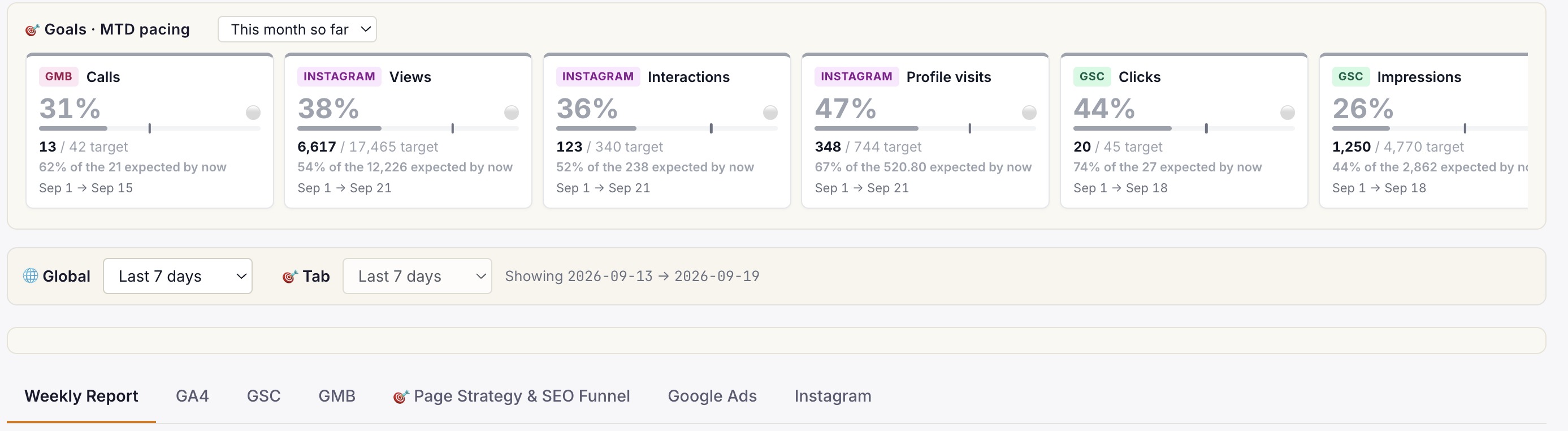
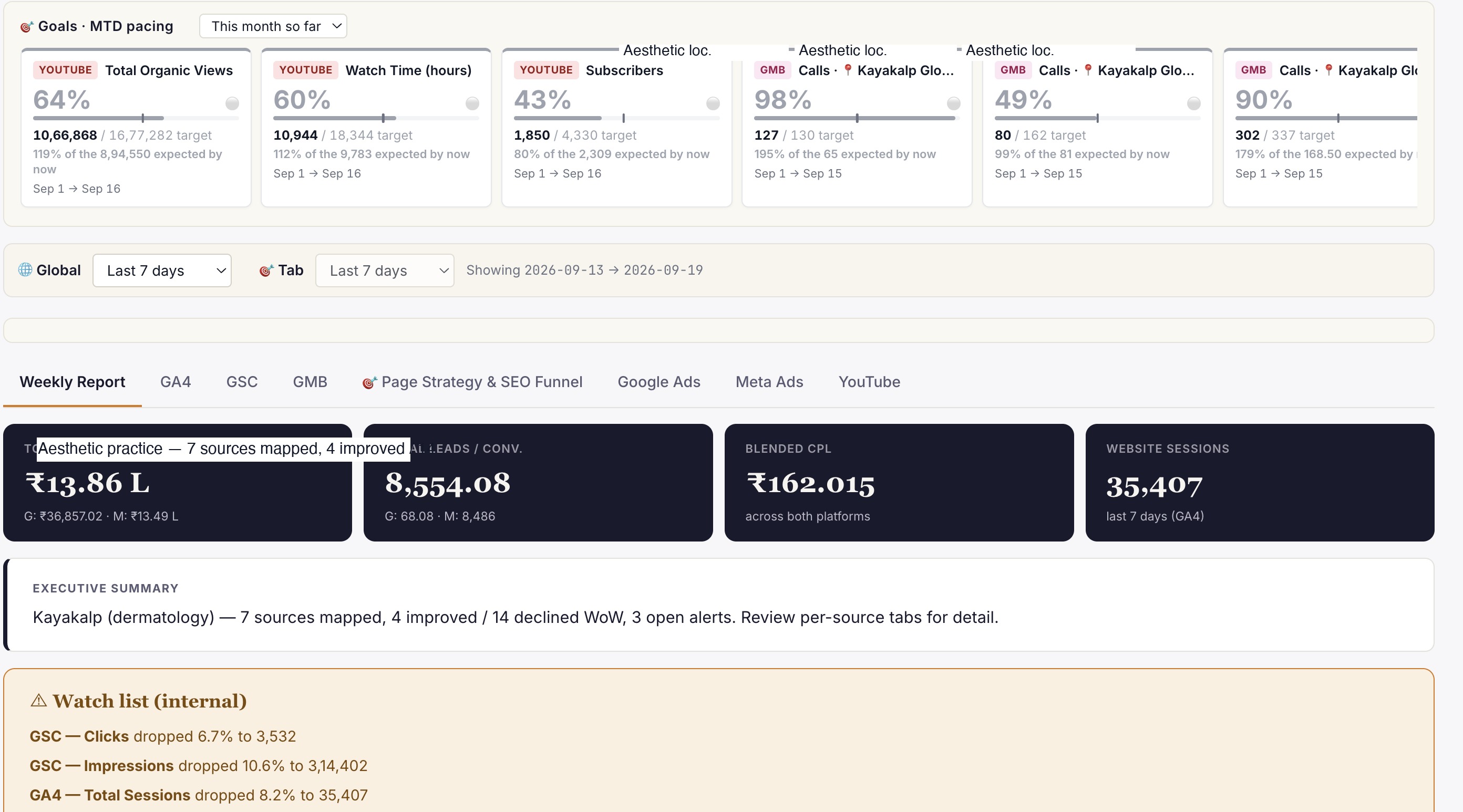
Live client dashboard. GSC, GA4, Google Ads, Meta Ads, IVR calls in one view. Login anytime, not monthly.
Phoenix
Clinic revenue intelligence over your PMS. Daily action queue: Prevent Loss, Maintain & Engage, Grow Revenue. Multi-centre rollout.
Or book a free 30-min audit to see all three in action on your account.
Healthcare brands
that already run on ICG.
A representative slice of the 150+ healthcare brands ICG has delivered for across India. Most engagements remain under NDA.


What ICG clients say · on video.
"Scale up of organic channels and business consulting. ICG has absolute domain authority in their field."
"Working with ICG transformed how we acquire IVF patients in Gurgaon. They understand the fertility journey from inquiry to consult..."
"What Ichelon accomplished — they got all my ideas and worked over 3-4 months to create an amazing, super-customised website."
Need help operationalising this?
Every ICG service is healthcare-only, NMC + DPDP-aware, and built around the patient-research patterns that drive Indian healthcare growth in 2026.
Every practice welcome — packages from ₹20,000/mo.
Goals-Driven engagements · Performance-Linked Payout Models available
More from
ICG.
Five trends shaping Indian healthcare marketing through 2027: AI-first patient research, Conversions API adoption, ABDM discovery, the AEO w...
Healthcare AIO is the discipline of getting your clinic or hospital cited inside Google AI Overviews, ChatGPT and Perplexity answers — not j...
Conversational-search advertising places brand messages inside AI chat answers — ChatGPT, Perplexity, Copilot — rather than beside a results...
Stop guessing.
Book a Diagnostic.
30 minutes. Free. With the AI-powered healthcare-only marketing agency 150+ brands already run on. No slides, no pitch, no hard close.


