


Crisis ORM vs Daily ORM for Medical Brands in India: The Buyer's Guide
Crisis ORM handles the fire. Daily ORM prevents it. This guide compares the two approaches for Indian healthcare brands across eight axes—team, SLAs, compliance, platforms, cost—and maps four buyer archetypes to the right mix. India-first, feature-based, vendor-neutral.
No pitch. Written root-cause diagnosis. AI-powered, healthcare only.
Direct answer
Crisis ORM handles the fire. Daily ORM prevents it. This guide compares the two approaches for Indian healthcare brands across eight axes—team, SLAs, compliance, platforms, cost—and maps four buyer archetypes to the right mix. India-first, feature-based, vendor-neutral.
TL;DR

India's medical brands are three years into a reputation environment nobody trained them for. Google reviews got smart. Meta comments got personal. And DPDP Act 2023 changed what you can say back. This guide separates the two ORM disciplines every hospital, clinic, and diagnostic chain needs, and shows you which one to buy first.
TL;DR
- Crisis ORM is reactive incident response. Daily ORM is proactive reputation building. Different teams, different SLAs, different budgets. Do not run them off the same desk.
- Start with Daily ORM. Crisis playbooks fall apart without a 4.5+ star baseline and a 500-review moat under you.
- DPDP Act 2023 rewrote the rules. You cannot name a complainant publicly, cannot share treatment details in a review reply, and cannot quote patient conversations without written consent — even to defend yourself.
- FY26 budget guide (Indian rupees): single clinic Rs 18,000-40,000 per month Daily ORM; 100-bed hospital Rs 75,000-1.5 lakh per month Daily plus a Crisis retainer or on-call clause; multi-city chain Rs 2-6 lakh per month blended.
- Four battlegrounds matter most in 2026: Google Business Profile, YouTube channel comments, Instagram DMs and comments, and Reddit medical threads. Everything else is second-order.
Table of Contents
- Why this comparison matters for Indian medical brands
- The eight axes to compare on
- Main comparison table
- Per-axis deep dives
- Which fits which buyer
- How ICG helps
- The 70-30 model for ORM services
- Frequently asked questions
Why this comparison matters for Indian medical brands
A dentist in Indore watches a single one-star Google review knock her clinic from 4.7 to 4.3 stars in six weeks. A 120-bed hospital in Pune wakes up to a viral Reddit thread accusing a surgeon of overcharging. An IVF chain in Bengaluru sees six negative comments appear under three separate Instagram Reels within 48 hours — all from what looks like the same coordinated push.
These are not the same problem. And yet most medical brands in India try to solve them with the same team, the same budget line, and the same monthly retainer. That confusion is what this guide fixes.
Online Reputation Management in Indian healthcare splits cleanly into two disciplines. Daily ORM is the boring, structured, always-on work — generating reviews from consenting patients, monitoring sentiment weekly, seeding positive content on YouTube and Instagram, keeping Google Business Profile fully populated with photos and posts, and quietly filing takedown requests on legitimately fake reviews. Crisis ORM is what you activate when something breaks — a viral complaint, a media allegation, a coordinated attack, a genuine adverse event that leaks. The team, tools, SLAs, and compliance posture are all different.
Three India-specific pressures make this split sharper here than in Western markets. First, DPDP Act 2023 severely limits what you can publish about a patient — including their name, treatment, or even the fact they were treated at your facility. Second, the NMC's advertising code, evolving through 2025 into 2026, restricts how doctors can use testimonials, comparative claims, and before-and-after imagery. Third, the ABDM ecosystem — ABHA numbers, HPR registration, and HFR facility IDs — is quietly becoming a trust signal. Facilities absent from HFR raise questions in a way they didn't three years ago. All three constrain your response options in ways a playbook borrowed from a US agency will not respect.
The eight axes to compare on
Before you look at the table, understand what you are actually comparing. These are the eight axes that decide whether a Daily ORM programme, a Crisis ORM capability, or a blend of both fits your organisation:
- Trigger cadence and workflow rhythm — is work always-on or event-triggered?
- Team composition and skill mix — who sits at the desk and what do they know?
- Response SLA and escalation ladder — how fast, and who does what when?
- Content output types — what actually gets published, filed, or served?
- Compliance surface — DPDP, NMC, IT Act, and ABDM adjacency
- Monitoring stack and data sources — what platforms, tools, and human eyes are involved?
- Cost structure and pricing bands — retainer, project, or blended?
- Measurable KPIs and reporting cadence — how you know it is working
Main comparison table
| Axis | Daily ORM | Crisis ORM | Blended Programme |
|---|---|---|---|
| Trigger and rhythm | Always-on, weekly workflows, monthly reports | Event-triggered, 24-72 hour intensive sprints | Daily rhythm with a crisis switch, drilled quarterly |
| Team composition | Community manager, review-response writer, sentiment analyst, junior legal reviewer | Senior strategist, legal counsel, PR liaison, medical advisor, platform-relations lead | Daily team plus a pre-contracted on-call crisis pod |
| Response SLA | 24-72 hours for reviews; weekly cadence for content | Under 4 hours first response; hourly updates during a live event | Standard 24 hr SLA that compresses to 2 hr under crisis flag |
| Content output | Review replies, GBP posts, patient-experience Reels, YouTube shorts, blog answers | Holding statements, official press notes, doctor-approved clarifications, takedown filings, legal notices | Daily assets plus a versioned crisis library kept warm |
| Compliance surface | NMC ad code alignment, DPDP consent for testimonials, standard IT Act hygiene | DPDP breach-notification triggers, defamation thresholds under IT Act, NMC disciplinary exposure | Both surfaces continuously mapped and versioned |
| Monitoring stack | GBP dashboard, Instagram Insights, YouTube Studio, sentiment tool, weekly Reddit sweep | Real-time alerts, media monitoring, escalation ticker, war-room dashboard | Unified stack with tiered alerts |
| Cost band (FY26 India) | Rs 18,000 - 1.5 lakh per month depending on scale | Rs 1.5 - 6 lakh per activation, plus retainer or on-call fee | Rs 40,000 - 6 lakh per month with crisis credits pooled |
| Primary KPI | Star average, review velocity, share of voice, positive-sentiment ratio | Time-to-containment, sentiment recovery curve, story half-life, legal exposure closed | Both KPI sets reported in a single monthly view |
Per-axis deep dives
1. Trigger cadence and workflow rhythm
Daily ORM has a heartbeat. Reviews are checked every morning, sentiment reports are pulled every Monday, content is planned two weeks out, and every quarter the team rebases against fresh keyword data. Nothing about the workflow assumes surprise. Crisis ORM assumes only surprise. The workflow is built to compress a whole month of decisions into 24 hours, and then to hold. Most Indian medical brands underestimate how different these two rhythms feel on the ground. A community manager who does beautiful Daily ORM often panics in a live crisis. A senior PR hand who is brilliant in a crisis hates the boredom of week-in-week-out review replies. If you try to build one team for both, you will lose one of them within a year. Blended programmes solve this with a small, drilled crisis pod — usually a senior strategist, one legal advisor, and a doctor liaison — activated by a defined signal.
2. Team composition and skill mix
A Daily ORM desk is a mid-level content and community operation. You need someone who can reply to a legitimate patient complaint without breaching DPDP consent, someone who understands how one review on a listing shifts a Google Business Profile star average, and a junior reviewer who checks every reply for NMC ad-code alignment before it goes live. Crisis ORM needs seniority. A crisis strategist who has run six live events in Indian healthcare can tell within two hours whether a story dies by 6 pm or runs three weeks — and that single read decides your entire response. You also need legal counsel who can draft a takedown notice under the IT Act's 2021 Intermediary Rules the same afternoon, and a PR liaison with real relationships at three or four regional publications. Blended programmes keep the Daily desk as the always-on team and pre-contract the crisis roles so someone answers the phone at 11 pm on a Saturday.
3. Response SLA and escalation ladder
Daily ORM SLAs are measured in days. A 4-star review deserves a warm thank-you within 48 hours. A 2-star review needs a compliant, empathic reply within 24. A serious complaint that hints at a clinical error routes to a senior partner and a doctor for co-approval, usually within 72. Crisis ORM SLAs are measured in minutes. First-response acknowledgement in under 4 hours (2 hours if the story is already trending). Hourly updates to a defined internal war-room. External statement — approved by legal, senior clinician, and CEO — inside 12 hours in most cases. A well-designed escalation ladder has three tiers: normal, elevated, crisis. Clear rules define what triggers each tier and who has authority to declare it. Most Indian hospitals we work with under-define tier 2, which is why so many mid-severity incidents get either over-escalated to a full crisis response or ignored until they become one.
4. Content output types
Daily ORM produces a lot. In a normal month for a 100-bed hospital that looks like 60-120 review replies, 20-40 GBP posts, 8-12 Reels or YouTube shorts featuring cleared clinical staff, four blog answers to high-intent local queries, and a monthly sentiment report. Every asset is on-brand, compliance-checked, and feeds the star average and share-of-voice score. Crisis ORM produces very little — but every asset carries weight. A holding statement, an official press note, a doctor-approved clarification video (usually 60-90 seconds, sober tone), a formal takedown submission to the platform in question, and if warranted, a legal notice served on the originating account. In a serious crisis you might publish four assets in seven days, and each one goes through three approval loops before it ships. The mistake we see most often is publishing Daily-ORM-quality content in a crisis. It reads as glib and makes the story worse.
5. Compliance surface — DPDP 2023, NMC, IT Act, and ABDM adjacency
DPDP Act 2023 is the biggest change to Indian healthcare ORM in a decade. You cannot name a patient in a public reply. You cannot confirm they were treated at your facility. You cannot quote what they told a doctor. Even in a crisis where the patient has publicly named you, your reply must be careful — a public admission that "we treated Mrs X" is itself a disclosure event under DPDP. The NMC's evolving advertising code restricts before-and-after images, comparative superlatives, and any implied guarantee of outcome — which limits how much Daily ORM can lean on visual testimonials. The IT Act's 2021 Intermediary Rules give you a clear path to takedown for defamatory or non-consensual content, but the drafting has to be exact. And while ABDM adjacency does not yet regulate ORM directly, HFR registration and a visible ABHA-ready presence are increasingly treated as trust signals by informed patients. Miss them and you look older than you are.
6. Monitoring stack and data sources
Daily ORM monitoring is scheduled. Someone opens the Google Business Profile dashboard every morning, Instagram Insights every Monday, YouTube Studio every Wednesday, and runs a Reddit sweep for brand, doctor names, and locality every Friday. A sentiment tool aggregates and flags outliers. Nothing about it is real-time and nothing needs to be — the point is coverage, not speed. Crisis ORM monitoring is real-time. Alerts trigger on volume spikes, sentiment collapses, and specific keyword combinations across the same platforms plus media monitoring across regional print, television, and OTT news. During a live event, one dedicated analyst watches a war-room dashboard continuously. A blended programme layers the two — the scheduled coverage runs every day, and the real-time alerts stay armed but silent until a signal fires. What kills most in-house programmes is trying to do real-time monitoring with a scheduled-monitoring team. They burn out inside three months.
7. Cost structure and pricing bands
Daily ORM in India priced honestly for FY26 lands in a wide band. A single-doctor clinic can get meaningful Daily ORM for Rs 18,000-25,000 per month — small review-generation programme, weekly GBP hygiene, monthly reporting. A three-to-five location dental or aesthetic chain typically sits at Rs 40,000-75,000 per month. A 100-bed hospital pays Rs 75,000-1.5 lakh per month for a proper Daily programme with sentiment analysis, cross-platform coverage, and legal review. Crisis ORM is priced per activation. A contained single-event crisis runs Rs 1.5-3 lakh. A multi-day, multi-platform event with legal filings and a press response runs Rs 3-6 lakh or more. Most hospitals of any size should either carry a small monthly retainer (Rs 25,000-40,000) for a Crisis ORM firm on standby, or pool crisis credits inside a blended programme so activation is not a fresh contract negotiation while a fire burns.
8. Measurable KPIs and reporting cadence
Daily ORM measures slow-moving numbers. Star average by location, monthly review velocity, share of voice against category benchmarks (compare against tiers, never specific brands), positive-to-negative sentiment ratio, first-response time on reviews, and month-over-month growth in positive testimonial assets. Reports go out monthly with a light weekly pulse. Crisis ORM measures a completely different set. Time-to-containment (how long from event start to the story visibly slowing). Sentiment recovery curve (how far back to baseline in what window). Story half-life. Legal exposure closed. Media-mention decay. These are single-event metrics reported inside 72 hours of resolution and rolled up into a quarterly incident register. Boards should see both, but never on the same dashboard — mixing them muddies both.
Which fits which buyer
Archetype 1: Single dental or aesthetic clinic, one location
You need Daily ORM. Full stop. Budget Rs 18,000-30,000 per month, structured around review generation from every consenting patient, weekly GBP hygiene, monthly reporting, and a quarterly sentiment review. Skip a Crisis retainer at this size — your total online footprint is small enough that a serious incident is rare, and if one happens you can retain a Crisis firm on the day. What you cannot skip is a documented consent-capture flow. DPDP compliance for a single clinic is straightforward, but only if the paperwork exists before the reviews do.
Archetype 2: 100-bed multi-speciality hospital, cardiology-heavy
This is the classic blended buyer. Budget Rs 75,000-1.5 lakh per month for Daily ORM across the main hospital plus your top three specialities, and add either a Rs 25,000-40,000 per month crisis retainer or Rs 1 lakh in pooled crisis credits per quarter. Cardiology-heavy hospitals need faster crisis capability than most because cardiac adverse events are both more news-worthy and more legally sensitive. Pre-approved doctor spokespeople, a versioned crisis library kept warm, and quarterly drills matter more here than they do for a smaller facility.
Archetype 3: Mid-tier IVF chain, three to eight centres
Budget Rs 1-2.5 lakh per month for Daily ORM across all centres, with a strong central content team that produces once, deploys everywhere, and localises per city. IVF is a testimonial-heavy category — which makes DPDP compliance the single biggest risk. Every patient story needs written consent that names the specific channels, retention duration, and right-to-withdraw. On the crisis side, IVF chains face a specific pattern: coordinated review pushes from unhappy-outcome patients and, occasionally, from competitors using very similar language across multiple platforms in short windows. A trained Crisis pod with pattern-recognition experience in fertility marketing pays back within two events.
Archetype 4: Multi-city diagnostic lab chain, 15+ centres
Budget Rs 2.5-6 lakh per month for a fully blended programme. Diagnostic chains have a different Daily ORM problem — huge review volume, thin margins per interaction, high sensitivity to turnaround-time complaints. The Daily desk needs to be process-heavy and technology-supported, not artisanal. Crisis exposure is different too — data-breach concerns under DPDP are the highest-frequency crisis type, and the crisis playbook must include a rehearsed breach-notification workflow that meets the Act's timelines. This is the archetype where a poorly-designed programme actually loses money.
How ICG helps
ICG (Ichelon Consulting Group) is India's AI-first healthcare marketing agency. We work with 150+ healthcare brands, hospitals, IVF chains, diagnostic labs, and speciality practices, so we have built and defended ORM programmes across every archetype above. Our position on Crisis vs Daily ORM is straightforward: treat them as separate disciplines with separate teams, separate SLAs, and separate reporting. We are also deliberately category-neutral on tooling. We have built Daily ORM programmes on Google Business Profile-first stacks for small clinics via our Angryturtle GBP operating system, on integrated Meta and YouTube stacks for consumer-heavy specialities using our own Meta Catalyst IQ ads engine and our YODA YouTube system, and on content-heavy stacks for local-search-dominated hospitals. For monitoring competitor Meta activity that often precedes a coordinated review push, our Prism Spy stack is available inside blended engagements; Prism Pulse provides the Instagram-side analytics. On the daily-desk side, AtomCRM (Rs 50,000/- setup + Rs 799/- per telecaller) captures review and complaint interactions into the same pipeline as leads. HealthPro 360 (Rs 14,999 per month) sits alongside for hospital brands that need EHR-adjacent workflow overlay. None of this is required for you to work with us — we start with the problem, not the toolkit.
The 70-30 model for ORM services

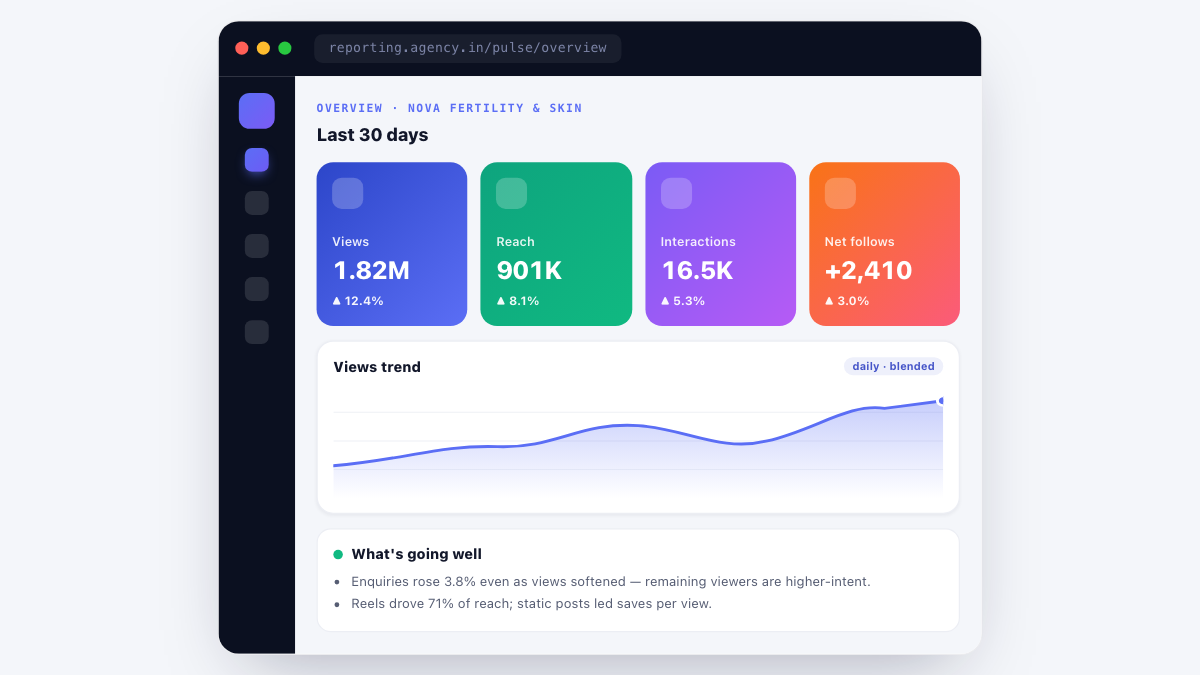


For clients who engage ICG for SEO, YouTube, or paid media, we run a 70-30 pricing model — 70% of the retainer covers guaranteed programmatic delivery (content, campaigns, technical work, reporting) and 30% is performance-linked. ORM is different. Reputation work is too outcome-sensitive to price on pure guarantees but also too always-on to price purely on results. Our ORM engagements are structured as a fixed monthly Daily ORM retainer — custom-scoped from Rs 20,000 per month, adjustable for multi-location — with Crisis ORM either as an on-call clause with defined activation fees or as pooled quarterly credits. This keeps incentives clean. Nobody is rewarded for a crisis, and Daily work is priced on committed capacity so we do not cut corners in a slow month.
Frequently asked questions
Do we need both Crisis and Daily ORM for a small single-location clinic?
Almost never. A single clinic below the Rs 5 crore annual revenue mark should run Daily ORM only and keep a Crisis ORM firm's number on file. The one exception is highly public specialities like plastic surgery, aesthetic dermatology, and IVF, where a single event can genuinely damage the brand and a small retainer of Rs 15,000-20,000 per month buys real peace of mind.
How does DPDP Act 2023 change our Crisis ORM playbook?
Materially. You cannot name a complainant in a public reply even to defend yourself. You cannot confirm treatment. Any breach-notification obligation triggers formal timelines to the Data Protection Board. Your crisis library needs pre-written templates that respect consent boundaries — the old "we treated Mrs X on Tuesday and here is what actually happened" playbook is now illegal.
Can we run Crisis ORM in-house?
Rarely, and only if you have a genuinely senior in-house PR lead with healthcare experience, a retained legal firm familiar with IT Act intermediary rules, and pre-cleared doctor spokespeople. Most hospitals fall short on the second and third, which is why retained crisis capability from a specialist firm is cheaper than the alternative when tested.
What is the fastest way to remove a defamatory Google review?
Flag through Google Business Profile with a clear, unemotional description of the specific policy violation. If that fails, escalate through Google's small-business support with case detail. If still unresolved and the review is genuinely defamatory (not just negative), a legal notice under the IT Act's 2021 Intermediary Rules moves the needle. Non-defamatory but unfair reviews rarely come down — your leverage is to bury them with volume.
How much of our annual marketing budget should ORM take?
A useful heuristic for FY26 Indian healthcare: 8-15% of your marketing budget on Daily ORM, and 3-8% as a Crisis provision (either retainer or pooled credits). Chains with public-facing specialities skew higher. Diagnostic chains with data-breach exposure should skew higher on the Crisis side specifically.
Should our doctors respond to reviews personally?
Only occasionally, with training, and only on positive reviews or clinical clarifications that are pre-vetted for NMC alignment. Well-drafted admin replies out-perform doctor replies on almost every metric except perceived warmth on the top 5% of positive reviews, and the compliance risk of an untrained doctor reply is real.
Is responding to a negative review a compliance risk under NMC?
It can be. Any reply that names a treatment outcome, uses a comparative claim ("we are the best..."), or implies a guarantee crosses NMC's advertising code. Any reply that references a specific patient or their condition crosses DPDP. A good Daily ORM desk maintains a reply template library that respects both edges — most in-house teams do not.
What is the ideal review generation cadence for a 100-bed hospital?
Roughly 60-120 new reviews per month across the main GBP profile and any speciality sub-profiles, generated from consented post-discharge and post-consultation touchpoints. Anything much higher looks manufactured to the platform and to informed patients. Anything much lower and your star average is exposed to single bad reviews for weeks.
Book a free 30-minute Brand & Growth Diagnostic.
It's a working session, not a sales pitch — you leave with a written root-cause analysis you can act on, whether or not you engage ICG.
Questions readers ask
about this topic.
The three platforms
behind every ICG engagement.
Beacon
CAPI middleware that fixes Event Match Quality, translates CRM statuses to Meta-standard events, dedups across channels.
Agency OS
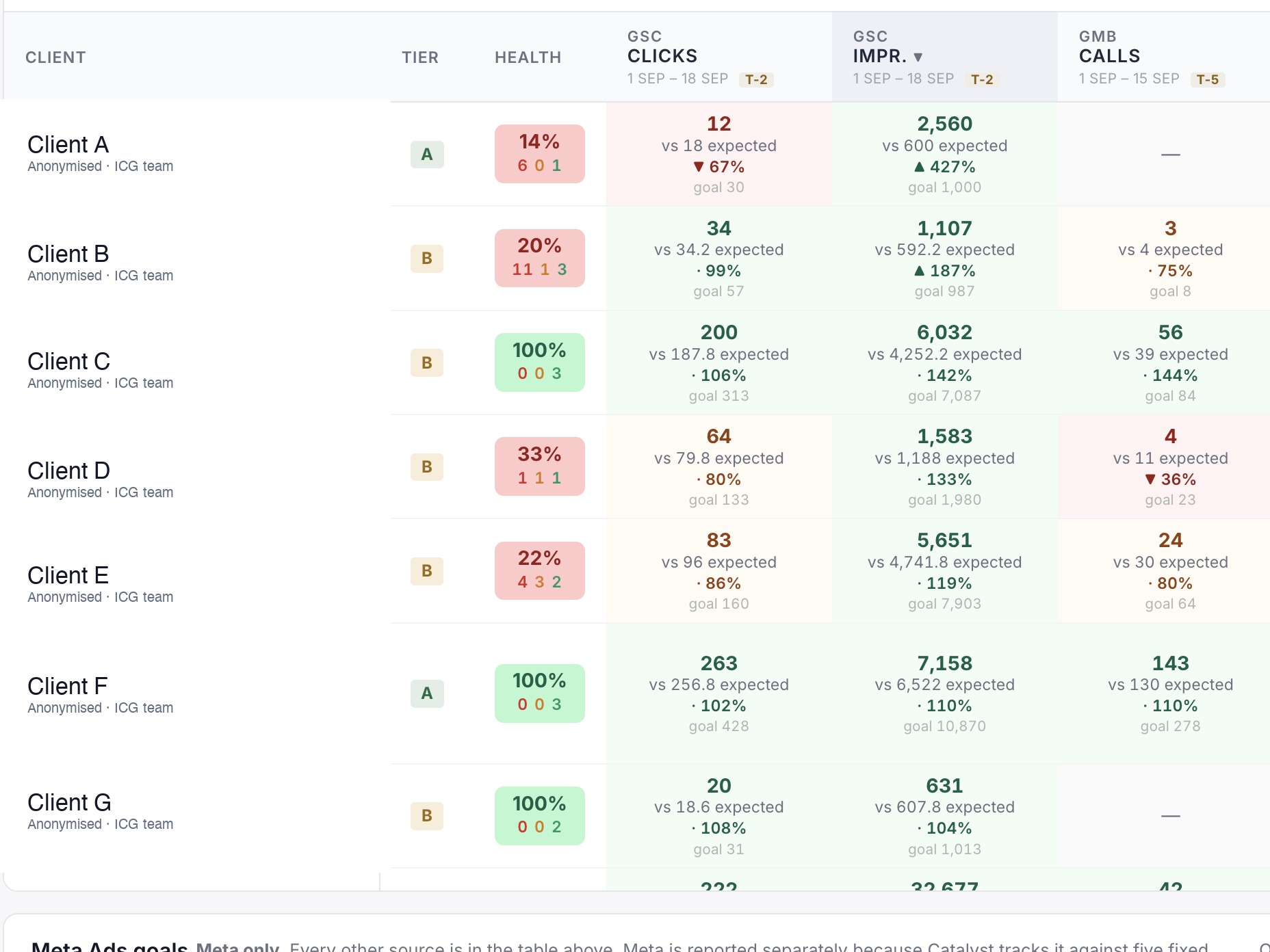
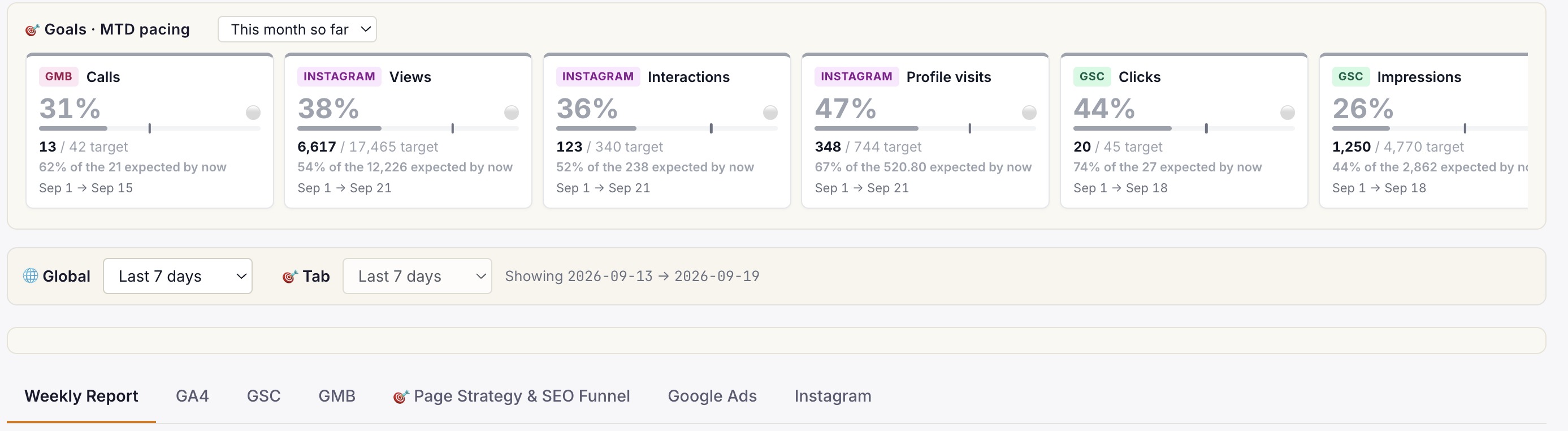
Live client dashboard. GSC, GA4, Google Ads, Meta Ads, IVR calls in one view. Login anytime, not monthly.
Phoenix
Clinic revenue intelligence over your PMS. Daily action queue: Prevent Loss, Maintain & Engage, Grow Revenue. Multi-centre rollout.
Or book a free 30-min audit to see all three in action on your account.
Healthcare brands
that already run on ICG.
A representative slice of the 150+ healthcare brands ICG has delivered for across India. Most engagements remain under NDA.


What ICG clients say · on video.
"Scale up of organic channels and business consulting. ICG has absolute domain authority in their field."
"Working with ICG transformed how we acquire IVF patients in Gurgaon. They understand the fertility journey from inquiry to consult..."
"What Ichelon accomplished — they got all my ideas and worked over 3-4 months to create an amazing, super-customised website."
The intelligence stack behind this playbook.
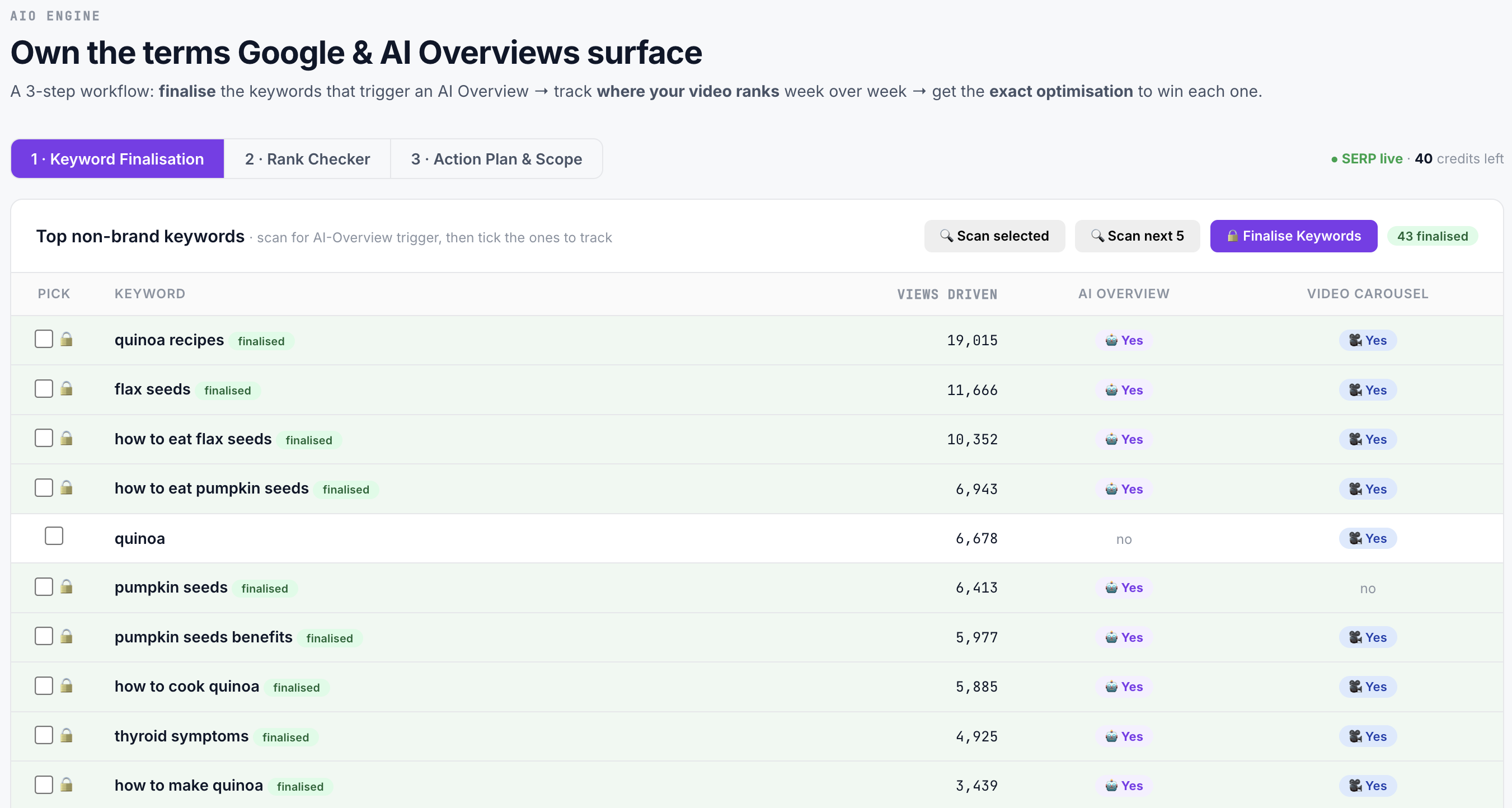
Every ICG engagement runs on the Search Intelligence Trifecta — Angryturtle for GMB, SIE for search and AI Overview, YODA for YouTube. Live product screens below.
Need help operationalising this?
Every ICG service is healthcare-only, NMC + DPDP-aware, and built around the patient-research patterns that drive Indian healthcare growth in 2026.
Every practice welcome — packages from ₹20,000/mo.
Goals-Driven engagements · Performance-Linked Payout Models available
More from
ICG.
Five trends shaping Indian healthcare marketing through 2027: AI-first patient research, Conversions API adoption, ABDM discovery, the AEO w...
Healthcare AIO is the discipline of getting your clinic or hospital cited inside Google AI Overviews, ChatGPT and Perplexity answers — not j...
Conversational-search advertising places brand messages inside AI chat answers — ChatGPT, Perplexity, Copilot — rather than beside a results...
Stop guessing.
Book a Diagnostic.
30 minutes. Free. With the AI-powered healthcare-only marketing agency 150+ brands already run on. No slides, no pitch, no hard close.


