


CPQL vs CPA vs ROAS for Healthcare India: A Metrics Buyer Guide
A neutral, feature-based comparison of CPQL, CPA and ROAS for Indian healthcare buyers, mapped to clinic size, treatment mix, DPDP Act 2023 consent, and how each metric behaves when the phones actually start ringing.
No pitch. Written root-cause diagnosis. AI-powered, healthcare only.
Direct answer
A neutral, feature-based comparison of CPQL, CPA and ROAS for Indian healthcare buyers, mapped to clinic size, treatment mix, DPDP Act 2023 consent, and how each metric behaves when the phones actually start ringing.
TL;DR

TL;DR
- CPA (Cost Per Acquisition) counts any converted action: a form fill, a call, a chatbot handoff. Cheap to instrument, easy to inflate with junk leads, and often the metric an agency will quote you first.
- CPQL (Cost Per Qualified Lead) only counts leads that pass a human or rules-based qualification step. Higher unit cost on paper, but it is the only one of the three that survives contact with the front-desk reality of an Indian clinic.
- ROAS (Return on Ad Spend) divides revenue by spend. It fits pharmacy, diagnostics, D2C SKUs and packaged health plans cleanly. It misrepresents high-consideration surgical care (IVF, cardiac, oncology, dental full-mouth) where the payment lands 30-180 days after the click.
- Under the DPDP Act 2023, all three metrics need consent-anchored data flows. CPQL is the easiest to defend to a Data Protection Officer because qualification usually already involves consent capture.
- A 100-bed multi-specialty hospital should lead with CPQL, watch CPA per department, and use ROAS only for pharmacy and diagnostics arms. A single dental clinic should ignore ROAS entirely. A D2C consult brand should invert that stack.
Table of Contents
- Why this comparison matters for Indian healthcare buyers
- The eight axes to compare on
- Main comparison table
- Per-axis deep dives
- Which metric fits which buyer
- How ICG helps you pick and instrument
- The 70-30 pricing model for measurement-linked services
- Frequently asked questions
Why this comparison matters for Indian healthcare buyers
Almost every conversation that ICG has with a hospital marketing head, a clinic-chain CFO, or a founder-doctor begins the same way. Someone quotes a number. "Our agency is delivering leads at Rs 180." "We are getting 6x ROAS on Meta." "Our CPA has come down 40 percent quarter on quarter." Then we ask the second question, which is where the number usually collapses: how many of those leads actually walked in, paid, and turned into a treatment episode? The room goes quiet.
The problem is not that the agency is lying. The problem is that CPA, CPQL and ROAS answer three genuinely different questions, and Indian healthcare has a shape that punishes the wrong choice. Consultations get scheduled weeks after the first form fill. Family decision-makers change between the ad click and the deposit payment. Insurance clearances, TPA approvals and second opinions stretch the window further. A Meta Ads dashboard reports what it can see, which is the click and the immediate conversion event. It cannot see the WhatsApp back and forth two weeks later, or the cash payment at the reception desk, or the elderly parent who is the real budget owner.
Layer on the specifics of the Indian regulatory and market environment. The DPDP Act 2023 has redrawn what you can store about a lead and for how long. NMC advertising guidance keeps the acceptable creative narrower than in most other verticals. ABDM is quietly changing how patient identity, appointment history and consent will flow between systems over the next three years. And Indian buyers themselves, whether a Tier-2 dental owner writing a personal cheque for marketing or a corporate hospital board approving a Rs 3 crore annual plan, sit at very different points on the risk curve. A metric that flatters one of them will mislead the other.
Choosing between CPA, CPQL and ROAS is therefore not a technical accounting question. It is a governance question. Whichever metric you elevate to the top of your marketing dashboard will silently shape what your agency optimises for, which channels get budget, which creatives get renewed, and which segments of your patient base get ignored.
The eight axes to compare on
Before we get to the table, here are the eight axes ICG uses when we sit with a healthcare buyer and work out which metric should sit at the top of their reporting stack. Each axis is a factual property of the metric itself, not a preference.
- What it actually measures. The literal definition, stripped of marketing gloss.
- Data plumbing required to compute it honestly. What tracking, CRM writes, offline uploads and reconciliation you need in place.
- Sensitivity to junk lead and bot inflation. How badly the number can be gamed by low-quality traffic before anyone notices.
- Attribution window and lag tolerance. How far apart the click and the outcome can be before the metric breaks.
- Fit with high-consideration versus high-frequency treatment mix. How the metric behaves for IVF or cardiac surgery versus dental cleaning or a diagnostic package.
- DPDP Act 2023 and consent implications. What consent posture the metric assumes and how defensible it is under India's data-protection regime.
- Reportability to a board, CFO or lender. How much translation is needed before a finance-first audience trusts it.
- Correlation with actual paying-patient acquisition. The most important axis. Does the metric move up and down with real revenue, or does it drift?
Main comparison table
| Axis | CPA (Cost Per Acquisition) | CPQL (Cost Per Qualified Lead) | ROAS (Return on Ad Spend) |
|---|---|---|---|
| What it measures | Cost of any counted conversion event (lead form, call, chatbot). | Cost of a lead that passes a qualification rule or human screen. | Revenue divided by ad spend, expressed as a multiple. |
| Data plumbing needed | Pixel, call tracking, form event. Low effort. | Above plus CRM stage writes, qualifier checklist, offline conversion uploads. | Above plus revenue attribution back to the originating click or campaign. |
| Junk-lead sensitivity | Very high. Bot fills and curiosity clicks inflate it silently. | Low. Junk is filtered before the metric is computed. | Medium. Junk raises spend without raising revenue, so it self-corrects with delay. |
| Attribution window tolerance | Hours to days. Breaks beyond 30 days. | Days to weeks. Holds up to 60-90 days. | Weeks to months, if offline revenue is uploaded back. |
| Fit for high-consideration care (IVF, cardiac, oncology) | Poor. Vanity-heavy. | Strong. Matches the qualification-heavy sales motion. | Weak. Revenue lags too far behind the click. |
| Fit for high-frequency care (dental, derma, diagnostics) | Useful as a directional guide. | Strong when consult conversion is the bottleneck. | Strong for packaged treatments and diagnostics. |
| DPDP Act 2023 posture | Requires clean consent capture on the ad-to-form path. | Naturally consent-anchored because qualification requires human contact. | Requires consent linkage between transaction record and marketing origin. |
| Board/CFO reportability | Low. Finance discounts CPA claims by default. | Medium. Needs a clear qualification definition on record. | High. Speaks the language finance already uses. |
| Correlation with paid-patient volume | Weak. Can move opposite to revenue. | Strong. Usually within 10-15 percent of true patient economics. | Strong for retail-shaped healthcare, weak for surgical. |
Per-axis deep dives
1. What each metric actually measures
CPA counts a converted action. The definition of "action" is set by whoever configured your pixel or your ads platform, which means it is almost never audited. In a typical Indian clinic setup, a CPA figure will bundle together a WhatsApp click, a form fill on the landing page, a call button tap and sometimes a chatbot session start. Those four events have wildly different downstream value, but the CPA number treats them as equivalent. CPQL forces you to define qualification first: minimum age, in-catchment PIN code, valid contact, expressed intent for a specific treatment. Only then does the lead count. ROAS pretends to measure business outcome directly, but in practice it measures whatever revenue your ads platform is able to see and match back to a click. If your reception collects payment offline, ROAS is only as good as your offline-conversion upload discipline.
2. Data plumbing required to compute it honestly
CPA is the cheapest metric to set up. A landing page, a pixel, a conversion event, done. This is why agencies default to it. CPQL requires that your CRM has a qualification stage, that someone updates that stage, and that the qualification result is written back to the ads platform through an offline conversion pipeline. That is real work. It usually means a lightweight CRM (AtomCRM, at Rs 50,000/- setup + Rs 799/- per telecaller, is the layer ICG most often deploys for clinics), a defined qualifier script the front desk actually uses, and a weekly reconciliation. ROAS demands the same plumbing plus revenue capture. For a hospital, that means the billing system has to hand revenue rows back to the marketing stack, tagged by the originating lead. Under HealthPro 360 or a similar RCM/EHR overlay, this is tractable. Without it, ROAS is guesswork dressed up as arithmetic.
3. Sensitivity to junk lead and bot inflation
This is the axis where CPA fails most Indian healthcare buyers and where nobody wants to talk about it. A dental clinic running Meta Ads in a Tier-2 city will routinely see 20-40 percent of its form fills classified as junk after a qualification call: wrong number, curiosity-only, competitor snooping, family member using their own phone. CPA does not see this. It reports Rs 180 per lead cheerfully. CPQL absorbs the junk into the denominator and gives you the true unit economics, which might be Rs 320 or Rs 450 per lead. This is not the agency getting worse. It is the agency's real number becoming visible. ROAS is less exposed to junk because junk leads do not convert to revenue, but it takes 30-60 days for that self-correction to show up.
4. Attribution window and lag tolerance
Indian healthcare has some of the longest consideration windows in any B2C or B2B2C category. An IVF enquiry can take 45-90 days to convert. A cardiac second opinion can take 60-120. A full-mouth dental rehabilitation quote might sit in a WhatsApp thread for four months. CPA windows on major ad platforms default to 7 or 28 days. Beyond that, the click-to-conversion link is broken and the metric silently under-reports. CPQL, because it is measured at your CRM, can tolerate whatever window your sales cycle actually needs. ROAS can too, but only if you have the offline conversion upload pipeline running reliably. Agencies quoting ROAS without offline uploads are quoting ROAS on the 10-20 percent of revenue the ad platform happened to see.
5. Fit with high-consideration versus high-frequency treatment mix
Divide your treatment portfolio into two buckets. High consideration: IVF cycle, oncology second opinion, cardiac surgery, orthopaedic replacement, bariatric surgery, full-arch implant. High frequency: dental cleaning, dermatology consult, diagnostic package, GP visit, routine paediatric follow-up. The high-consideration bucket must be measured on CPQL. The purchase is too slow, too consultative, and too family-mediated for CPA or ROAS to reflect reality. The high-frequency bucket can lead with CPA if your qualification discipline is weak, but should lead with CPQL if you have a functioning front desk. ROAS shines for packaged retail products: master health check-ups, diagnostic bundles, pharmacy refills, D2C supplements, subscription health plans.
6. DPDP Act 2023 and consent implications
India's Digital Personal Data Protection Act has moved consent from a checkbox to an audit surface. Every lead record has to have provenance: what was the person told, what did they agree to, when, and for what purpose. CPA-driven funnels tend to be light on consent because the goal is friction reduction. CPQL funnels are naturally consent-anchored because the qualification step almost always includes a call, a WhatsApp exchange, or a scheduling confirmation, each of which is a fresh consent opportunity. ROAS pipelines that upload revenue back to the ads platform have to establish that the person consented to their transaction being linked back to marketing. If your Data Protection Officer sees your CPA claims and asks how each of those leads consented, "the pixel fired" is not an answer that will hold up.
7. Reportability to a board, CFO or lender
CFOs in Indian hospital groups are trained to distrust marketing metrics, and CPA is the reason. They have seen too many decks where CPA came down while occupancy stayed flat. ROAS gets the warmest reception in a finance meeting because it speaks the language of multiples and gross margin, but the moment you claim 6x ROAS on a Rs 40 lakh spend, the CFO will ask which line in the P&L moved by Rs 2.4 crore. If you cannot show that line, the number gets discounted. CPQL sits in the middle. It requires the smallest translation, because the qualified lead can be mapped directly to a downstream conversion rate and average revenue per patient, both of which the finance team already knows.
8. Correlation with actual paying-patient acquisition
This is the axis that decides everything else. In hundreds of Indian healthcare accounts, ICG has seen CPA drop 30 percent while paid-patient volume stayed flat, and CPQL drop 8 percent while paid-patient volume grew 20 percent. CPA correlates loosely at best. CPQL correlates tightly, usually within 10-15 percent of the true patient economics, because the qualification step is essentially a lightweight simulation of the actual sales conversation. ROAS correlates strongly for retail-shaped healthcare (pharmacy, diagnostics, packaged plans) and weakly for surgical or long-cycle care. If you can measure only one of the three, measure CPQL.
Which metric fits which buyer
Single-owner dental clinic in a Tier-2 city (Rs 8-15 lakh per year marketing budget)
Lead with CPQL. Track CPA as a secondary directional metric. Ignore ROAS entirely; the treatment mix is too varied and the payment collection too offline for revenue attribution to work honestly. The realistic target is Rs 300-600 per qualified lead depending on the city, with 30-45 percent walk-in conversion and Rs 8,000-25,000 average first-treatment value. A monthly agency spend in the Rs 25,000-60,000 range with GBP work through an Angryturtle-style operating system usually delivers better economics than paid ads alone at this scale.
100-bed multi-specialty hospital in a metro or Tier-1 city
Lead with CPQL, broken out by department. Cardiology, oncology, orthopaedics and IVF should be measured only on CPQL with a 60-90 day attribution window and offline conversion uploads. General OPD, diagnostics and pharmacy arms can use CPA and ROAS respectively. Expect qualified-lead costs to vary from Rs 400 for OPD-heavy departments to Rs 2,500-5,000 for cardiac or oncology enquiries with genuine intent. This is the buyer for whom the ICG Scale package at Rs 99,999 per month, extended into Google Ads at the 5 lakh-plus budget band, was designed.
Mid-tier IVF chain (5-10 centres)
CPQL only. CPA is misleading because the emotional and financial weight of an IVF cycle inflates junk leads and curious enquiries dramatically. ROAS is misleading because the payment lands 45-90 days after the first click, often across a couple of centres, and the revenue attribution rarely holds. Instrument a qualification framework that captures age, previous cycles, catchment feasibility and stated intent to travel. A qualified IVF lead in India typically costs Rs 1,800-4,500 in metros and holds a 15-25 percent cycle-conversion rate. Meta Catalyst IQ style consolidated Meta Ads engines combined with disciplined Prism Spy competitor intel work well here because the creative fatigue cycle is fast.
D2C health brand or online consult platform
Lead with ROAS. Track CPA as your unit-cost check. Use CPQL only for high-value SKUs (a Rs 15,000 supplement stack, an enterprise consult subscription, a corporate wellness deal). Your treatment mix is retail-shaped, your payment is online, and your revenue attribution can be clean if you keep it clean. Target 3-5x blended ROAS at scale, with acquisition CPA held below one-third of first-year customer value.
How ICG helps you pick and instrument


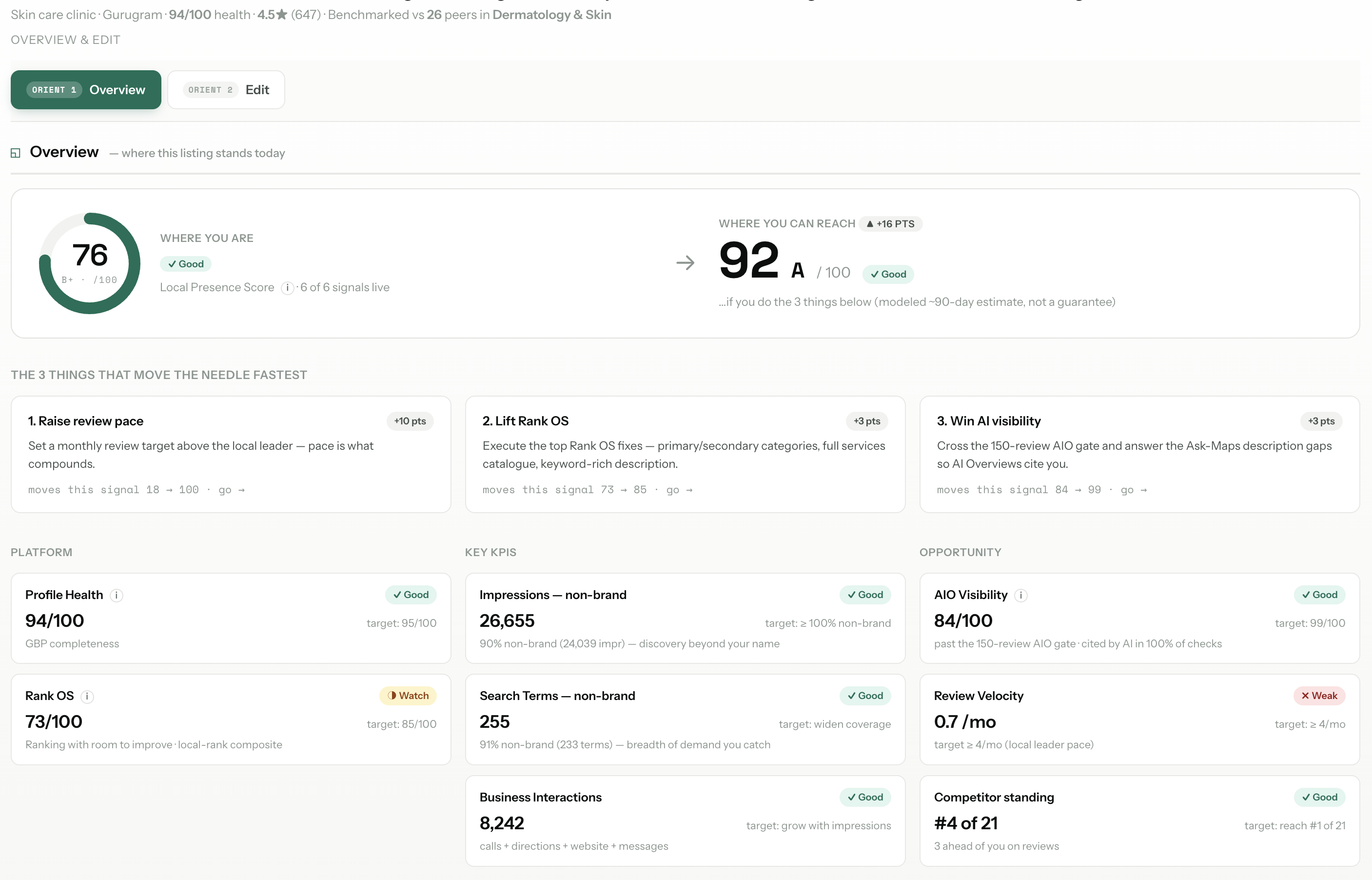
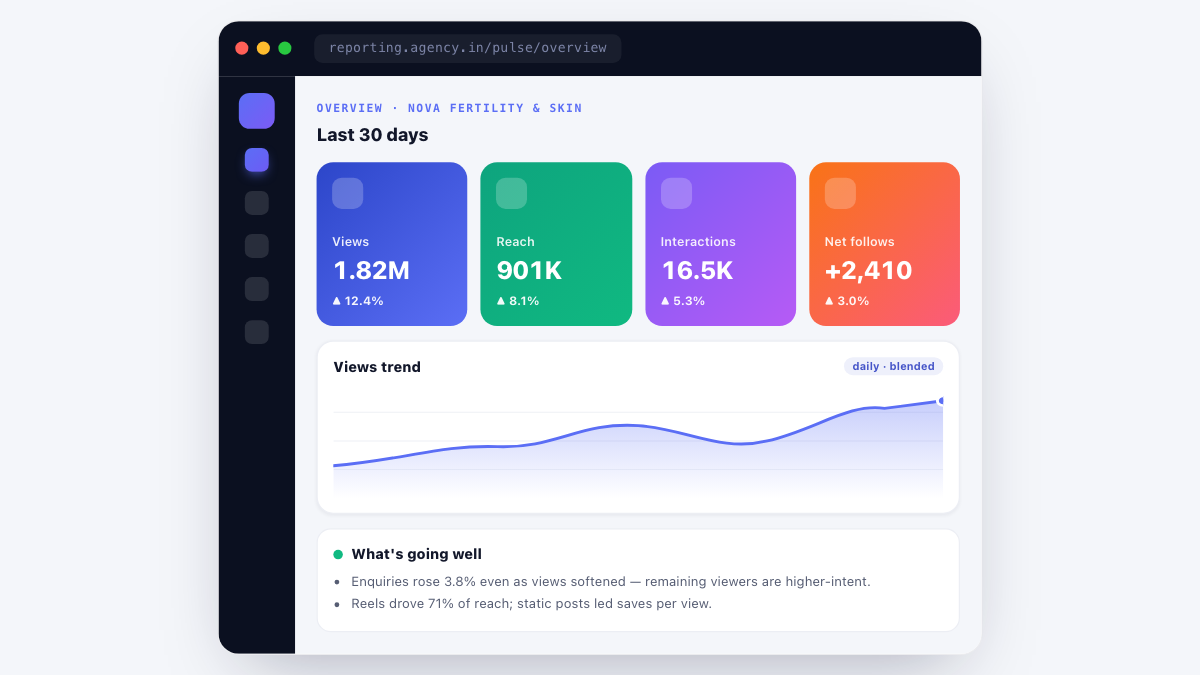
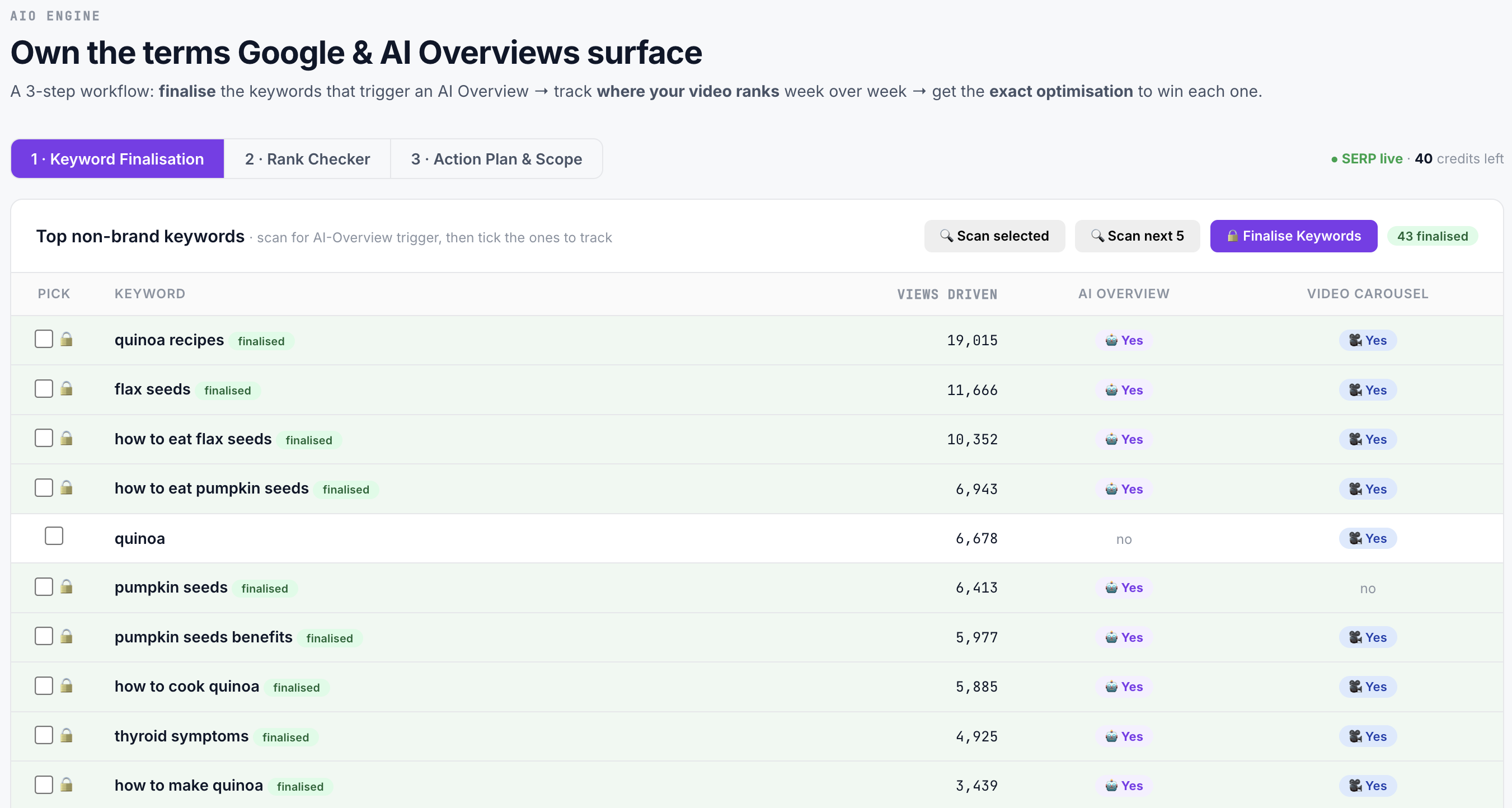
ICG's role in this comparison is deliberately category-agnostic. We do not sell you a metric. We sit with the marketing head, the CFO or the founder-doctor, look at the actual treatment mix, walk through the CRM state as it is today, and recommend which of the three metrics should sit at the top of your dashboard. In most Indian healthcare accounts, that ends up being CPQL with a secondary ROAS for the retail arms. We then instrument the pipeline: AtomCRM for lead capture and qualification stages, HealthPro 360 as the RCM/EHR overlay for revenue attribution when it exists, Meta Catalyst IQ for Meta Ads consolidation, YODA for YouTube and AIO surfaces, Angryturtle for GBP-first local search, and Prism Pulse and Prism Spy for the intelligence layers that keep the whole system honest. The measurement discipline comes first. The channel choice comes second.
The 70-30 pricing model for measurement-linked services
For SEO, Google Ads and YouTube/AIO engagements, ICG operates on a 70-30 pricing model rather than a flat retainer. Seventy percent of the monthly fee is fixed and covers the operating cost of running the engagement: strategy, content, creative, campaign management, reporting, and the CRM and measurement plumbing described above. Thirty percent is tied to a twelve-month performance target agreed at the start of the engagement, released against a sliding-scale slab as the target is hit. The Foundation tier for SEO starts at Rs 49,999 per month, Growth at Rs 74,999, and Scale at Rs 99,999. The same 70-30 structure extends into Google Ads engagements at monthly ad budgets of Rs 5 lakh and above, and into YouTube SEO or AIO engagements at monthly budgets of Rs 50,000 and above.
The reason the 70-30 model matters in a metrics discussion is that it forces both sides to agree upfront on what "performance" actually means. If the shared target is CPA, junk leads will flatter both parties. If the target is CPQL or a downstream patient-volume number, both sides are pushed toward the same reality the front desk lives in. This is the conversation ICG would rather have with a prospective client on day one than have the argument on month six.
Frequently asked questions
Is CPQL always better than CPA for Indian healthcare?
For high-consideration care, yes. For retail-shaped healthcare with clean online payment, CPA and ROAS together can outperform CPQL because the qualification overhead is not worth the extra plumbing. The rule of thumb: if a human on your team has to speak to the lead before money changes hands, CPQL should be your primary metric.
Our agency reports CPA under Rs 200. Should we be happy?
Not until you know what fraction of those leads qualify. A Rs 180 CPA with a 25 percent qualification rate is a Rs 720 CPQL, which changes the strategic conversation entirely. Ask your agency for the qualification-rate cohort, week over week, for the last quarter.
How do I calculate ROAS honestly when most of our payments happen offline at reception?
You need three things: a CRM that captures the lead-to-patient link, a billing export that tags patients by their originating lead, and an offline-conversion upload pipeline that sends transaction values back to the ads platform on a weekly cadence. Without all three, ROAS is estimation, not measurement.
Does the DPDP Act 2023 stop us from measuring CPA the way we used to?
It does not stop the measurement. It changes the consent posture around the underlying data. You need explicit, purpose-specific consent to collect lead PII for marketing follow-up, and you need to be able to prove that consent per record. This affects CPA less than it affects downstream nurture, but it should be part of your instrumentation plan.
What is a realistic CPQL for a metro dental clinic in India?
In current market conditions, Rs 300-600 per qualified lead for general dentistry, Rs 800-1,500 for orthodontics and cosmetic work, and Rs 2,000-4,000 for full-arch implants. These bands move meaningfully by city, catchment, and creative freshness, and they should always be read alongside walk-in conversion rate.
Can ROAS work for surgical departments in a corporate hospital?
It can, but only with disciplined offline conversion uploads and a 60-90 day attribution window. Most hospital ROAS numbers you will see quoted in the market do not have this discipline behind them and should be treated as directional rather than measured.
How does NMC advertising guidance affect which metric we can chase?
NMC guidance affects the creative surface, not the metric itself. What it does mean in practice is that your qualified-lead volume will be lower per rupee than in an unregulated vertical, which reinforces the case for measuring CPQL rather than CPA. High volumes of ungated CPA-optimised traffic in healthcare invite regulatory scrutiny; disciplined CPQL-led work does not.
If we could only instrument one metric this quarter, which should it be?
CPQL. It requires more plumbing than CPA and less than a fully attributed ROAS, and it correlates most tightly with paid-patient volume across the widest range of Indian healthcare buyer profiles. Everything else can be layered on later.
Book a free 30-minute Brand & Growth Diagnostic.
It's a working session, not a sales pitch — you leave with a written root-cause analysis you can act on, whether or not you engage ICG.
Questions readers ask
about this topic.
The three platforms
behind every ICG engagement.
Beacon
CAPI middleware that fixes Event Match Quality, translates CRM statuses to Meta-standard events, dedups across channels.
Agency OS
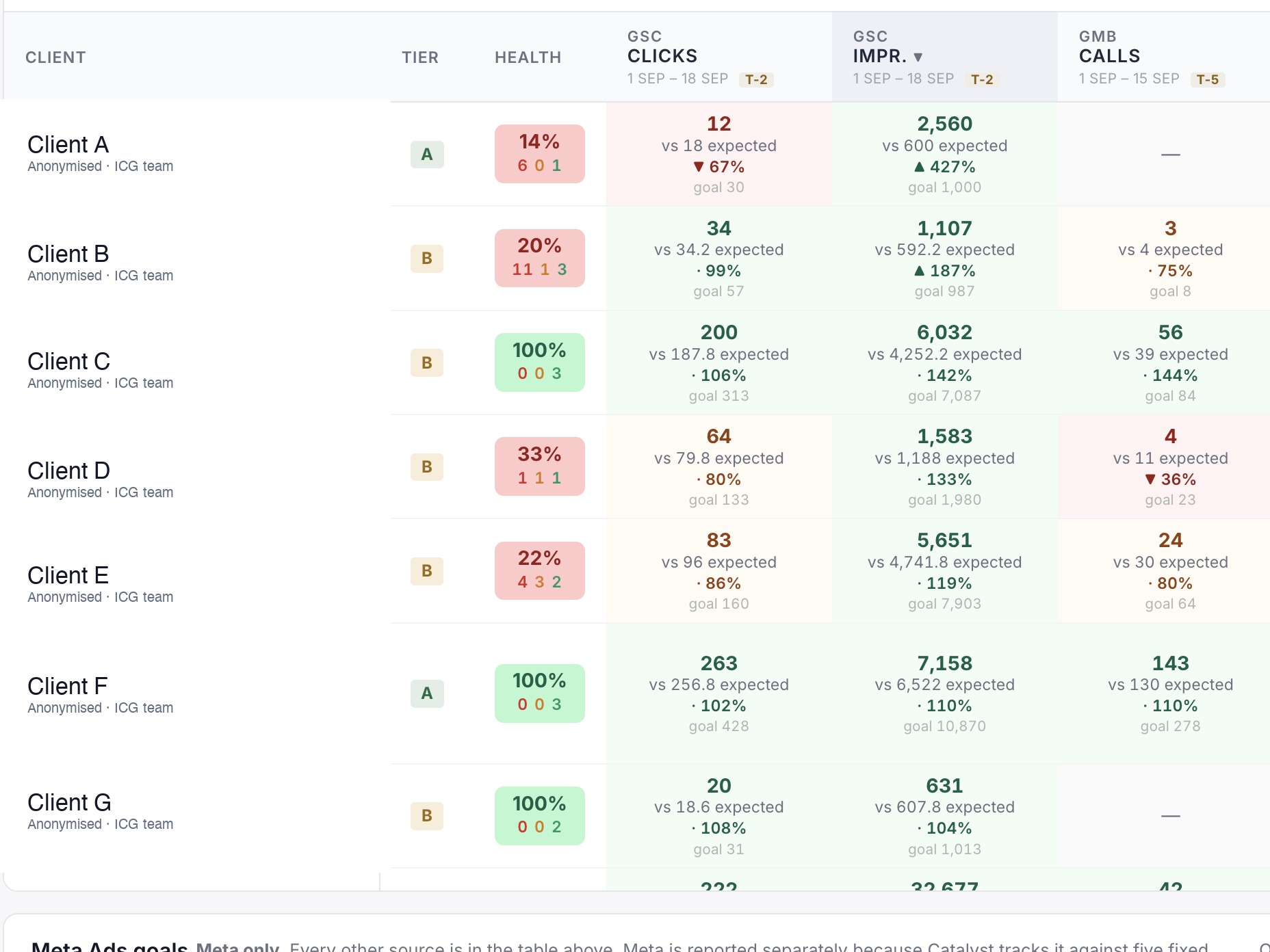
Live client dashboard. GSC, GA4, Google Ads, Meta Ads, IVR calls in one view. Login anytime, not monthly.
Phoenix
Clinic revenue intelligence over your PMS. Daily action queue: Prevent Loss, Maintain & Engage, Grow Revenue. Multi-centre rollout.
Or book a free 30-min audit to see all three in action on your account.
Healthcare brands
that already run on ICG.
A representative slice of the 150+ healthcare brands ICG has delivered for across India. Most engagements remain under NDA.


What ICG clients say · on video.
"Scale up of organic channels and business consulting. ICG has absolute domain authority in their field."
"Working with ICG transformed how we acquire IVF patients in Gurgaon. They understand the fertility journey from inquiry to consult..."
"What Ichelon accomplished — they got all my ideas and worked over 3-4 months to create an amazing, super-customised website."
Need help operationalising this?
Every ICG service is healthcare-only, NMC + DPDP-aware, and built around the patient-research patterns that drive Indian healthcare growth in 2026.
Every practice welcome — packages from ₹20,000/mo.
Goals-Driven engagements · Performance-Linked Payout Models available
More from
ICG.
Five trends shaping Indian healthcare marketing through 2027: AI-first patient research, Conversions API adoption, ABDM discovery, the AEO w...
Healthcare AIO is the discipline of getting your clinic or hospital cited inside Google AI Overviews, ChatGPT and Perplexity answers — not j...
Conversational-search advertising places brand messages inside AI chat answers — ChatGPT, Perplexity, Copilot — rather than beside a results...
Stop guessing.
Book a Diagnostic.
30 minutes. Free. With the AI-powered healthcare-only marketing agency 150+ brands already run on. No slides, no pitch, no hard close.


