


The Complete Healthcare Marketing Playbook for India 2026
A founder-written pillar on how Indian hospitals, clinics, IVF chains, and pharma brands should build their 2026 marketing engine — compliance-safe, AIO-ready, and lead-to-revenue accountable.
No pitch. Written root-cause diagnosis. AI-powered, healthcare only.
Direct answer
A founder-written pillar on how Indian hospitals, clinics, IVF chains, and pharma brands should build their 2026 marketing engine — compliance-safe, AIO-ready, and lead-to-revenue accountable.
TL;DR

TL;DR
- Healthcare marketing in India in 2026 is a compliance-first, AI-native game. NMC advertising norms, the DPDP Act 2023, and ABDM's data rails now shape what you can say, store, and target.
- Roughly 60% of specialty demand in Tier-1 and Tier-2 cities starts on Google Maps, YouTube, or an AI answer engine. If your GBP, doctor pages, and structured content are weak, paid spend just fills the gap at a higher cost.
- The winning stack is boring but non-negotiable: fixed GBP hygiene, deep specialty content, an AIO layer for ChatGPT and Perplexity, disciplined paid campaigns, and a CRM that actually calls the lead in under 5 minutes.
- In our audits of 150+ clinics and 300+ live healthcare accounts, the leak is rarely at the top of the funnel. It's the 40-60% of leads that never get called, or get called on day three.
- Budget benchmark: a mid-tier single-specialty hospital in a Tier-1 metro typically needs Rs 3-8 lakh a month across content, SEO, ads, and enablement to hit 30+ qualified leads a day.
- ICG's 70-30 model (Foundation Rs 49,999 / Growth Rs 74,999 / Scale Rs 99,999) fixes 70% of fee and ties 30% to a 12-month target, so you stop paying for effort and start paying for outcome.
- Use the 12-month roadmap at the end as your quarter-by-quarter checklist. Nothing on it is optional.
Table of contents
- Why the 2026 India playbook is different
- The five foundations every Indian healthcare marketer must fix first
- Compliance: NMC, DPDP Act 2023, and ABDM realities
- Local dominance: GBP, reviews, and the map pack
- Content, SEO, and winning the AI answer layer
- Paid acquisition: Google, Meta, and YouTube for healthcare
- CRM and the leaking bucket problem
- Benchmarks: what good looks like across specialties
- Buyer archetypes: matching strategy to your setup
- Common mistakes we see in 150+ clinic audits
- The ICG 70-30 pricing model
- The 12-month execution roadmap
- Key takeaways
- FAQ
Why the 2026 India playbook is different
If you last wrote a marketing plan in 2022, throw it out. The rules changed on three fronts at once, and Indian healthcare is more exposed to each of them than most other industries.
First, the National Medical Commission tightened its advertising code. Testimonials and cure-based claims that used to fly on Instagram carousels now trigger complaints from peers. Second, the DPDP Act 2023 turned lead lists into a liability if you can't produce a valid consent trail. Third, the AI answer layer became real. When a patient's family in Ludhiana asks Perplexity about "best IVF clinic in Punjab", your website may never get the click. Your citation, doctor bio, and schema decide whether you get named at all.
Sitting on top of all this: Google's Search Generative Experience for India is now the default for millions of first-time users on cheap Android phones. YouTube is where Tier-2 patients research a surgeon before booking. And WhatsApp is where the lead actually converts.
This pillar walks through everything a hospital CMO, a solo clinic owner, an IVF chain founder, or a pharma brand manager needs to run in 2026. It's opinionated. It's built from what we see, week after week, across our 300+ live healthcare accounts.
The five foundations every Indian healthcare marketer must fix first
Before you spend a rupee on ads, five things must be true about your setup. Skipping any of them is the reason most healthcare marketing budgets waste 40-60% of their fee.
1. A single source of truth for your brand and doctors
Every hospital we audit has three versions of its doctor list. One on the site, one on a booking widget, one on a directory that scrapes stale data. When Google, an AI engine, or a patient family compares them, the inconsistency kills trust. Fix this before anything else. One clean CSV of doctors, specialties, degrees, MCI/NMC registration numbers, languages, and hospital affiliations, then push it everywhere.
2. A crawlable, schema-marked website
India-specific problem: 70% of healthcare sites we audit are built on themes that block the crawlers. Doctor pages have no Physician schema. Hospital pages have no MedicalOrganization markup. FAQ sections are collapsed inside JavaScript that AI engines can't parse. If your dev partner tells you SEO is "on the roadmap", you already know why your organic traffic is flat.
3. A Google Business Profile per location, properly claimed
Not per brand. Per location. If you're a 4-clinic dental chain in Bengaluru, that's four GBPs. Each one wants its own service list, category, hours, holiday hours, weekly posts, Q&A monitoring, and photo hygiene. This is where our Angryturtle GBP OS earns its keep — the manual version of doing this well for four listings burns 15-20 hours a month.
4. A working lead-to-call loop
You need a place where every enquiry lands, gets routed to a human within 5 minutes during business hours, and gets logged with a source tag. If your current CRM is a WhatsApp group, that's the leak. In our data, the difference between a 5-minute callback and a 6-hour callback is roughly 3x on conversion for high-intent specialties like IVF, ortho, and cosmetic dentistry.
5. A named person accountable for growth
Not a committee. Not "the agency will handle it". One senior person on your side who owns the number, sits in the weekly review, and can approve creative in under 48 hours. Healthcare accounts without this role stall inside two quarters, no matter how good the vendor is.
Section takeaway: If any of these five aren't in place, put the ad spend on pause and fix them. Doing marketing on a broken foundation is the fastest way to burn a Rs 20 lakh annual budget with nothing to show for it.
Compliance: NMC, DPDP Act 2023, and ABDM realities
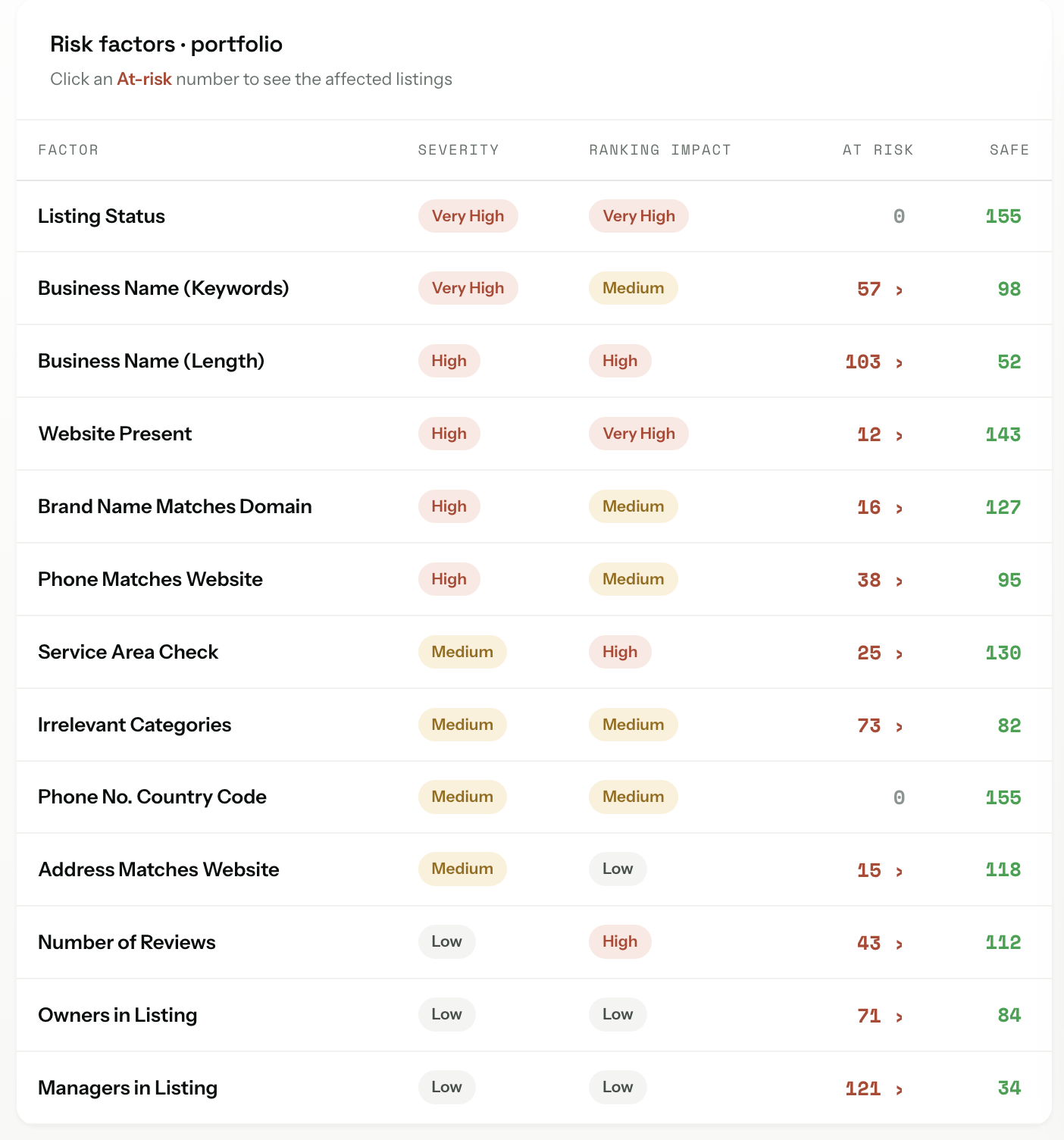
Compliance in Indian healthcare marketing isn't a legal footnote anymore. It's a design constraint that shapes creative, landing pages, CRM setup, and even the doctor's social handles. Miss it and you get a state medical council notice, a DPDP complaint, or a takedown that costs a quarter of momentum.
What NMC actually restricts
The NMC code, as tightened, restricts self-promotion, guaranteed results, before-and-after images that imply cure, testimonials from patients treated by the doctor, and comparative claims against peer doctors. Aesthetic clinics, IVF centres, and cosmetic dentistry practices are the most exposed because their conversion creative depends on outcomes.
What you can do: educational content, credentials, procedure explainers, hospital tours, technology showcases, and third-party press mentions. What you can't: "guaranteed pregnancy", "no.1 surgeon", cured-patient stories with names, and stock-image transformations. The line is finer than most vendors admit, and most compliance mistakes come from a junior social media executive posting a reel at 11 pm.
DPDP Act 2023 and consent hygiene
The DPDP Act treats health data as sensitive personal data with a higher bar for consent. Practical implications: your lead form needs a clear purpose statement, a checkbox that isn't pre-ticked, a right-to-withdraw path, and a documented retention schedule. Your call-centre scripts need consent capture at start of call. Your CRM needs a consent log that can be produced on request. And your remarketing pixels need to respect withdrawals.
Ignoring this is a slow-burn risk. The Data Protection Board hasn't started issuing large penalties yet, but the first big healthcare case will land, and the noise will be brutal for brand trust.
ABDM: the underrated advantage
The Ayushman Bharat Digital Mission and ABHA IDs sound like a hospital IT problem. They're actually a marketing opportunity. Practices that integrate with ABDM early can offer identity-verified booking, portable records, and government-referral eligibility, which converts especially well in Tier-2 and Tier-3 markets. HealthPro 360's ABDM overlay is one path; there are others. Either way, treat this as a marketing asset, not just a compliance box.
Section takeaway: Have a healthcare-fluent lawyer review your top 20 landing pages, your ad creative library, and your CRM consent flow once a year. Costs Rs 50,000-1,50,000 and saves you a state council notice.
Local dominance: GBP, reviews, and the map pack
For any healthcare business with a physical location, local SEO is the single highest-ROI channel in India today. In our 150-clinic portfolio, GBP-sourced enquiries carry a cost per qualified lead 40-70% lower than paid search for the same specialty.
Why local is oversized for Indian healthcare
Patient families in India shortlist by distance, then by trust signals, then by price. The Google Maps 3-pack is where that shortlist is built. If you're not in the top 3 for "IVF centre near me" in your suburb, you're competing with a handicap the ads budget won't overcome.
The GBP hygiene checklist
- Primary and secondary categories chosen precisely (e.g. "Fertility clinic", not "Medical clinic")
- Full service list, each service with a 100-200 word description written for humans
- All hours, including holiday hours updated 30 days ahead
- 3-5 posts per week — updates, offers, events, doctor spotlights (compliant)
- Weekly Q&A monitoring — planted questions with your own answers are fair game
- Photo library refreshed monthly, minimum 20 recent geo-tagged shots
- Product/menu section populated with service packages and price bands where allowed
Doing this manually for a multi-location group is where the wheels come off. Our Angryturtle GBP OS runs this cadence across 30-100 listings for the same monthly cost as one in-house executive.
Reviews: the compounding asset
Target 4-8 fresh reviews per month per location, with a 4.6+ average and thoughtful owner responses inside 24 hours. Never buy reviews. Never respond defensively to a negative one — the response is read by the next 500 patient families, not the reviewer. And integrate a compliant review request into the post-consultation flow, not the pre-consultation one.
Local content: hyper-specific pages that rank
Build a dedicated page for every high-intent local combination: "orthodontist in Jayanagar", "hair transplant clinic in Andheri", "IVF centre in Salt Lake". Each with unique content, local doctor bios, real photos, and directions embedded. In our data, sites with 40-60 such pages typically capture 3-5x the local organic traffic of sites with a single generic city page.
Section takeaway: If you do only one thing in the next 30 days, run a GBP audit across every location and fix the categories, services, and posting cadence. The map pack is decided before the patient ever visits your website.
Content, SEO, and winning the AI answer layer
Traditional SEO isn't dead. But the layer sitting on top of it — AI-generated answers on Google's AIO, ChatGPT, Perplexity, Gemini, and Claude — is where a growing share of first impressions now happen. In 2026, your content strategy has to serve both a search engine and an answer engine, and the writing looks different for each.
The specialty-authority stack
Blog posts alone don't build authority. What does: a hub-and-spoke structure with a deep pillar page per specialty (like this one), 20-40 supporting cluster articles, doctor-authored expert pages, condition explainers, procedure guides, and a strong internal linking pattern. Each doctor should have a proper bio with credentials, published articles, and Person schema. This is what AI engines cite when they name your hospital.
Writing for AIO extraction
AI engines pull answers from clear, chunked, factually dense passages. That means TL;DR blocks, short definition paragraphs, tables, and FAQ pairs. Avoid buried leads, marketing fluff, and unqualified claims. Every stat needs a source or a qualifier. Every recommendation needs a "why". The pieces we publish for our own clients that get cited most often share three traits: they answer a specific question, they show working (data, methodology, examples), and they carry a named human byline with real credentials.
Video and YouTube: the underrated moat
YouTube in India is where Tier-2 patients research a surgeon before booking. A doctor with 30-50 educational videos, each ranked for a specific procedure query, builds a moat that competitors can't buy their way past in 6 months. Our YODA product runs this systematically — AI-assisted scripting, on-camera direction for time-poor doctors, chapters, and schema — but you can start manually with two videos a month per lead consultant.
Programmatic SEO, done right
Programmatic pages ("dental implant cost in [city]", "IVF success rate for [age band]") work in India when the underlying data is real and the pages avoid boilerplate. Where it fails: same 800 words with only the city name swapped. Google's spam updates handle those in one crawl cycle. Where it works: 30-100 pages, each with genuine local data, local doctor mentions, and unique media.
The role of structured data
Schema markup is no longer optional. MedicalOrganization, Hospital, Physician, MedicalCondition, MedicalProcedure, FAQPage, HowTo, and VideoObject schemas together tell Google and the LLMs what your entity is, who's on the team, and what you treat. Sites without proper schema are invisible to the answer layer regardless of content quality.
Section takeaway: Budget content depth over content volume. Ten deep, well-schemaed, expert-authored pillar pages will out-rank and out-cite 100 shallow blog posts every time.
Paid acquisition: Google, Meta, and YouTube for healthcare

Paid acquisition in healthcare has become both more expensive and more restricted. Google's healthcare vertical carries the highest CPC scrutiny of any category in India. Meta's ad approval on medical creatives is unpredictable. YouTube masthead placements are a Tier-1-metros-only game. Yet paid still delivers the fastest incremental lead, when set up correctly.
Google Ads for high-intent specialties
Search campaigns for IVF, ortho, cosmetic dentistry, hair transplant, and cardiac procedures still convert. Rules of engagement in 2026: exact and phrase match dominate over broad match. Landing pages must load in under 2.5 seconds on mid-range Android. Ad copy must avoid "guaranteed" and "best". Every campaign needs proper location targeting down to postcode radius, negative keyword lists tuned to filter salary and course seekers, and offline conversion feedback from your CRM.
Typical healthy CPQL (cost per qualified lead) in our data: Rs 400-900 for dental, Rs 800-2,500 for IVF, Rs 1,500-4,000 for cardiac, Rs 300-700 for general OPD. If yours is 2x these, the leak is landing page and CRM, not the ad account.
Meta Ads: creative volume is the moat
On Instagram and Facebook, healthcare creative burns out fast because of ad fatigue and Meta's own medical policy tightening. You need 20-40 creative variants per specialty per month, not 3. Our Meta Catalyst IQ product exists because we saw agencies losing accounts over exactly this — good targeting, weak creative volume. Reels and carousels beat single-image ads by 2-3x in most healthcare tests we run.
YouTube: brand plus performance
YouTube is dual-purpose. In-stream ads for brand memory work at Tier-1 for hospitals doing Rs 50 lakh+ annual media. For clinics, YouTube discovery ads (in the sidebar and app feed) are underused and cheap. Combined with a proper YouTube SEO layer (chapters, playlists, end screens), a lead consultant's channel becomes a demand-generation asset that keeps working after the ad budget stops.
WhatsApp: the conversion channel
Nothing converts in Indian healthcare like WhatsApp. Click-to-WhatsApp ads on Meta, WhatsApp Business API for appointment nudges, and pre-consultation document collection are all core in 2026. Every landing page needs a WhatsApp CTA above the fold and a phone fallback. In our audits, sites without WhatsApp lose 20-35% of leads compared to sites with it, holding everything else constant.
Section takeaway: Paid spend without landing page discipline, CRM speed, and WhatsApp fallback is just expensive traffic. Fix the funnel first, then scale the media budget.
CRM and the leaking bucket problem

The most expensive mistake in Indian healthcare marketing isn't a bad ad campaign. It's a good campaign that fills a leaky bucket. In our 150-clinic portfolio, 40-60% of paid leads never receive a callback within an hour. Some never receive one at all.
What the leak actually looks like
Leads land in a form. Form emails a shared inbox. Inbox is checked twice a day. High-intent leads are called first, low-intent ones ignored. WhatsApp DMs are answered by whichever executive is free. No source tagging, no consent log, no follow-up cadence. Come reporting day, the agency shows leads. The hospital shows almost no revenue. Both sides get suspicious. The account churns in 90 days.
The stack that fixes it
A healthcare-specific CRM (our AtomCRM at Rs 50,000/- setup + Rs 799/- per telecaller is one option, there are others) with: single inbox for form, WhatsApp, call, and walk-in leads; auto-assignment rules; SLA timers with escalation; source and campaign tagging pushed back to Google and Meta for optimisation; consent log; follow-up sequences by specialty; and a live dashboard the hospital promoter can open on their phone.
The 5-minute callback rule
The single highest-ROI operational change we recommend: guarantee a callback in under 5 minutes for high-intent enquiries during business hours. Not aspiration. Guarantee. Staff the phone accordingly, or route to a compliant tele-consult desk. In our data, this alone lifts lead-to-consultation conversion by 40-90% depending on specialty.
Reporting that promoters actually read
Weekly one-pager, not monthly 40-slide deck. Leads by source, cost per qualified lead, consultation rate, conversion to procedure, revenue attributed. Anything else goes in an appendix. If your agency can't produce this in week one, that's the tell.
Section takeaway: A functional CRM plus a 5-minute callback SLA typically returns more than doubling the ad budget. Fix this before you scale spend.
Benchmarks: what good looks like across specialties
Ranges below are drawn from our 150-clinic portfolio over the last 12 months. They're directional, not guarantees. Your mileage varies by city tier, brand strength, and lead handling.
Cost per qualified lead by specialty (Tier-1 metro, 2026)
| Specialty | Google Ads CPQL | Meta Ads CPQL | Consult-to-procedure % |
|---|---|---|---|
| General dental | Rs 300-700 | Rs 200-500 | 35-55% |
| Cosmetic dentistry / implants | Rs 800-2,000 | Rs 600-1,500 | 20-35% |
| IVF | Rs 800-2,500 | Rs 700-2,200 | 15-30% |
| Hair transplant | Rs 600-1,800 | Rs 400-1,400 | 18-30% |
| Orthopaedics (joint replacement) | Rs 1,200-3,500 | Rs 900-2,800 | 10-22% |
| Cardiac (angioplasty / CABG) | Rs 1,500-4,000 | Rs 1,200-3,200 | 8-18% |
| Aesthetic dermatology | Rs 400-1,200 | Rs 300-900 | 25-45% |
| General OPD (multi-specialty) | Rs 300-700 | Rs 200-500 | 40-60% |
Monthly budget bands that actually work
| Setup | Typical monthly budget | Realistic leads/day |
|---|---|---|
| Solo clinic, single location, Tier-2 | Rs 40,000 - 1,20,000 | 2-6 |
| Multi-doctor clinic, Tier-1 metro | Rs 1,50,000 - 4,00,000 | 6-15 |
| Single-specialty hospital, Tier-1 | Rs 3,00,000 - 8,00,000 | 15-35 |
| Multi-location chain, national | Rs 10,00,000 - 40,00,000 | 40-120 |
Section takeaway: If your CPQL is more than 2x these bands, the fix is almost never "more budget". It's landing page, CRM speed, or targeting discipline.
Buyer archetypes: matching strategy to your setup
The right playbook depends on which of these you are. Most of the failed engagements we've seen came from applying a hospital-chain playbook to a solo clinic, or vice versa.
Archetype 1: The Solo Founder Doctor
A dentist, dermatologist, gynaecologist, or physiotherapist running one clinic in a Tier-1 or Tier-2 city. Budget Rs 40,000-1,20,000 a month. What works: obsessive GBP hygiene, 40-60 hyper-local pages, doctor-led YouTube (2 videos a month), WhatsApp-first lead handling, and one paid channel done well rather than three done badly. What doesn't: national brand campaigns, generic influencer collabs, elaborate agency retainers that eat the whole budget.
Archetype 2: The Multi-Location Chain Founder
A 4-30 clinic chain in one specialty. Budget Rs 3-15 lakh a month. What works: per-location GBP operations (this is where Angryturtle earns its keep), a strong central content engine, doctor authority pages for the top 20-30 consultants, CRM with per-location dashboards, and a media plan that flexes budget to whichever locations are ramp-mode. What doesn't: one agency running everything from a single dashboard, no per-location accountability, and creative approvals bottlenecked at HQ.
Archetype 3: The Hospital CMO
A single-specialty hospital or a 100-500 bed multi-specialty. Budget Rs 5-40 lakh a month. What works: a real brand campaign (not just performance), department-wise landing page architecture, doctor influencer programme for top-quartile consultants, insurance and TPA content, international patient pages (especially for cardiac and ortho), and a proper analytics stack with LTV attribution. What doesn't: treating marketing as a lead-gen cost centre disconnected from patient experience and doctor recruitment.
Archetype 4: The Pharma Brand Manager
Prescription or OTC brand at a mid-cap Indian or MNC pharma. Budget Rs 15 lakh-2 crore a year for digital. What works: HCP-first content (educational, evidence-heavy), condition awareness campaigns for OTC, DPCO-compliant creatives, medical rep enablement content, KOL programmes done cleanly, and never mixing consumer and HCP audiences on the same handles. What doesn't: patient-testimonial-driven creative, pushing bottom-funnel offers on prescription molecules, and any shortcut around the OPPI code.
Section takeaway: Pick your archetype honestly. Ask any prospective agency to describe how their playbook differs across all four. If they can't, they're pattern-matching.
Common mistakes we see in 150+ clinic audits
Every one of these is fixable in a quarter. Every one of them is more common than you'd think.
- Running ads to the homepage. A generic homepage converts at a fraction of the rate of a specialty-specific landing page. If your dental implant ad points to yourpractice.com, you're spending 2-3x per lead than you should.
- No offline conversion tracking. Google and Meta optimise for whatever you tell them to. If they don't know which leads actually converted to procedures, they optimise for volume, not value.
- Same creative for 6 months. Healthcare ad creative burns out in 4-8 weeks on Meta. Sites running the same 3 static creatives all year are paying an unnecessary CPQL premium.
- Ignoring the doctor's personal brand. Patients follow doctors, not logos. A hospital that lets its top consultants build clean personal brands under a coordinated policy grows faster than one that suppresses individual visibility.
- Cheap reviews, expensive consequences. Bought reviews get flagged, the listing loses trust, and recovery takes 6-12 months. Never worth it.
- Chasing pop culture on social. A trending dance reel from a hospital handle destroys trust with the exact audience segment that pays for the procedure. Educational, calm, credentialed content wins the wallet.
- Vendor concentration risk. One agency doing SEO, ads, content, and CRM under one roof sounds efficient until it isn't. Best-in-class per function, coordinated by an in-house owner, beats "full service" in almost every account over 18 months.
- No monthly review with the promoter present. Marketing engagements without direct promoter engagement stall. If the founder is too busy for a monthly one-hour review, the account is under-prioritised and will underperform.
Section takeaway: Do an honest audit against this list twice a year. Every mistake fixed compounds.
The ICG 70-30 pricing model
Fee should reflect outcome, not effort. Our 70-30 model splits the retainer so 70% covers the fixed operational cost of doing the work — content production, ad management, GBP operations, CRM setup, weekly reviews — and 30% is tied to a 12-month target agreed with the client on day zero.
Three tiers, priced for Indian healthcare specifically:
- Foundation — Rs 49,999 per month. For solo clinics and early-stage single-location practices. Covers GBP operations, foundational SEO, content cadence, and basic paid.
- Growth — Rs 74,999 per month. For multi-doctor clinics and single-specialty growth-stage practices. Adds full-funnel paid, YouTube SEO, and a lead CRM setup.
- Scale — Rs 99,999 per month. For multi-location chains and single-specialty hospitals. Adds per-location operations, doctor authority programme, and offline conversion feedback loops.
The same 70-30 model extends to Google Ads and Meta media at monthly ad budgets above Rs 5 lakh, and to YouTube SEO / AIO retainers from Rs 50,000 a month upward. The point isn't the tier. It's the accountability. Ask any agency you're evaluating what percentage of their fee is at risk against your target. If the answer is zero, you already know how the year will go.
The 12-month execution roadmap
Use this as your quarter-by-quarter checklist. It assumes you're starting near-zero. Compress it if you already have parts running.
Quarter 1 (months 1-3): fix the foundation
- Complete GBP audit and remediation across every location
- Doctor list clean-up, single source of truth, credentials verified
- Website audit: schema, speed, mobile, crawlability
- CRM stood up, source tagging live, 5-minute callback SLA enforced
- DPDP consent flow deployed on all forms and call scripts
- NMC compliance sweep on existing landing pages and creative library
- Publish the specialty pillar page (like this one) for your top 3 specialties
Quarter 2 (months 4-6): build the demand engine
- 40-60 hyper-local pages per priority city
- 20-40 supporting cluster articles per pillar
- Doctor authority pages for top 10-30 consultants with Person schema
- YouTube channel setup, 2 videos per lead consultant per month
- Google Ads launched on top 3 specialty campaigns with offline conversion feedback
- Meta creative library: 20-40 variants per specialty per month
- WhatsApp Business API integrated with CRM
Quarter 3 (months 7-9): scale what works
- Double down on the 2-3 channels with best CPQL, cut the rest
- Programmatic city and specialty pages if data supports it
- AIO push: TL;DR blocks, tables, FAQ pairs added to top 30 pages
- Review programme hitting 4-8 fresh reviews per location per month
- First quarterly business review with the promoter present
- Compliance re-audit; recalibrate any drift
Quarter 4 (months 10-12): compound and defend
- Doctor personal brand programme in full swing
- YouTube library at 30-50 videos per top consultant
- Retention and reactivation campaigns to existing patient list (consented only)
- ABDM integration live if applicable
- Full year audit against the 70-30 target; renegotiate scope and fee
- Roadmap for year two, with content depth, not just channel spread
Section takeaway: Twelve months is enough to move a healthcare business from broken foundation to compounding growth. It is not enough to skip steps. Every quarter builds on the last.
Key takeaways
- The 2026 India playbook is compliance-first, AI-native, and outcome-accountable. Older playbooks miss all three.
- Fix the five foundations before spending on ads: single source of truth, crawlable site, GBP per location, working lead-to-call loop, and a named growth owner.
- NMC, DPDP Act 2023, and ABDM aren't optional. They shape creative, landing pages, CRM, and even doctor social handles.
- Local dominance via GBP and hyper-local pages typically delivers 40-70% lower CPQL than paid search for the same specialty.
- Content depth over volume. Ten expert-authored, schemaed pillar pages beat 100 shallow blogs for both search and AIO citation.
- Paid works when the funnel is fixed. CPQL 2x the benchmark is a landing page and CRM problem, not a media budget problem.
- The 5-minute callback rule alone lifts lead-to-consultation by 40-90% in our data.
- Match your playbook to your archetype: solo founder, chain founder, hospital CMO, or pharma brand manager. Each needs different moves.
- The 70-30 model (Foundation Rs 49,999 / Growth Rs 74,999 / Scale Rs 99,999) ties 30% of fee to a 12-month target so accountability is baked in.
- Follow the 12-month roadmap in order. Compress it if you've already built pieces, but don't skip steps.
Frequently asked questions
What is the realistic budget for healthcare marketing in India in 2026?
A solo clinic in a Tier-2 city can start at Rs 40,000-1,20,000 a month across all channels. A multi-doctor Tier-1 clinic typically needs Rs 1.5-4 lakh. A single-specialty hospital at Rs 3-8 lakh. A national multi-location chain Rs 10-40 lakh. These include content, SEO, ads, GBP operations, and CRM tooling. Below these bands you're underfunded; well above them without a clear plan usually means waste.
How long does it take to see results from healthcare SEO in India?
For local SEO (GBP + hyper-local pages), first meaningful lifts show in 60-90 days. For organic search and content, expect 4-6 months to see traffic movement and 9-12 months for compounding gains. AIO citations start appearing in 3-6 months for pages built specifically for that layer. Paid, obviously, works in week one — but only if the funnel is fixed.
Is influencer marketing worth it for hospitals and clinics?
Sometimes, and only when done cleanly. NMC restrictions and DPDP considerations make patient-testimonial influencer content risky. What works better in Indian healthcare: micro-influencers in the health and wellness space doing awareness content, not endorsement content. Doctor-led personal brand-building on your own consultants typically outperforms any paid influencer play.
How do I choose between an in-house team and an agency?
In-house works when you're doing over Rs 20 lakh a month in media and can hire senior specialists. Agency works when you need best-in-class per function without paying six senior salaries. The best-performing setups we see are hybrid: a senior in-house owner who runs the strategy, plus specialist agency partners per function. The failure mode either way is the same — no in-house owner, no accountability.
What are the biggest DPDP Act compliance risks for a healthcare marketer?
Three main ones: pre-ticked consent boxes on lead forms, retargeting audiences built without documented consent, and CRM systems that can't produce a consent log on request. Fix all three inside the first quarter. Have a healthcare-fluent lawyer review your consent flow annually.
How is AIO different from traditional SEO, and what should I do about it?
Traditional SEO ranks pages. AIO extracts answers. Your job now is to write pages that both rank and get cited. Practical moves: TL;DR blocks at the top, clear H2 questions with tight answers, tables for comparative data, FAQ sections, named-expert bylines with credentials, and complete schema markup. The best AIO-ready pages tend also to be the best traditional SEO pages, so this isn't a trade-off.
Do I need a CRM or is a shared inbox enough?
A shared inbox is enough for a solo clinic doing 2-4 leads a day. Beyond that, a proper CRM is where the growth is. It doesn't have to be expensive — a healthcare-specific tool at Rs 14,999 a month covers most needs for a mid-sized clinic. The gain is not the software; it's the operational discipline it forces.
How should a hospital handle negative Google reviews?
Respond within 24 hours, calmly, without disclosing patient information. Acknowledge the concern, offer a private channel to resolve, and never argue on the public thread. Your response is read by the next 500 patient families, not by the reviewer. Also invest in fresh review inflow so one negative review is diluted by ten recent positive ones inside a fortnight.
Is YouTube worth the investment for a specialty clinic?
Yes, if a lead consultant will commit to two videos a month for at least 12 months. YouTube is where Tier-2 patients research surgeons before booking, and a ranked video library is a moat competitors can't quickly copy. Start with the top 20 procedure queries in your specialty, script them in the doctor's voice, and add chapters and end screens on every upload.
What's the single most impactful change I can make this quarter?
Enforce a 5-minute callback SLA on all high-intent leads during business hours. In our 150-clinic data, this one operational change typically lifts lead-to-consultation conversion by 40-90%. It costs nothing in media spend, and it exposes every other weakness in your funnel so you can fix them next.
How do I know my agency is actually delivering?
Ask for a weekly one-pager with five numbers: leads by source, cost per qualified lead, consultation rate, procedure conversion, and revenue attributed. If the agency can't or won't produce this in week one, that's the signal. Also ask what percentage of their fee is at risk against your 12-month target. Zero-at-risk fee structures rarely align incentives correctly.
Where does ICG fit in this stack?
We're a founder-led healthcare marketing agency serving 300+ live clients. Our product stack — Angryturtle for GBP operations, YODA for YouTube, Meta Catalyst IQ for paid social, Prism Spy and Prism Pulse for intelligence, AtomCRM at Rs 50,000/- setup + Rs 799/- per telecaller for lead handling, and HealthPro 360 at Rs 14,999 a month for RCM/EHR overlay — is designed to be picked up modularly or run as a full retainer under the 70-30 model. The playbook above is the same one we run internally.
Book a free 30-minute Brand & Growth Diagnostic.
It's a working session, not a sales pitch — you leave with a written root-cause analysis you can act on, whether or not you engage ICG.
Questions readers ask
about this topic.
The three platforms
behind every ICG engagement.
Beacon
CAPI middleware that fixes Event Match Quality, translates CRM statuses to Meta-standard events, dedups across channels.
Agency OS
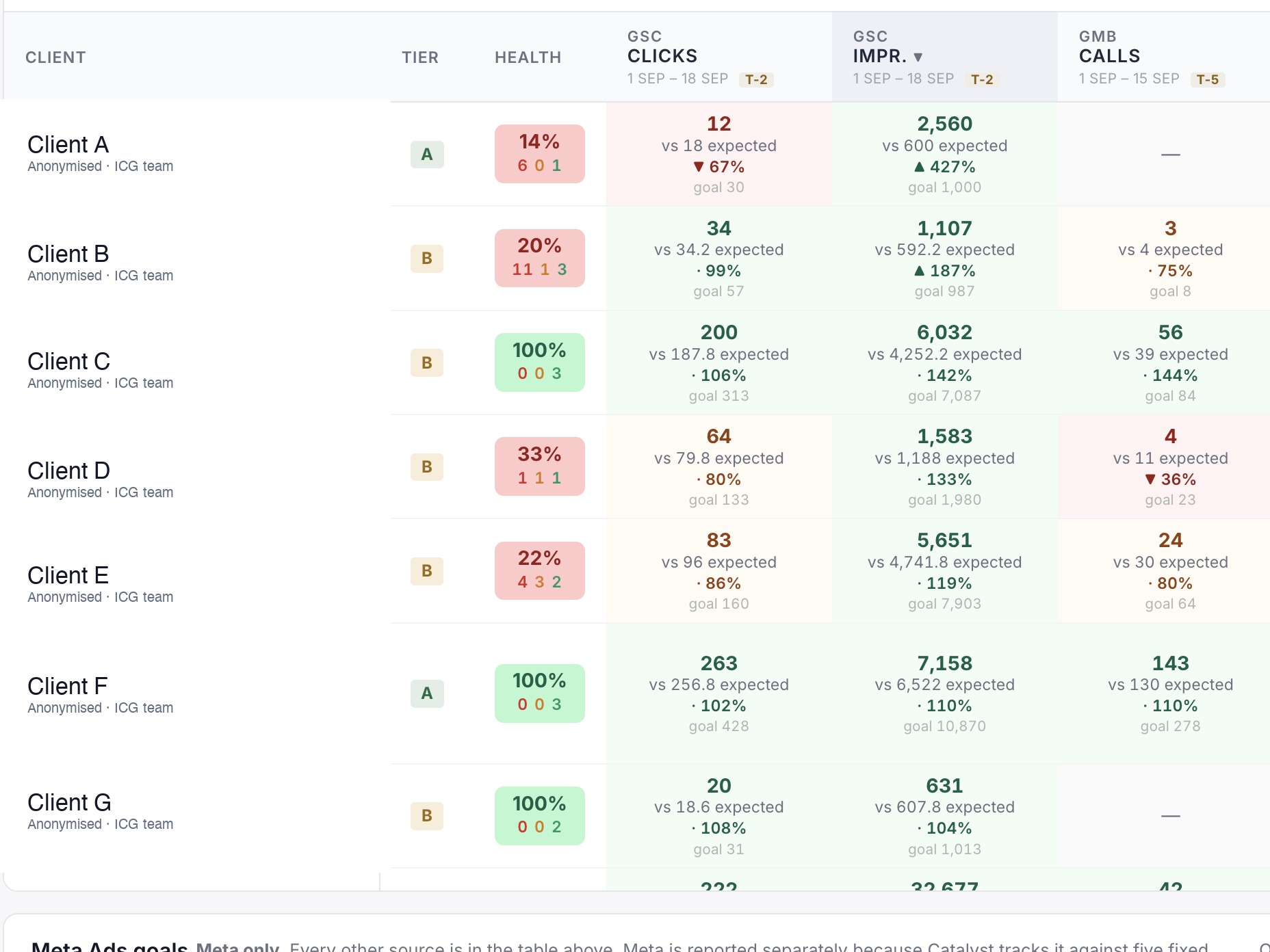
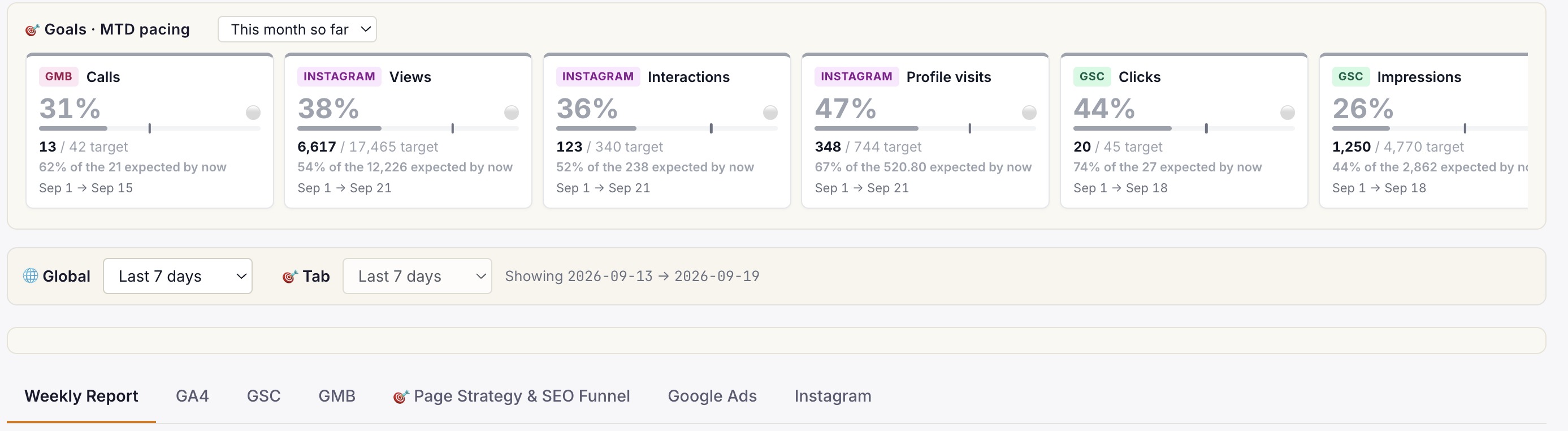
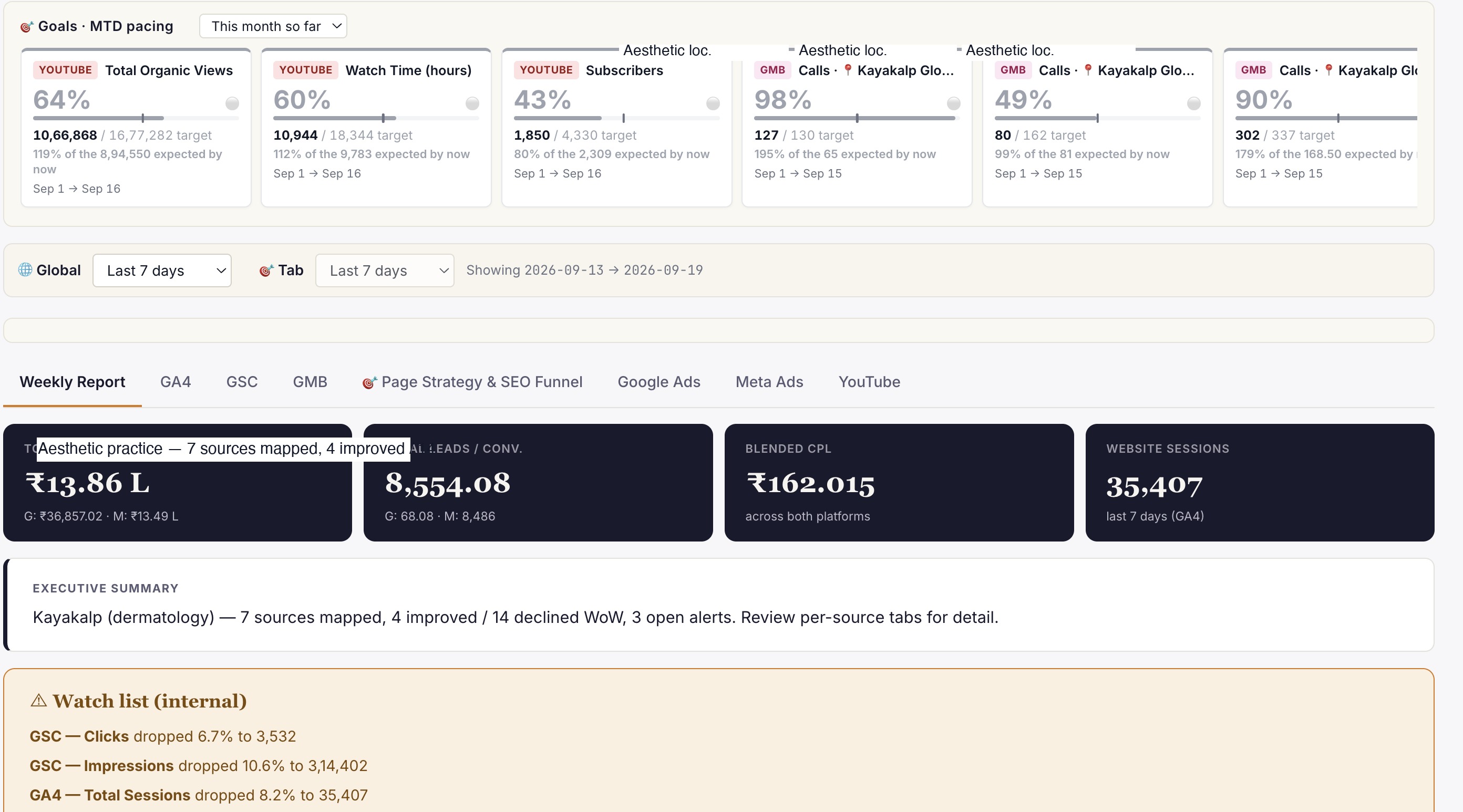
Live client dashboard. GSC, GA4, Google Ads, Meta Ads, IVR calls in one view. Login anytime, not monthly.
Phoenix
Clinic revenue intelligence over your PMS. Daily action queue: Prevent Loss, Maintain & Engage, Grow Revenue. Multi-centre rollout.
Or book a free 30-min audit to see all three in action on your account.
Healthcare brands
that already run on ICG.
A representative slice of the 150+ healthcare brands ICG has delivered for across India. Most engagements remain under NDA.


What ICG clients say · on video.
"Scale up of organic channels and business consulting. ICG has absolute domain authority in their field."
"Working with ICG transformed how we acquire IVF patients in Gurgaon. They understand the fertility journey from inquiry to consult..."
"What Ichelon accomplished — they got all my ideas and worked over 3-4 months to create an amazing, super-customised website."
Need help operationalising this?
Every ICG service is healthcare-only, NMC + DPDP-aware, and built around the patient-research patterns that drive Indian healthcare growth in 2026.
Every practice welcome — packages from ₹20,000/mo.
Goals-Driven engagements · Performance-Linked Payout Models available
More from
ICG.
Five trends shaping Indian healthcare marketing through 2027: AI-first patient research, Conversions API adoption, ABDM discovery, the AEO w...
Healthcare AIO is the discipline of getting your clinic or hospital cited inside Google AI Overviews, ChatGPT and Perplexity answers — not j...
Conversational-search advertising places brand messages inside AI chat answers — ChatGPT, Perplexity, Copilot — rather than beside a results...
Stop guessing.
Book a Diagnostic.
30 minutes. Free. With the AI-powered healthcare-only marketing agency 150+ brands already run on. No slides, no pitch, no hard close.


