


Digital transformation healthcare agency India — the enterprise partner for hospital groups and PE-backed chains.
Hospital chains, PE-backed healthcare groups, and pharma majors don't need another campaign vendor. They need someone who will sit inside the acquisition system for 18-24 months, rebuild the parts that are broken — the marketing tech stack, the attribution layer between an enquiry and a booked appointment, the location-by-location visibility problem that spreadsheets can't solve — and hand back a system the internal team can run independently once it's built. That is the engagement this page describes.
TL;DR
- This is ICG's anchor digital transformation programme, built for enterprise healthcare buyers — hospital groups, PE-backed chains, pharma majors — not single clinics.
- Engagements typically run 18-24 months across four phases: discovery, foundation and integration, scale-out, and optimisation with internal handover.
- The Search Intelligence Trifecta (Angryturtle + SIE + YODA) is the intelligence layer, combined with EMR/PMS integration and marketing-tech-stack rebuild.
- Pricing is retainer-plus-project: Retainers from Rs 20,000/month · Custom-scoped per engagement, with phase-based project fees scoped after discovery.
- The assigned account lead functions as a fractional-CGO-adjacent partner — owning the acquisition roadmap without the full-time-executive overhead.
What digital transformation actually means for a hospital group in 2026.
The phrase gets used loosely enough that it's worth being precise about what it means for a healthcare enterprise specifically, because it is not the same exercise as digital transformation for a retail chain or a bank. A hospital group's digital transformation problem sits at the intersection of three things that don't usually get solved together: patient acquisition marketing, clinical operations systems, and a location footprint that keeps growing faster than any single team can manage manually.
Concretely, it means every location's Google Business Profile, website presence, and doctor directory listing is accurate and discoverable — not managed ad hoc by whichever location manager has time that week. It means the enquiry that comes in through a website form, a WhatsApp message, or a phone call can be traced through the EMR or PMS to an actual booked appointment, so leadership can answer "what did this campaign actually produce" with a number instead of a guess. It means a marketing spend decision at the group level is informed by which locations, which specialties, and which channels are actually converting — not an average across the whole portfolio that hides which three cities are quietly losing money on paid acquisition.
For a PE-backed healthcare group specifically, there's an additional layer: the board wants to see acquisition-cost trends that map to the investment thesis, and a due-diligence-grade data trail that survives scrutiny at the next funding round or exit conversation. A collection of disconnected Google Analytics properties and a spreadsheet someone updates monthly does not survive that scrutiny. A properly integrated attribution system does.
For a pharma major with a distributed field and retail footprint, the shape of the problem shifts again — the "locations" are often distributor and retail touchpoints rather than clinical sites, and the compliance overlay (DCGI, UCPMP 2024) sits over every piece of content and every integration decision from day one, not bolted on afterward.
What ties all three buyer types together is scale breaking the tools that work fine for a single clinic. A rank tracker built for one website doesn't help when there are 40 location pages to monitor. A single Google Business Profile login doesn't help when there are 60 profiles across a state, each one a potential suspension risk if managed carelessly. A marketing team's mental model of "the funnel" doesn't help when the actual patient journey crosses a website, a call centre, a walk-in, and an EMR record that three different systems each have a partial, disagreeing version of. Digital transformation at this scale is the work of making all of that legible and connected — not a rebrand, not a new website, not a bigger ad budget.
The 18-24 month roadmap ICG runs.
Every enterprise engagement follows the same four-phase shape, though the calendar length and the specific project-fee scope inside each phase varies with the client's starting point — a 12-location chain on a modern cloud PMS moves through this roadmap faster than a 60-location group running three legacy systems that don't talk to each other.
| Phase | Duration | What happens | What ships |
|---|---|---|---|
| Phase 1 Discovery & audit | Months 0-3 | Full stack audit — EMR/PMS, CRM, website, GBP fleet, current ad accounts. Location-by-location visibility baseline. Stakeholder interviews across marketing, ops, and clinical leadership. | Stack audit report, Rank OS baseline score per location, phased project-fee quote for phases 2-4. |
| Phase 2 Foundation & integration | Months 3-9 | Tech-stack integration build (enquiry-to-appointment attribution layer), Trifecta rollout at 3-5 pilot locations, compliance-checked content and claim-language framework established. | Working attribution dashboard, pilot-location GBP/SEO/YouTube live, internal playbook v1. |
| Phase 3 Scale-out | Months 9-18 | Trifecta and integration layer rolled out across the full location footprint. Location marketing coordinators trained on their dashboards. Cluster-level content and authority building at scale. | Full-footprint visibility coverage, trained internal team, board-ready monthly reporting live. |
| Phase 4 Optimisation & handover | Months 18-24 | Internal team running day-to-day operations independently. ICG shifts to strategic-review and quarterly optimisation cadence. Capability gaps closed with targeted training. | Internal ownership of routine workflows, ICG retained for strategy and platform access, next-phase roadmap agreed. |
The reason this runs 18-24 months rather than the 3-6 month timeline of a typical SEO or GBP retainer is that most of the real work in phases 1 and 2 is not marketing execution — it's systems integration, which moves at the pace of IT approvals, vendor API access, and internal stakeholder alignment across departments that don't normally coordinate with each other. A hospital group's IT team, marketing team, and individual location managers each have their own priorities and their own calendar; getting all three moving on the same integration timeline is the actual bottleneck, not the marketing strategy itself.
Some groups extend past 24 months as an ongoing orchestration retainer once the foundation is fully live — at that point the engagement looks more like a standard ICG retainer relationship, just running across a much larger footprint with the attribution and Trifecta infrastructure already in place rather than being built from scratch.
The Search Intelligence Trifecta as the intelligence layer.
A hospital group with 40 locations cannot manage visibility the way a single clinic does — one login, one dashboard, one strategist checking rank once a week. At enterprise scale, the Search Intelligence Trifecta is the layer that makes location-by-location performance legible without requiring the marketing team to manually pull 40 separate reports every month.
Angryturtle handles the Google Business Profile fleet — every location's listing accuracy, review velocity, and suspension-risk monitoring in one place, which matters enormously at scale because a single mismanaged profile among dozens can quietly drag down the whole group's local-pack visibility in that city, and a suspended profile at a flagship location can cost weeks of enquiry volume before anyone even notices it happened.
SIE — the Search Intelligence Engine — runs the 5-stage Rank OS diagnostic (Discoverability, Indexability, Authority, Engagement, Adoption) across the group's website and every location or specialty landing page, plus AI Share of Voice tracking so leadership knows whether the group is being cited when a prospective patient asks ChatGPT or Perplexity which hospital handles a given specialty in their city — a question increasingly asked before a traditional Google search even happens.
YODA sits on top of both, watching YouTube and the brand-search flywheel — whether doctor and specialty content is being found, and whether that visibility is converting into the branded-search spike that precedes most booking decisions. For an enterprise client, the value of running all three together rather than as separate vendor relationships is a single portfolio view: leadership can see which locations are ahead, which are behind, and which specific lever — GBP health, organic authority, or video and brand search — is the actual bottleneck at each underperforming site, rather than a vague "marketing isn't working there" that nobody can act on.
Tech stack modernization — EMR, PMS, CRM, and marketing systems talking to each other.
The single most common gap ICG finds in an enterprise discovery phase is that marketing spend and clinical operations run on completely disconnected systems. Ads generate leads in a CRM or ad-platform dashboard. The EMR or PMS records appointments and treatments. Nobody has built the bridge between the two, so "did this campaign produce revenue" gets answered with a rough estimate instead of a traceable number — and at enterprise scale, a rough estimate across a multi-crore annual marketing budget is not good enough for a board or an investor.
The integration workstream starts with mapping exactly what the client's stack already has — which EMR or PMS is in use, whether it exposes an API or only manual export, what CRM (if any) currently ingests enquiries, and where call-tracking or WhatsApp Business data currently lives, usually nowhere connected to anything else. From that map, ICG builds the attribution layer: every enquiry channel — website form, WhatsApp, call, GBP messaging, walk-in referral — gets tagged at the point of capture, and that tag is carried through to the appointment record in the EMR/PMS so a completed, kept, and billed appointment can be traced back to its original source.
This is meaningfully harder than a standard marketing-attribution setup because healthcare data has genuine sensitivity constraints a typical CRM integration doesn't — patient data can't simply flow into a generic marketing dashboard without DPDP 2023-compliant handling, access controls, and often a data-residency requirement the client's compliance or legal team has to sign off on before any integration goes live. ICG's tech-stack workstream builds the integration with that constraint as a starting condition, not an afterthought discovered during a security review three months in.
Where the existing PMS or EMR has no usable API, the integration sometimes runs through a lighter-weight bridge — a structured intake form that feeds both the marketing dashboard and a manual reconciliation process into the clinical system, until the client's own IT roadmap catches up with a proper API-capable platform. ICG flags this honestly during discovery rather than promising a fully automated pipeline the underlying system can't actually support; a partial but honest attribution picture built on real data beats a fully automated one built on assumptions.
Team ops and capability building.
An 18-24 month engagement that leaves the client no more capable at month 24 than they were at month 1 has failed, regardless of how good the dashboards look in the interim. Capability building runs in parallel with the technical work from the discovery phase onward, not as a rushed handover exercise squeezed into the final month.
Location coordinators
Each location's marketing coordinator or front-desk lead is trained on the Trifecta dashboards relevant to their site — reading a GBP health score, spotting a review-response gap, understanding what the local Rank OS score means for their location specifically.
Documented playbooks
Every recurring workflow gets written down as the group scales — new-location GBP onboarding, content approval routing through compliance, the standard operating procedure for launching a new specialty landing page.
Monthly leadership sync
The account lead meets group marketing leadership monthly to review the roadmap, flag risks, and adjust phase priorities — the fractional-CGO-adjacent cadence that keeps the engagement accountable to a plan, not a vague ongoing relationship.
Internal ownership by phase 4
By months 18-24, routine operations — GBP monitoring, standard content publishing, first-line reporting — sit with the internal team. ICG retains strategic oversight, platform access, and the quarterly optimisation work that needs specialist depth.
This structure exists because enterprise clients justifiably worry about vendor lock-in on something as central as patient-acquisition infrastructure. Building internal capability alongside the technical rollout — rather than keeping every workflow deliberately opaque so the client stays dependent — is what lets an 18-24 month engagement graduate into a lighter, strategic retainer rather than an ever-expanding execution contract the client can never step back from without losing visibility entirely.
Compliance overlays for hospital groups, PE-backed chains, and pharma.
Compliance risk scales with the number of locations and the number of people touching content, which is exactly the enterprise problem. A single-clinic mistake in claim language is one page to fix. The same mistake replicated across a shared content template on 40 location pages is a much bigger exposure — and a much bigger reason enterprise clients need a partner who builds compliance checks into the workflow itself rather than relying on manual review that doesn't scale.
Every piece of content — location pages, doctor profiles, service-line descriptions, ad copy — runs through a claim-language check against NMC Section 6 and ASCI Chapter III before publishing, applied at the template level so a fix propagates across every location using that template rather than being caught and corrected location by location after the fact. Pharma-adjacent messaging, common for hospital groups running in-house pharmacy or diagnostic-partner promotions, gets an additional DCGI and UCPMP 2024 pass.
Data handling across the new attribution and integration layer is logged DPDP 2023-compliant from the integration's design stage — access controls on who can see patient-adjacent enquiry data, data-residency requirements where the client's legal team specifies them, and audit logging on the integration points between marketing systems and the EMR/PMS. Where a group's specialties or facilities carry NABH accreditation, or where AYUSH-adjacent service lines exist within the portfolio, those overlays are applied to the relevant location or service-line content specifically rather than uniformly across a portfolio where they don't apply.
For a PE-backed group specifically, this compliance discipline does double duty: it protects against the immediate regulatory and reputational risk, and it builds the kind of clean, defensible content and data trail that survives scrutiny during a future due-diligence process — a consideration that rarely shows up in a standard marketing brief but matters enormously to ownership.
Measurement and reporting cadence.
Reporting at enterprise scale has to serve two very different audiences at once — the operating marketing team who need weekly, location-level detail to act on, and the board or ownership group who need a monthly or quarterly view that answers "is this investment working" without wading through 40 location dashboards.
Weekly, the Trifecta dashboards update automatically — GBP health and risk factors across the fleet, Rank OS score movement per location, AI Share of Voice trend. This layer is built for the operating team and location coordinators to act on directly, not to be presented in a meeting.
Monthly, the account lead delivers a board-ready summary: patient-acquisition cost by channel and location, ranking and visibility trend at the portfolio level, and progress against the phase milestones locked in at kickoff — the same locked-forecast discipline SIE runs on every account, so a board sees an honest comparison against the original commitment rather than a moving goalpost dressed up as progress.
Quarterly, a deeper strategic review covers cluster-level market-share movement (is the group gaining or losing ground against the broader specialty landscape in each city, not just its own historical baseline), the ROI case for the next phase of investment, and any adjustment needed to the 18-24 month roadmap based on what discovery has revealed as the engagement progresses — because a plan built in month one inevitably needs refinement once integration work at month nine reveals constraints nobody could see from outside the client's systems.
Pricing model — retainer for orchestration, project fees per phase.
The entry retainer covers ongoing Trifecta platform access and account orchestration. The phased roadmap — discovery, foundation and integration, scale-out, optimisation — carries separate project fees, scoped after the discovery phase based on location count, existing stack complexity, and integration depth required.
Enterprise pricing works differently from a standard SEO or GBP retainer precisely because the scope of work is not knowable in advance. A 12-location chain running a modern, API-capable PMS needs a fundamentally lighter integration build than a 60-location group running three legacy systems that don't talk to each other and require custom bridge-building for every one. Quoting a fixed number before discovery would mean either underscoping the harder cases or overcharging the easier ones — neither is honest, so ICG doesn't do it.
What does stay consistent, deliberately, is the entry point: the base orchestration retainer starts from Rs 20,000/month regardless of how large the eventual engagement grows, the same entry rate as any other ICG retainer. What changes for an enterprise client is the project-fee layer stacked on top — the phase 2 integration build, the phase 3 scale-out content and authority work across dozens of locations, and any custom development the attribution layer requires — each scoped individually and agreed before that phase begins, not bundled into a single opaque enterprise number quoted on a first call.
This structure gives a client real off-ramps too. If phase 1 discovery reveals the internal appetite or budget isn't there for the full 18-24 month build, the engagement can stop at the orchestration-retainer level with the Trifecta running as a standalone visibility layer — no obligation to commit to the full transformation programme before seeing what discovery actually finds inside the existing systems.
Who this is for.
This programme is built for three buyer profiles specifically, and it is worth being direct about who it is not built for, because the engagement length and pricing structure only make sense at a certain scale.
Hospital groups
Multi-facility hospital chains — typically 8 or more locations, or fewer large facilities each running multiple service lines and a complex referral network — where visibility, attribution, and reporting have outgrown what a single marketing coordinator can manage manually.
PE-backed healthcare chains
Diagnostic, clinic, or specialty chains under private-equity ownership, where a board or investor group needs defensible, auditable acquisition-cost data alongside the operational marketing lift itself.
Pharma majors
Companies with a distributed field or retail footprint where digital visibility, compliance-checked content at scale, and integration with existing distributor or CRM systems present the same structural challenge as a multi-location clinical chain.
A single-clinic practice or a small 2-3 location group is genuinely better served by ICG's standard SEO, GBP, or YouTube retainers — the full 18-24 month transformation programme carries integration and orchestration overhead that only pays for itself once the location count and stack complexity reach a certain scale. Part of the discovery-phase conversation, honestly, is ICG telling a prospective client when a lighter standard retainer is the right fit instead of the full enterprise programme — a smaller group sold an enterprise-scale engagement it doesn't need is a bad outcome for both sides.
What does qualify a group for this programme, regardless of exact location count, is the presence of the underlying structural problem: disconnected systems that make attribution impossible, a location footprint too large for manual visibility management, and leadership — internal or ownership-level — that needs board-grade reporting a standard retainer's monthly PDF was never built to provide.

We cover every stage, from first search to repeat visit
- 0Foundations
- 1Demand gen
- 2Capture
- 3Lead quality
- 4Lead mgmt
- 5Scheduling
- 6Show-up
- 7Conversion
- 8Retention
We work across all nine stages, from foundations to past patients, and fix the stage that leaks first. Our own software runs the work, and every stage is reported against a monthly target on Ichelon Agency OS.
See all nine stages and the tool behind each one →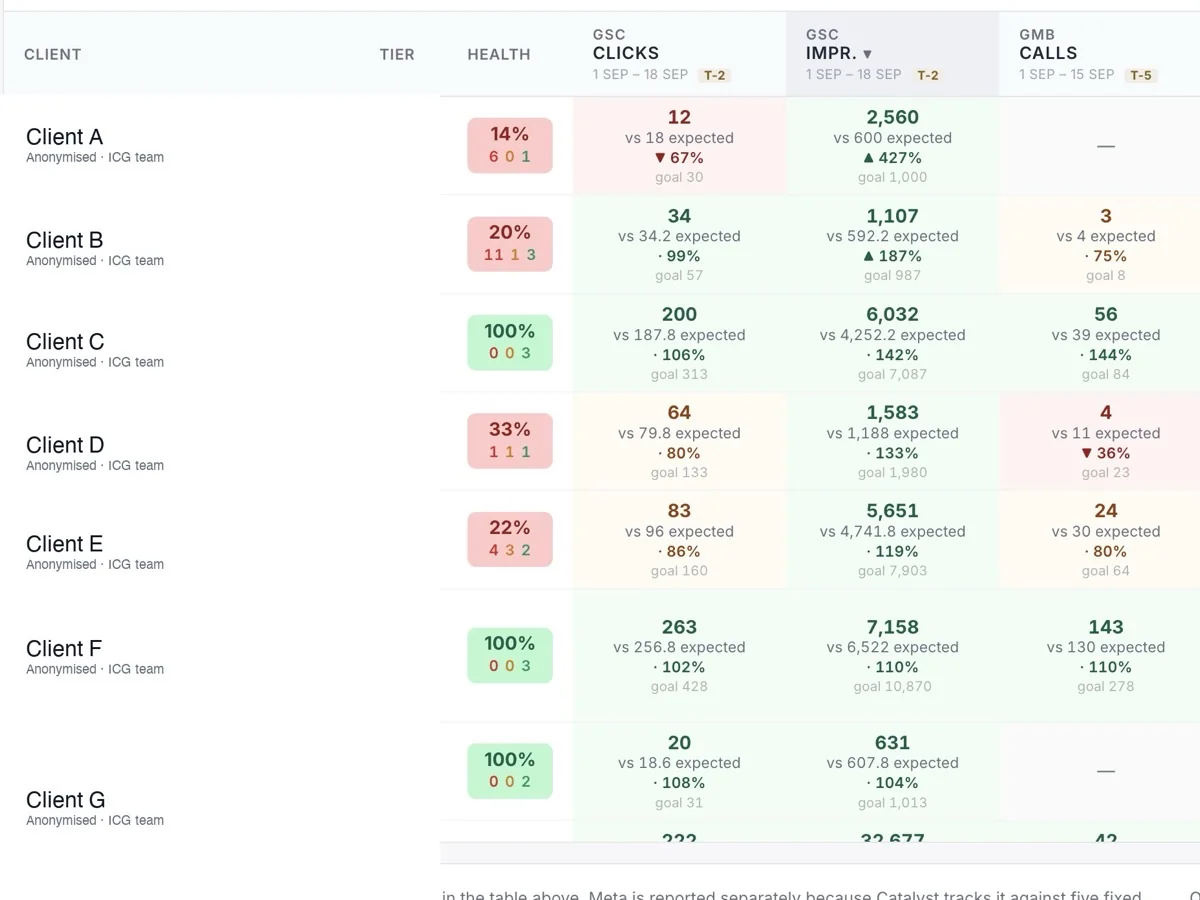
Frequently asked questions
What does digital transformation mean for a hospital group specifically?
For a hospital group or multi-clinic chain, digital transformation is not a website redesign. It means every location, doctor profile, and service line is discoverable and correctly attributed online; the EMR or PMS talks to the marketing stack so an enquiry can be traced through to a completed appointment and a treatment outcome; and leadership has one dashboard showing patient-acquisition cost by channel, by city, by specialty, instead of a dozen disconnected spreadsheets each location manager maintains separately.
How long does an enterprise digital transformation engagement run?
Typically 18 to 24 months. The first 90 days are discovery and stack audit, months 3 to 9 are foundation and integration work (tech stack, attribution, Trifecta rollout at pilot locations), months 9 to 18 are scale-out across the full location footprint, and months 18 to 24 are optimisation and internal capability handover. Some groups extend beyond 24 months as an ongoing orchestration retainer once the foundation is live.
What is the Search Intelligence Trifecta and how does it fit an enterprise engagement?
The Trifecta is three ICG-built platforms run together on every account: Angryturtle for Google Business Profile intelligence across every location, SIE (Search Intelligence Engine) for organic and AI-search visibility, and YODA for YouTube and brand-search intelligence. For an enterprise client with 15, 40, or 100+ locations, the Trifecta is the only practical way to see acquisition performance location-by-location on one dashboard instead of manually pulling reports from each clinic.
Do you integrate with our existing EMR or PMS?
Yes — ICG's tech-stack modernisation workstream maps the client's existing EMR/PMS/CRM environment first, then builds the integration layer that connects enquiry sources (website forms, WhatsApp, call tracking, GBP messaging) through to the appointment record, so a marketing spend can be traced to a booked, kept, and billed appointment rather than stopping at 'lead generated.' The exact integration approach depends on which EMR/PMS is in use and what its API or export capability supports.
Is this a fractional CGO arrangement?
It sits adjacent to one. ICG does not take a CXO title or board seat, but for the duration of the engagement the assigned account lead functions as the growth-marketing counterpart leadership meets monthly, owns the acquisition roadmap, chairs the cross-functional stack-integration calls, and is accountable for the numbers on the dashboard — without the equity, headcount, or full-time-employment overhead of hiring a Chief Growth Officer directly.
What compliance considerations apply to a hospital group or pharma-adjacent transformation?
NMC Section 6 and ASCI Chapter III govern claim language across every location's content and ads. Any pharma-adjacent messaging is checked against DCGI and UCPMP 2024. Patient and enquiry data moving through the new attribution layer is handled DPDP 2023-compliant, with data-residency and access-control requirements reviewed as part of the tech-stack integration workstream — this matters more at enterprise scale because a single misconfigured integration can expose data across dozens of locations at once, not one.
How do you report to a PE-backed board or ownership group?
Monthly board-ready reporting covers patient-acquisition cost by channel and location, location-level ranking and visibility trend through the Trifecta dashboard, and progress against the locked roadmap milestones agreed at kickoff. A quarterly deeper review covers cluster-level market-share movement and the ROI case for the next phase of stack investment — the format is built to sit inside a board deck without a marketing team needing to translate it first.
What size of hospital group or chain is this built for?
This programme is scoped for multi-location hospital groups, PE-backed clinic and diagnostic chains, and pharma majors with a distributed field or retail footprint — typically 8 or more locations, or a single large facility with multiple service lines and a complex referral network. Single-clinic and small multi-location practices are better served by ICG standard SEO, GBP, or YouTube retainers rather than the full transformation programme.
What happens to internal team capability after the engagement?
Capability building runs alongside the technical work from month one, not as a handover exercise tacked onto the end. Location marketing coordinators are trained on the Trifecta dashboards they will own day-to-day, an internal playbook is documented for every recurring workflow (new-location onboarding, GBP setup, content approval routing), and by months 18-24 the internal team is running routine operations independently with ICG retained for strategy, platform access, and the harder quarterly optimisation work rather than daily execution.
How does this differ from hiring a generic digital agency?
A generic agency runs campaigns. This programme rebuilds the underlying system a hospital group depends on to see, measure, and improve patient acquisition across every location — the tech-stack integration, the attribution layer connecting spend to booked appointments, and the Trifecta intelligence platforms are the actual deliverable, with campaign execution as one layer sitting on top of that foundation rather than the whole engagement.
