


WhatsApp Broadcast Lists for Healthcare in India: 2026 Playbook
A practical 2026 guide for Indian healthcare marketers on WhatsApp broadcast lists and the Business API: consent under DPDP, NMC-safe content, template design, cadence, and how ICG structures broadcast programs for clinics, hospitals and pharma.
No pitch. Written root-cause diagnosis. AI-powered, healthcare only.
Direct answer
A practical 2026 guide for Indian healthcare marketers on WhatsApp broadcast lists and the Business API: consent under DPDP, NMC-safe content, template design, cadence, and how ICG structures broadcast programs for clinics, hospitals and pharma.
TL;DR
WhatsApp is now the default patient conversation channel in India. Nine out of ten smartphone users in urban India open the app every day, and Indian healthcare businesses are quietly moving reminders, reports, refills and re-engagement onto broadcast lists and the WhatsApp Business API. But most clinics and hospitals still confuse a broadcast list with a group, treat consent as optional, and end up with numbers blocked or messages marked as spam. This 2026 playbook fixes that.
TL;DR
- WhatsApp broadcast lists (in the consumer app) cap at 256 saved contacts and only reach people who have saved your number back. Any hospital, clinic chain or pharma brand doing more than 500 outbound messages a month should move to the WhatsApp Business API.
- India's DPDP Act 2023 requires clear, documented, purpose-specific consent before every marketing broadcast. The NMC 2022 Professional Conduct code further restricts doctors from soliciting patients through promotional messages.
- Utility broadcasts dominate healthcare ROI in India: appointment reminders average 68% open rates, report-ready notifications 72%, and post-consult follow-ups draw 54% replies in ICG client data across 300+ live healthcare accounts.
- WhatsApp Business API in India costs roughly Rs 0.35 per delivered utility message and Rs 0.88 per marketing message as of 2026, before agency and platform fees.
Table of contents
- Why WhatsApp broadcasts matter for Indian healthcare in 2026
- What is the difference between a broadcast list and the WhatsApp Business API?
- Are WhatsApp broadcasts legal under DPDP and NMC in 2026?
- What kind of healthcare broadcast content actually works in India?
- How do you build a clean, consented broadcast list for a clinic or hospital?
- What broadcast cadence and timing work for Indian patients?
- How do you measure ROI on WhatsApp broadcasts in healthcare?
- How ICG structures WhatsApp broadcast programs for healthcare
- Where WhatsApp broadcasts sit inside ICG's 70-30 pricing model
- FAQ
Why WhatsApp broadcasts matter for Indian healthcare in 2026
WhatsApp is the most opened app on Indian smartphones, ahead of every social platform, and it has quietly become the default channel for anything a patient actually needs to act on. Reminders, prescriptions, lab reports, pre-op instructions, insurance queries and follow-up appointments all move faster there than on SMS or email.
For an Indian clinic doing 40 to 80 appointments a day, the marketing question in 2026 is no longer whether to be on WhatsApp. It is how to use it without getting blocked, without triggering a DPDP complaint, and without burning the brand of the doctor whose face is on the message. That is where broadcast lists, and later the WhatsApp Business API, come in.
Three shifts are pushing this hard right now. First, SMS DLT approvals for pharma and hospital senders have become slower and more restrictive since 2024. Second, IVR and outbound call answer rates in metros have dropped below 22% for unknown numbers. Third, patients across Bengaluru, Hyderabad, Pune and Delhi NCR increasingly reject calls but reply to WhatsApp messages within minutes.
What is the difference between a broadcast list and the WhatsApp Business API?
A WhatsApp broadcast list is a native feature of the consumer and WhatsApp Business app that lets you send one message to up to 256 saved contacts at once, but only those who have saved your number will actually receive it. The WhatsApp Business API is a paid, template-based enterprise channel with no 256 cap, real analytics, and formal opt-in flows.
The distinction is not academic. A single-doctor clinic in Indiranagar with a loyal patient base of 400 can run broadcast lists cleanly from the WhatsApp Business app. A 6-branch dental chain in Hyderabad sending 8,000 recall reminders a month cannot. The consumer broadcast feature will silently deliver to a fraction of the list, the marketing team will assume it worked, and 90 days later recall bookings will look flat.
Quick comparison
| Feature | Broadcast list (WhatsApp Business app) | WhatsApp Business API |
|---|---|---|
| Max recipients per send | 256 saved contacts | Effectively unlimited, tiered by quality rating |
| Requires recipient to save your number | Yes, or the message will not deliver | No |
| Message approval | Free-form | Template pre-approval by Meta |
| Analytics | Read ticks only | Delivered, read, click, reply, conversion webhooks |
| Typical Indian use case | Solo doctor, single-clinic dentist, boutique aesthetics | Hospital chains, diagnostics, pharma, aggregators |
| Cost in India, 2026 | Free plus phone bill | Approx Rs 0.35 utility, Rs 0.88 marketing per message |
Rule of thumb from ICG's healthcare desk: cross 500 outbound messages a month or three clinic locations, and you should already be planning an API migration.
Are WhatsApp broadcasts legal under DPDP and NMC in 2026?
Yes, WhatsApp broadcasts are legal in India in 2026, but only if you can prove three things: purpose-limited consent under the Digital Personal Data Protection Act 2023, no violation of the National Medical Commission 2022 Professional Conduct guidelines on solicitation, and clean handling of any health data you reference. Miss any of the three and the risk moves from platform bans to statutory penalties.
Under the DPDP Act, consent must be free, specific, informed, unconditional and revocable. In practice this means a patient ticking a checkbox at reception that says Yes, I would like to receive appointment reminders and health updates from this clinic on WhatsApp, tied to that specific purpose. A blanket line buried in a five-page consent form will not survive scrutiny.
The NMC 2022 code restricts doctors from directly soliciting patients. Utility messages tied to an existing doctor-patient relationship, such as reminders, reports and post-op instructions, are safe. Promotional messages inviting new patients for cash treatments cross the line for individual practitioners, though hospitals and clinics as registered entities have more room.
Two safe patterns for Indian healthcare in 2026:
- Utility-first messaging from doctors and specialists (reminders, reports, follow-ups). Keeps you clean under NMC and gets the highest engagement.
- Marketing broadcasts from the brand entity, not the individual doctor (offers, camps, packages), with opt-in captured at the brand level and a working opt-out keyword like STOP or HATAO.
What kind of healthcare broadcast content actually works in India?
The broadcasts that perform in Indian healthcare in 2026 are the ones patients would have wanted a phone call about, sent instead as a short, template-clean WhatsApp message. Reminders, reports, refills, referrals and re-engagement. Not offers, not newsletters, not doctor birthday wishes.
Working benchmarks from ICG's healthcare accounts in the last 12 months:
- Appointment reminders sent 18 to 24 hours in advance: 68% open, 41% reply, 12% reschedule or confirm.
- Report-ready notifications from diagnostics and radiology: 72% open, 33% same-day pickup or download.
- Post-consultation follow-ups at 48 hours: 54% reply rate, roughly 8% converting into a review or referral request.
- Recall reminders for dental cleanings, IVF cycles and dermatology follow-ups at 90 to 180 days: 22% to 34% appointment rebook rate.
- Vaccination and health-check camp invites to opted-in corporate lists: 14% to 18% RSVP.
What consistently underperforms: generic health tips, motivational quotes, festival greetings and non-personalised offers. In Chennai and Kochi, English-only broadcasts also underperform bilingual ones by 20% to 30% on reply rate; Tamil and Malayalam second lines meaningfully move the needle.
How do you build a clean, consented broadcast list for a clinic or hospital?
Build the list at every touchpoint where a patient already trusts you, capture consent in writing, tag the purpose, and never merge lists across entities. A clean 3,000-contact broadcast base outperforms a dirty 30,000-contact one within 90 days, because Meta and WhatsApp actively downrank senders whose messages get blocked or ignored.
Practical build sequence for a mid-size Indian clinic or hospital:
- Reception intake: Add a checkbox to the patient registration form and the digital OPD tablet. Capture the WhatsApp number separately if it differs from the primary mobile.
- Google Business Profile: Angryturtle, ICG's Google Business Profile OS, treats the WhatsApp button on your GBP listing as a consent event when a patient clicks and initiates. Log it and route it into your patient database.
- Website chat and forms: Every lead form on your site should have an explicit WhatsApp opt-in line above the submit button, not below.
- YouTube and Instagram funnels: If you are running educational content via YODA (ICG's YouTube-native product for healthcare) or measuring Instagram performance through Prism Pulse, use the click-to-WhatsApp CTA to capture first-party consented numbers rather than buying lists.
- Meta and Google Ads: Meta Catalyst IQ, ICG's paid-media engine for healthcare, runs click-to-WhatsApp ad formats that let you capture consent inside the first message exchange, which is compliant if logged properly.
What to avoid: buying leads from data brokers, importing hospital PMS databases without a re-consent workflow, and merging pharma sales-rep contact books into a hospital broadcast list. All three are common in India and all three end in bans.
What broadcast cadence and timing work for Indian patients?
Send utility broadcasts as they happen, and cap marketing broadcasts at 2 to 4 per patient per month across all your properties combined. Send between 9:30 AM and 12:30 PM or 5:30 PM and 8:30 PM in India, avoiding early mornings and post-10 PM. Sunday evenings work well for chronic-care recalls; Monday mornings destroy open rates.
Three cadence patterns that hold up across specialties in ICG's book:
- Reminder pattern (dental, ophthalmology, IVF, dermatology): T-24 hours reminder, T-2 hours nudge, T+48 hours follow-up. Three messages per visit, all utility.
- Chronic care pattern (diabetes, cardiology, oncology): Monthly refill nudge, quarterly HbA1c or vitals reminder, half-yearly review invite. Roughly 6 to 8 messages per patient per year.
- Elective and aesthetics pattern (hair transplant, cosmetic dentistry, plastic surgery): Consult follow-up at 48 hours, then a 15-day, 30-day and 60-day nudge sequence with progressively softer CTAs, then quarterly brand updates.
One warning specific to India: festive-season broadcasts (Diwali, Onam, Eid, Pongal) work for hospitality but frequently backfire in healthcare. Patients associate their doctor's brand with trust, not sale-season noise. Keep festival messages to one gentle greeting a year at most.
How do you measure ROI on WhatsApp broadcasts in healthcare?

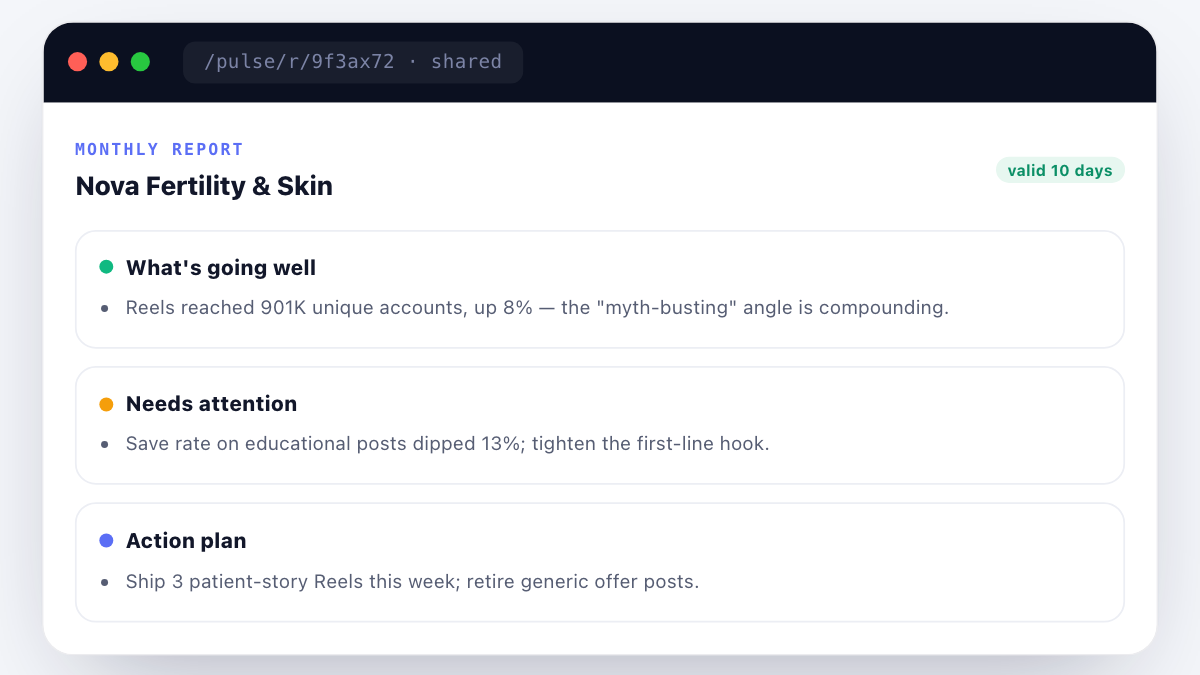
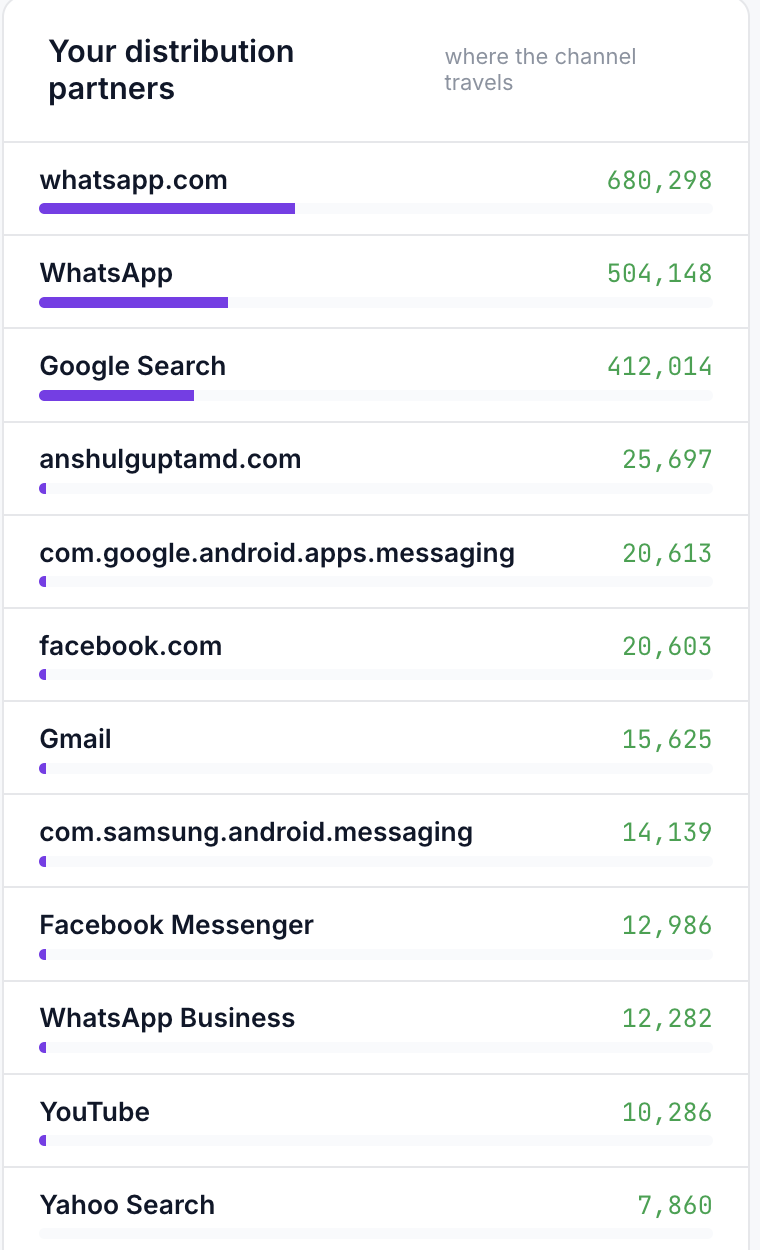
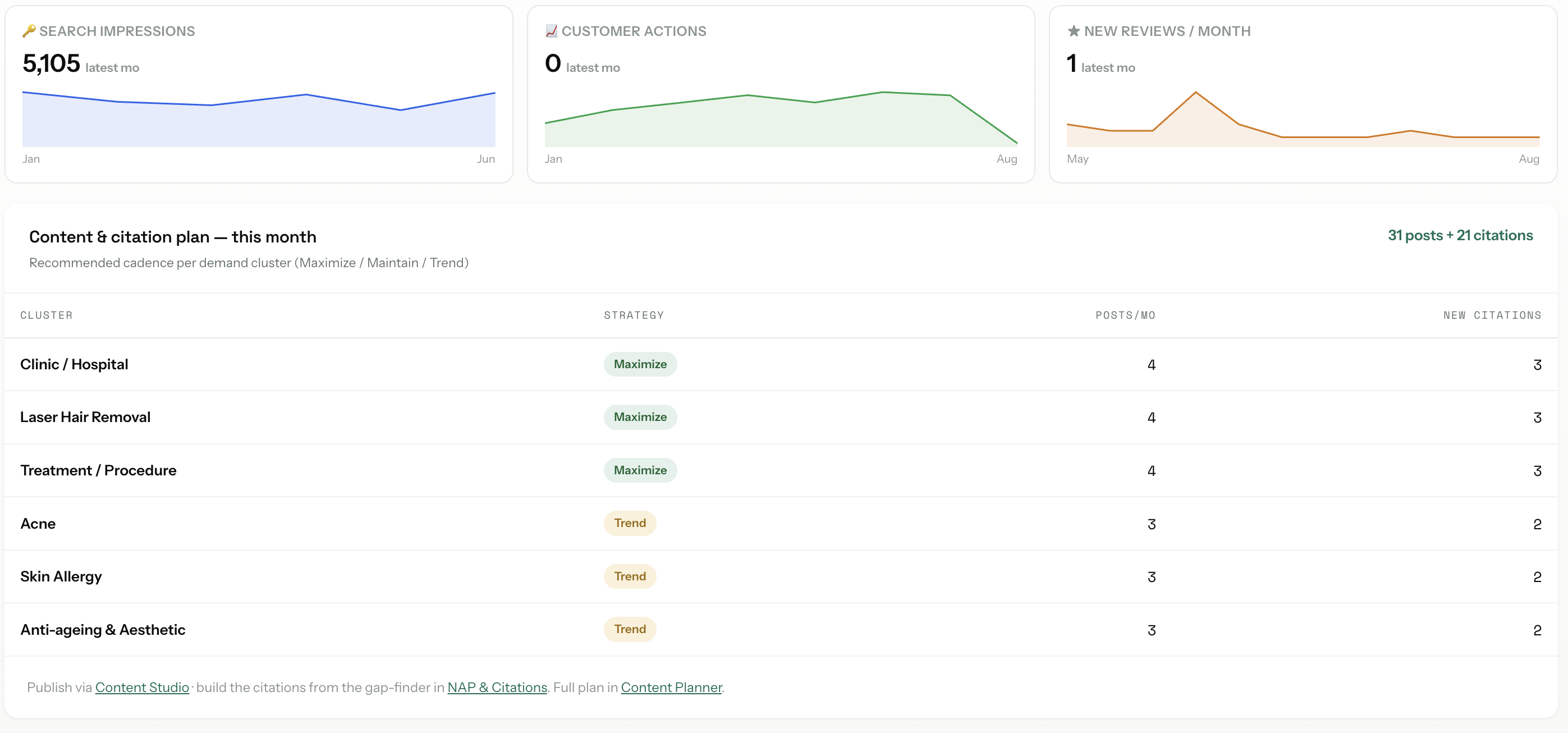
Measure WhatsApp broadcasts on the same four numbers you would measure any healthcare channel: cost per qualified lead, cost per booked appointment, show-up rate, and 90-day patient lifetime value. Vanity metrics like delivered, opened and read are useful only for template optimisation, not for board reporting.
A workable healthcare WhatsApp ROI stack for 2026:
- Attribution: Every outbound template should carry a UTM-tagged link or a unique short-code so replies can be attributed back to the campaign in your CRM. Nexus CRM, ICG's Rs 14,999 per month healthcare-native CRM, ships with this attribution out of the box, and HealthPro 360, the Rs 14,999 per month hospital RCM overlay, ties messages to encounter IDs.
- Booking funnel: Message sent, replied, appointment confirmed, appointment shown, revenue billed. If any of those five stages is not being logged, your ROI number is fiction.
- Cost math: Total WhatsApp Business API spend plus agency retainer, divided by booked appointments in the same window. For most Indian multi-specialty clinics, this settles between Rs 90 and Rs 220 per booked visit, roughly a third of paid-search cost per booking.
- Competitive read: Prism Spy, ICG's Meta Ads intelligence tool, tells you which brands in your city are running click-to-WhatsApp ads, at what frequency and against which creative angles. That context is what stops you from spending against a category that is already saturated.
How ICG structures WhatsApp broadcast programs for healthcare
At Ichelon Consulting Group, we run WhatsApp broadcast programs across more than 150 clinics and 300 live healthcare clients as a joined-up layer, not a standalone channel. The three principles are: build on first-party consent, keep utility and marketing streams separate, and always plug measurement into the CRM the client already uses.
Every WhatsApp program we run starts with a consent audit, a template library sized to the client's specialty mix, and a 30-day pilot on 1,000 to 3,000 patients before scaling. We refuse to work with purchased lists, and we do not send doctor-branded promotional broadcasts because of NMC exposure.
Our stack is deliberately modular. Angryturtle handles the Google Business Profile side and captures inbound WhatsApp intent. YODA drives long-form educational demand on YouTube. Meta Catalyst IQ runs click-to-WhatsApp paid campaigns. Prism Spy watches competitor Meta creative in your city. Prism Pulse reports Instagram-side content performance. Nexus CRM and HealthPro 360 hold the patient record and the encounter ID that every broadcast has to reconcile against. WhatsApp broadcasts are the connective tissue across all of it.
Where WhatsApp broadcasts sit inside ICG's 70-30 pricing model

WhatsApp broadcast execution is bundled inside our 70-30 fixed-variable model rather than sold as a standalone line item. 70% of your monthly retainer is fixed scope: templates, opt-in flows, cadence, reporting. 30% is variable capacity that flexes with campaign windows, new clinic launches, or seasonal pushes.
- Foundation Rs 49,999 per month: single location, up to 5,000 broadcasts a month, one template library, monthly reporting.
- Growth Rs 74,999 per month: up to 3 locations or specialties, up to 20,000 broadcasts a month, quarterly template refresh, fortnightly reporting.
- Scale Rs 99,999 per month: chain or hospital-wide rollout, up to 60,000 broadcasts a month, dedicated compliance sweeps, weekly reporting, integration into Nexus CRM or HealthPro 360.
WhatsApp Business API pass-through costs (roughly Rs 0.35 utility, Rs 0.88 marketing per message in India in 2026) sit outside the retainer, billed at cost. That keeps the pricing model honest as message volumes grow.
Book a free 30-minute Brand & Growth Diagnostic.
It's a working session, not a sales pitch — you leave with a written root-cause analysis you can act on, whether or not you engage ICG.
Questions readers ask
about this topic.
The three platforms
behind every ICG engagement.
Beacon
CAPI middleware that fixes Event Match Quality, translates CRM statuses to Meta-standard events, dedups across channels.
Agency OS
Live client dashboard. GSC, GA4, Google Ads, Meta Ads, IVR calls in one view. Login anytime, not monthly.
Phoenix
Clinic revenue intelligence over your PMS. Daily action queue: Prevent Loss, Maintain & Engage, Grow Revenue. 46-centre rollout.
Or book a free 30-min audit to see all three in action on your account.
Healthcare brands
that already run on ICG.
A representative slice of the 150+ healthcare brands ICG has delivered for across India. Most engagements remain under NDA.


What ICG clients say · on video.
"Scale up of organic channels and business consulting. ICG has absolute domain authority in their field."
"Working with ICG transformed how we acquire IVF patients in Gurgaon. They understand the fertility journey from inquiry to consult..."
"What Ichelon accomplished — they got all my ideas and worked over 3-4 months to create an amazing, super-customised website."
Need help operationalising this?
Every ICG service is healthcare-only, NMC + DPDP-aware, and built around the patient-research patterns that drive Indian healthcare growth in 2026.
More from
ICG.
Healthcare AIO is the discipline of getting your clinic or hospital cited inside Google AI Overviews, ChatGPT and Perplexity answers — not j...
Conversational-search advertising places brand messages inside AI chat answers — ChatGPT, Perplexity, Copilot — rather than beside a results...
NABH digital compliance means every claim, image and testimonial your hospital publishes online matches what an accreditation surveyor can v...
Stop guessing.
Book a Diagnostic.
30 minutes. Free. With the AI-powered healthcare-only marketing agency 150+ brands already run on. No slides, no pitch, no hard close.


