


Social Listening for Multi-Location Hospitals in India: A Marketing Director's Playbook
A practical playbook for Indian hospital marketing directors running 8-40 units: which signals to track across GMB, Meta, YouTube, and Reddit, how to stay inside the DPDP Act, and how ICG structures listening as a signal system, not a dashboard.
No pitch. Written root-cause diagnosis. AI-powered, healthcare only.
Direct answer
A practical playbook for Indian hospital marketing directors running 8-40 units: which signals to track across GMB, Meta, YouTube, and Reddit, how to stay inside the DPDP Act, and how ICG structures listening as a signal system, not a dashboard.
TL;DR
TL;DR
- Social listening for multi-location hospitals in India is the disciplined capture of what patients, referrers, doctors, and competitors say about each unit across Google, Meta, YouTube, WhatsApp, and Reddit — rolled up to a chain-level signal system, not a per-unit dashboard.
- Generic listening tools break past 8 units because they undercount Hindi and regional-language mentions, cannot ingest GMB reviews at unit level, and miss what competitor chains are running as Meta Ads.
- Under the DPDP Act 2023, hospital chains must anonymise personal identifiers at ingestion, not at reporting. Storing a reviewer's name alongside their appointment record without consent is a violation.
- ICG runs a four-product listening stack — Angryturtle for GMB, YODA for YouTube, Prism Pulse for Instagram, Prism Spy for competitor Meta Ads intel — under a 70-30 fixed-plus-variable retainer starting at Rs 49,999/month.
Table of contents
- Why this matters for Indian hospital marketing directors
- What is social listening for a hospital chain
- Why generic social listening tools fail Indian hospital groups
- Which signals should a multi-city hospital chain track
- How to set up social listening across 8-40 units
- How does the DPDP Act change social listening
- What are the most common mistakes hospital marketing teams make
- How ICG structures social listening for hospital chains
- FAQ
Why this matters for Indian hospital marketing directors
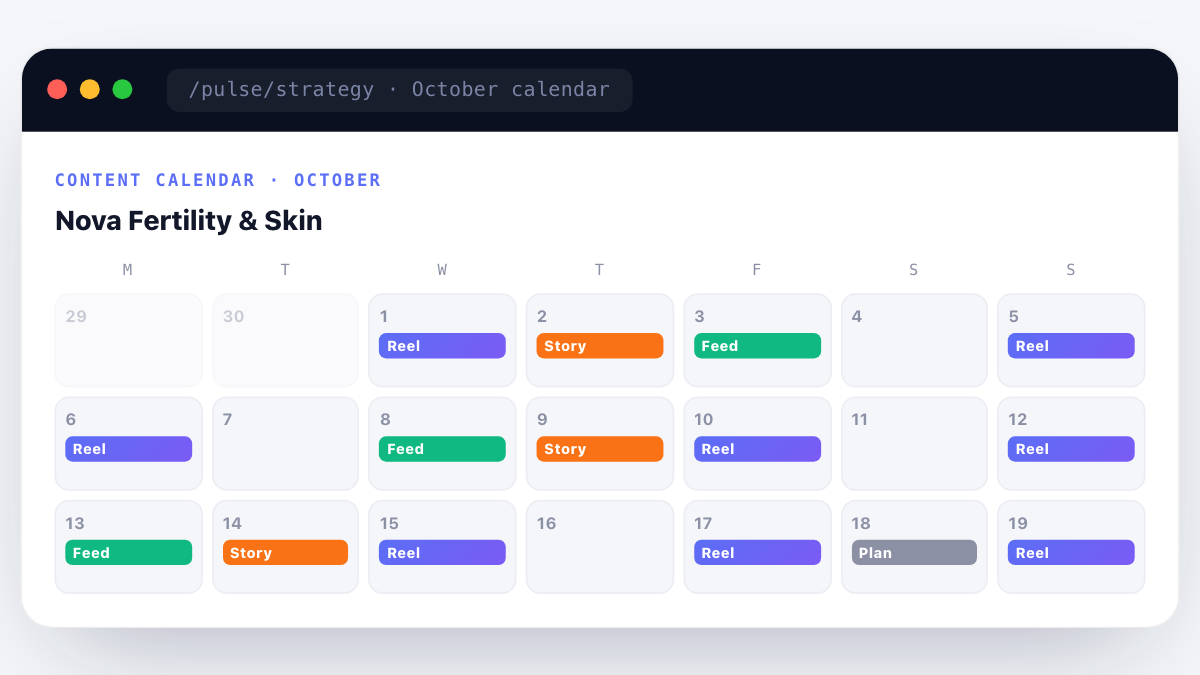

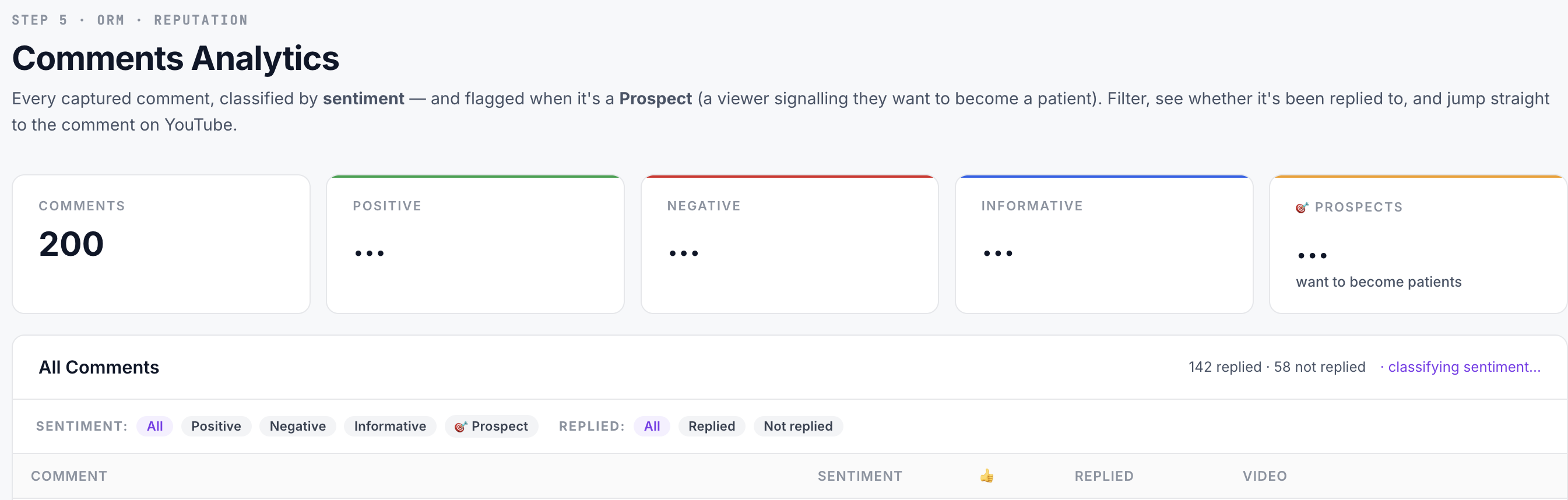
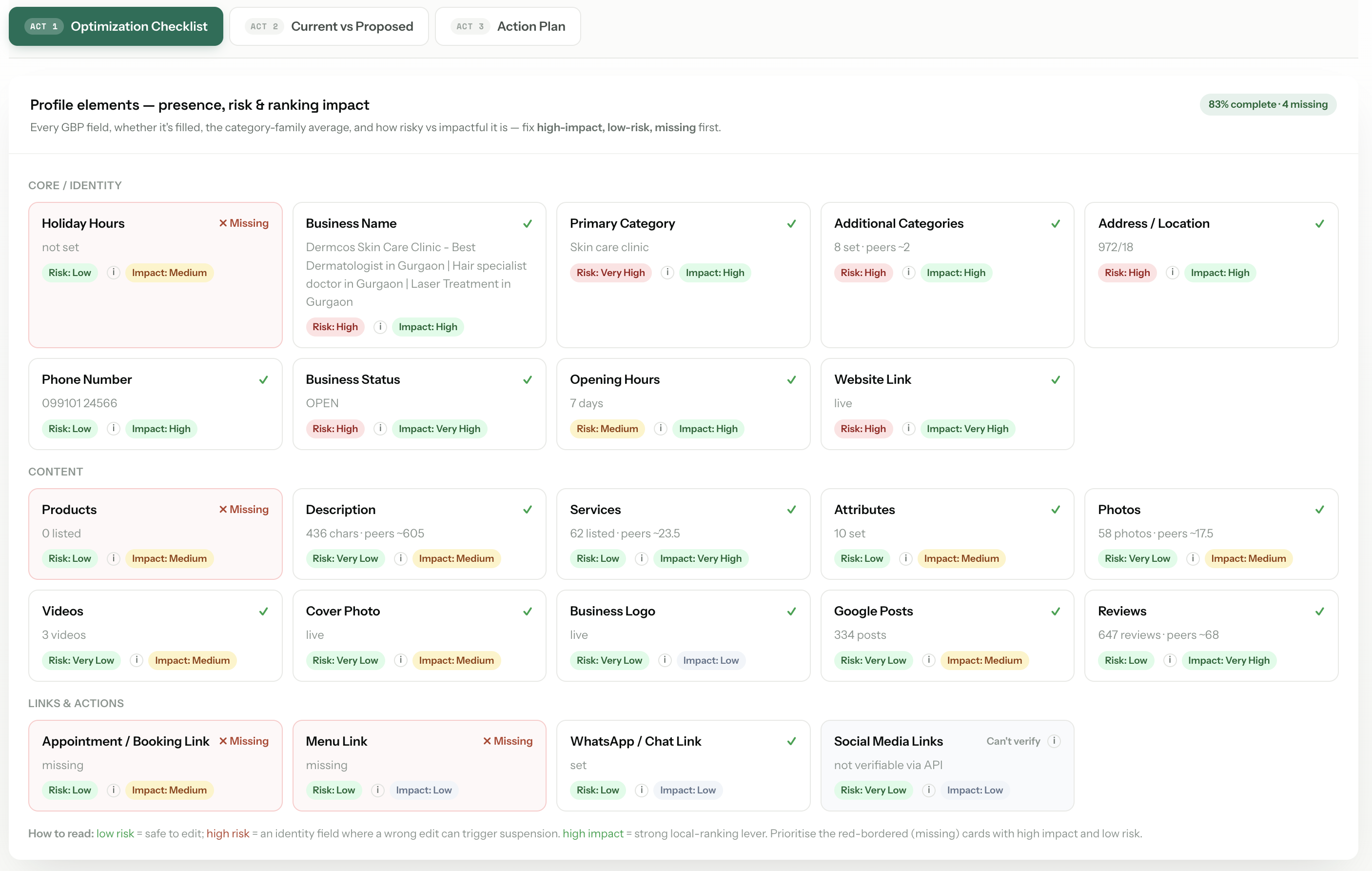
India's multi-location hospital chains have grown faster than their marketing infrastructure. A tertiary-care group that ran 6 units in 2019 now runs 22. A single-specialty IVF or dental chain that started in Bangalore now sits in Delhi NCR, Hyderabad, Kochi, Pune, and Ahmedabad. Marketing directors inherit a stack built for one hospital — one call tracker, one Google Business Profile, one Meta ad account — and are asked to defend brand reputation and lead flow across a dozen cities.
Social listening is the layer that sits underneath every real marketing decision — where to spend Meta Ads next month, which unit needs a service-recovery campaign, whether a rival chain is quietly poaching your senior consultants — and yet it is the layer most Indian hospital groups have not built. Reviews get answered when they hurt. Reddit threads get discovered by an intern. WhatsApp forwards about a botched OPD experience reach the corporate office three weeks late.
This piece is a practical playbook for hospital marketing directors, healthcare agency owners, and doctor-entrepreneurs running 3 or more units. It is not a listing of tools. It is a framework for what to listen for, how to structure the intake across cities, how to stay inside the DPDP Act while doing it, and how to translate signals into ad spend and OPD throughput.
What is social listening for a hospital chain
Social listening for a hospital chain is the structured capture of every public mention of your brand, your units, your consultants, your services, and your competitors across social and search platforms — turned into signals the marketing, medical, and operations teams can act on within a defined SLA. It is different from social media monitoring, which usually stops at your own posts.
For a multi-location hospital in India, the real surface area is wider than most teams assume. It includes Google Business Profile reviews for every unit (often 15-40 profiles across a chain), Meta comments on brand and unit pages, organic mentions in Instagram Reels and comments, YouTube comments on both your channel and competitor doctor channels, public Reddit threads on r/india, r/bangalore, r/delhi, r/mumbai, r/askdocs where Indian health seekers cross-post extensively, Quora answers where your consultants or competitors are named, LinkedIn mentions from GPs and referring specialists, and news coverage or hyperlocal blog write-ups in vernacular languages.
Listening is only useful when it rolls up. A single Reddit complaint about a Gurgaon unit means nothing on its own. Fourteen complaints about wait time across five units in an eight-week window is a P&L conversation with the CFO.
Why generic social listening tools fail Indian hospital groups
Generic social listening platforms fail Indian hospital chains for four structural reasons: they undercount vernacular mentions, they cannot ingest Google Business Profile reviews at a unit level at scale, they miss competitor Meta Ads chatter entirely, and they treat every mention as equal weight when hospital marketing needs clinical-severity tiering.
Vernacular blind spots
Between 43% and 58% of health-related social conversation in Indian Tier-2 and Tier-3 cities happens in Hindi, Marathi, Tamil, Telugu, Bengali, or Kannada — often transliterated into Roman script (Hinglish). Off-the-shelf listening engines trained on English miss this entirely. A hospital chain in Pune that only listens in English is effectively blind to two-thirds of what its own OPD patients are actually saying online.
GMB blindness
Most listening tools do not natively ingest Google Business Profile reviews at scale across many locations. But for hospital chains, GMB is the single largest source of intent — roughly 68-74% of hospital discovery in Indian metros starts on Google Maps. A tool that does not read your GMB at unit level is not a hospital listening tool.
Paid-competitor blindness
Your competitor's most aggressive positioning is inside their Meta Ads, not their organic posts. Standard listening tools do not surface competitor ad copy or creative rotation cadence. You need a dedicated Meta Ads intelligence layer for this — one of the reasons ICG built Prism Spy.
No severity tiering
A mention that says "the OT was cold" and a mention that says "wrong medication was given" are not the same mention. Generic tools sort by sentiment score. Hospital marketing teams need clinical-severity tiering, medico-legal exposure tiering, and PR-risk tiering — three separate axes with three separate escalation paths.
Which signals should a multi-city hospital chain track
A multi-city hospital chain should track five signal classes: unit-level reputation drift, consultant-level chatter, service-line demand shifts, competitor positioning, and referrer sentiment. Each maps to a different internal owner and a different reporting cadence.
Unit-level reputation drift
Track weekly delta in GMB rating per unit. A drop from 4.6 to 4.3 at a Kochi unit over three weeks is a fire alarm — that is roughly 15-25 negative reviews in a window when the unit probably only needed 6-8 nudged 5-star reviews to hold ground. Weekly deltas surface problems before quarterly reviews do.
Consultant-level chatter
Named senior consultants — cardiologists, oncologists, IVF specialists, orthopaedic surgeons — attract disproportionate mentions. Track each named consultant separately across GMB, Instagram, YouTube, and LinkedIn. If a lead consultant is being poached by a rival chain (visible via changing LinkedIn activity plus patient forum questions asking "is Dr X still at Hospital Y"), you will see it in the listening layer 3-6 weeks before HR does.
Service-line demand shifts
Rising Reddit and Quora volume on queries like "robotic knee replacement Hyderabad" or "IVF second opinion Delhi NCR" tells the chain where to point Meta Ads spend next quarter and which service lines to build long-form content around. This is where Angryturtle (ICG's Google Business Profile OS) feeds signals back into unit-level GMB posts and Q&A.
Competitor positioning
Track what rival chains are running as Meta Ads creatives, which long-tail keywords they are ranking for on YouTube, and what price signals they are pushing in Instagram captions. This is intelligence work, not vanity monitoring, and it belongs with the marketing head, not the social media coordinator.
Referrer sentiment
GPs, dentists, physios, diagnostic labs, and IVF-adjacent specialists refer to hospital chains constantly. Their public LinkedIn activity, their WhatsApp forwards within professional groups, and their public testimonial patterns are the highest-leverage signal in the entire listening stack — and the most underused signal at Indian hospital chains today.
How to set up social listening across 8-40 units
Setting up social listening across a mid-sized Indian hospital chain takes 8-12 weeks of structured work split into four phases: inventory, ingestion, tiering, and workflow. Skip any of the four and you get dashboards nobody opens after week six.
Weeks 1-3: Inventory
Map every public asset. Every GMB profile. Every Meta page. Every Instagram handle. Every YouTube channel (some units run their own). Every LinkedIn page for named consultants. Every microsite the marketing team forgot about. Most 20-unit chains discover 40-90 assets they did not know they owned — pages created by former agencies, duplicate GMBs, orphaned Instagram handles with 300 followers and one review.
Weeks 4-6: Ingestion
Set up automated ingestion. GMB reviews via the Business Profile API. Instagram via Meta Graph APIs for owned accounts. YouTube via the YouTube Data API. Reddit via keyword-based pulls. WhatsApp is not directly ingestable at scale — build a manual escalation channel with unit marketing coordinators trained to flag serious forwards within a defined SLA.
Weeks 7-9: Tiering
Tag every incoming mention against three axes: clinical severity (0-3), medico-legal exposure (0-3), and PR/brand risk (0-3). A mention scoring 3-3-3 goes to the CMO and the legal team within one hour. A mention scoring 1-0-0 waits for the weekly review. Every hospital chain needs its own tiering matrix — do not borrow one from a consumer brand playbook.
Weeks 10-12: Workflow
Build the response workflow. Who replies to a Google review under 4 stars within 4 hours? Which named consultant approves responses about their own OPD? Who owns the escalation to the medical superintendent for a Reddit thread that mentions a specific admission? Listening without workflow is just journaling with better fonts.
How does the DPDP Act change social listening
The Digital Personal Data Protection Act 2023 changes hospital social listening in one significant way: any personal identifier scraped from a social platform is personal data, and storing it in your systems without lawful basis is a violation. Listening architectures must anonymise identifiers at ingestion, not at reporting.
Practically, this means:
- You cannot store a patient's name lifted from a Google review inside your CRM alongside their appointment record without documented consent.
- You cannot forward WhatsApp screenshots that contain patient names to internal marketing groups.
- You cannot build an internal "difficult patients" or "serial complainer" list from public complaints.
- You can store anonymised sentiment, severity, unit, service line, and consultant tags indefinitely as operational data.
- You must have a documented Data Protection Officer sign-off on your listening architecture and a records-of-processing register.
The safe pattern is: ingest the mention, extract the signal, anonymise the identifier within the same pipeline, and discard the raw identifier from persistent storage. If you need to respond to a specific reviewer, the response happens on-platform, not by linking their public identity to your internal patient record. Chains operating across states also need to check how ABDM (Ayushman Bharat Digital Mission) rules interact with ABHA-linked patient data — a layer most listening vendors do not know exists.
What are the most common mistakes hospital marketing teams make
The five most common mistakes Indian hospital marketing teams make with social listening are: outsourcing to a single agency without internal escalation SOPs, listening only in English, ignoring competitor Meta Ads, treating GMB reviews as a customer service ticket queue instead of a sales asset, and buying tools before writing the workflow.
Outsourcing without SOPs
Many chains hand social listening to a digital agency and never build the internal escalation. When a real crisis hits — a viral Reddit thread about a wrong-site surgery, say — the agency does not know who to call at 11 PM on a Sunday. Nothing happens for 14 hours. By Monday morning it is on regional TV and a state consumer forum has taken cognisance.
English-only listening
Covered above. This is the single most expensive blind spot for chains operating outside metro South India and pockets of Bangalore, Bombay, and Delhi.
Ignoring competitor Meta Ads
Your rival chain in Chennai is running 42 Meta ad creatives targeting oncology second-opinion seekers this quarter. You are running 6. You will lose that quarter. You needed to know this six weeks ago, not at the year-end review.
Treating GMB as a ticket queue
Every 5-star GMB review that names a consultant is a sales asset — it should be repurposed as a testimonial embedded on the consultant's landing page, added to their profile schema, and pushed as an Instagram Reel with permission. Most chains just delete the notification.
Tools before workflow
The tool is 20% of the work. The workflow — who does what, in how many hours, with which approver, feeding which downstream campaign — is 80%. Buying the tool first is why roughly 70% of listening dashboards go unused within 90 days at Indian hospital chains.
How ICG structures social listening for hospital chains
ICG structures social listening for multi-location hospital chains as a four-product stack sitting on top of the client's existing GMB, Meta, and YouTube estate — designed around signals rather than vanity metrics, and delivered under a fixed-plus-variable retainer that ties a portion of our fee to signal-response SLAs.
Angryturtle (ICG's Google Business Profile OS) handles the GMB layer — review ingestion, response drafting, Q&A monitoring, and post cadence — across every unit in the chain. YODA (ICG's YouTube AI-native product) monitors comments on both the chain's channel and named-consultant channels, and cross-references what competitor healthcare channels are ranking for. Prism Pulse handles Instagram analytics at brand and unit level. Prism Spy handles competitor Meta Ads intelligence — the layer generic listening tools cannot provide. Underneath all of it, Nexus CRM (Rs 14,999/month) tags every listening-generated lead so attribution rolls up cleanly to the marketing head.
Meta Catalyst IQ takes the listening signal and turns it into ad creative direction — if Prism Spy shows a rival chain in Ahmedabad running oncology-second-opinion creatives, Meta Catalyst IQ builds the counter-narrative creative within 48 hours. HealthPro 360 (Rs 14,999/month) sits on the RCM and EHR overlay side so the chain can eventually correlate a listening signal — say, rising wait-time complaints across three Delhi NCR units — with actual OPD throughput data. Signal to spend to throughput, in one loop.
The methodological difference is that ICG does not sell a dashboard. We build a signal system where every mention has an owner, an SLA, and a documented lineage back into the quarterly marketing plan. This is the reason ICG's 300+ live healthcare clients — including 150+ clinics running under the same operating model — treat listening as an operations discipline, not a monthly report.
The 70-30 model for hospital listening engagements
ICG's healthcare marketing engagements use a 70-30 fixed-plus-variable pricing model. For a multi-location chain, the listening stack typically fits inside one of three retainers: Foundation at Rs 49,999/month (up to 8 units, GMB-focused listening, weekly reporting), Growth at Rs 74,999/month (up to 20 units, GMB + Meta + YouTube listening, competitor Meta Ads intel via Prism Spy, twice-weekly reporting), or Scale at Rs 99,999/month (unlimited units, full stack including Reddit and vernacular listening, daily reporting, dedicated response pod). Seventy percent of the fee is fixed retainer for the stack and the pod; thirty percent is variable, tied to signal-response SLAs, unit-level GMB rating movement, and Meta Ads efficiency lifts directly driven by listening insights.
FAQ

Is social listening for hospitals different from general brand listening?
Yes, fundamentally. Hospital listening requires clinical-severity tiering, medico-legal exposure tagging, consultant-level attribution, and DPDP-compliant anonymisation at ingestion. Consumer brand listening tools treat every mention as marketing data — hospital mentions can be legal exposure, PR risk, or operational input, and often all three at once.
How much should a 15-unit Indian hospital chain budget for social listening?
A 15-unit chain typically fits inside ICG's Growth tier at Rs 74,999/month, which covers GMB, Meta, and YouTube listening across all units plus competitor Meta Ads intelligence. Chains running large paid Meta Ads or heavy oncology, IVF, or orthopaedic service lines usually move to Scale at Rs 99,999/month for daily reporting and dedicated response.
Can we use social listening data to build a patient database for remarketing?
No. Under the DPDP Act 2023, personal identifiers scraped from public reviews or forum posts cannot be stored alongside patient records without lawful basis and explicit consent. Listening data must be anonymised at ingestion. Remarketing based on scraped identifiers is a compliance violation and a reputational risk.
What is the realistic ROI horizon for social listening in a hospital chain?
Chains that stand up the full workflow typically see measurable impact in 90-120 days: unit-level GMB ratings stabilise inside the first 60 days, competitor Meta Ads counter-creative shows CPQL improvements by day 90, and consultant-level chatter feeds influencer and testimonial content by month four. Full financial ROI typically lands between month six and month nine.
Do we need separate listening for each city or one central setup?
One central setup with city-level and unit-level rollups. Fragmenting listening across cities creates duplicate ingestion, missed cross-city trends, and inconsistent tiering. The central listening pod should surface city-specific reports to city marketing coordinators, but the ingestion layer, tiering matrix, and severity SLA should be identical chain-wide.
How does social listening interact with our existing CRM?
Listening should feed the CRM as anonymised signals — service line demand shifts, unit-level sentiment scores, consultant popularity indices, competitor pressure by city — not as raw personal data. A properly integrated stack (Nexus CRM, in ICG's case) tags every lead with its listening-derived context so sales and marketing can prioritise without breaching DPDP.
Do we need vernacular listening if all our units are in metros?
Yes, even metro units see 30-45% of their patient-side social conversation in Hinglish or a regional language. Metro doctors sit inside referral networks and family-decision loops that operate in Hindi, Marathi, Bengali, Tamil, or Kannada. English-only listening in a Delhi or Chennai chain still misses a third of what patients and referrers are actually saying.
Who inside the hospital should own the listening function?
The marketing head owns the function; the medical superintendent owns clinical-severity escalations; the CFO or COO owns the tie-in to unit-level throughput data. A dedicated listening pod (internal or via ICG) executes daily, but the accountability sits with the marketing head who is measured on brand rating movement, CPQL, and OPD throughput against listening-informed spend allocation.
Book a free 30-minute Brand & Growth Diagnostic.
It's a working session, not a sales pitch — you leave with a written root-cause analysis you can act on, whether or not you engage ICG.
Questions readers ask
about this topic.
The three platforms
behind every ICG engagement.
Beacon
CAPI middleware that fixes Event Match Quality, translates CRM statuses to Meta-standard events, dedups across channels.
Agency OS
Live client dashboard. GSC, GA4, Google Ads, Meta Ads, IVR calls in one view. Login anytime, not monthly.
Phoenix
Clinic revenue intelligence over your PMS. Daily action queue: Prevent Loss, Maintain & Engage, Grow Revenue. 46-centre rollout.
Or book a free 30-min audit to see all three in action on your account.
Healthcare brands
that already run on ICG.
A representative slice of the 150+ healthcare brands ICG has delivered for across India. Most engagements remain under NDA.


What ICG clients say · on video.
"Mental health marketing requires a different sensitivity. ICG built compliance-aware campaigns that respect both patients and our..."
"Bariatric surgery patients need a long consideration cycle. ICG built a content + paid system that respects that timeline."
"Working with ICG felt like working with an in-house growth team that happens to specialise in healthcare."
Need help operationalising this?
Every ICG service is healthcare-only, NMC + DPDP-aware, and built around the patient-research patterns that drive Indian healthcare growth in 2026.
More from
ICG.
Healthcare AIO is the discipline of getting your clinic or hospital cited inside Google AI Overviews, ChatGPT and Perplexity answers — not j...
Conversational-search advertising places brand messages inside AI chat answers — ChatGPT, Perplexity, Copilot — rather than beside a results...
NABH digital compliance means every claim, image and testimonial your hospital publishes online matches what an accreditation surveyor can v...
Stop guessing.
Book a Diagnostic.
30 minutes. Free. With the AI-powered healthcare-only marketing agency 150+ brands already run on. No slides, no pitch, no hard close.


