


The OHMRC Model: Why Your Healthcare Landing Page Converts at 2% When It Should Convert at 6%
Most healthcare landing pages convert at 1.5-3%. The benchmark for well-optimised pages is 5-8%. OHMRC is the methodology that closes the gap — falsifiable hypotheses from data, scoped methods, significance-disciplined results, and a hypothesis register that compounds.
No pitch. Written root-cause diagnosis. AI-powered, healthcare only.
Direct answer
Most healthcare landing pages convert at 1.5-3%. The benchmark for well-optimised pages is 5-8%. OHMRC is the methodology that closes the gap — falsifiable hypotheses from data, scoped methods, significance-disciplined results, and a hypothesis register that compounds.
TL;DR
A healthcare landing page that converts at 2% is leaving 60-70% of its potential conversion on the table. Most healthcare landing pages convert between 1.5% and 3%. The benchmark for a well-optimised healthcare service page is 5-8% — and it does not require a different traffic mix, a different agency, or a different ad platform. It requires a different methodology.
The methodology is OHMRC: Objective → Hypothesis → Method → Result → Conclusion. ICG runs every healthcare landing page CRO test through this framework. It is the discipline that separates evidence-based improvement from designer-led guesswork.
Want an OHMRC CRO audit of your top healthcare landing page?
The Five Stages
O — Objective
What is this page supposed to make the visitor do? Specifically — not "convert" but the exact action. Submit a form? Call a number? Open WhatsApp? Click to a calendar? Book directly?
Most landing pages have ambiguous objectives. The "Contact Us" page wants form OR phone OR WhatsApp — all three CTAs compete for attention. The "About IVF" page is informational AND wants a consultation booking — both tasks compete.
Discipline: Every page has one primary objective. Secondary objectives are explicit and visually subordinate. Tertiary objectives are footer-only.
H — Hypothesis
Why is the page currently failing to achieve the objective? The hypothesis must be falsifiable. "The CTA is not prominent enough" is too vague. "Users do not see the CTA because it appears below the fold on iPhone viewports" is testable.
Strong hypotheses come from data:
- Scroll depth: where do users stop reading?
- Heat maps: where do users click that is not the CTA?
- Form analytics: which field drops users?
- Device breakdown: does conversion vary by mobile vs desktop dramatically?
- T-1 page reverse path: what did converters see before converting?
M — Method
What specifically will you change? One variable at a time, or one carefully scoped multi-variant test. The change has to be small enough to attribute outcomes to it, large enough to produce a measurable signal.
Examples of clean methods:
- Test new headline ("Fertility specialists at Crysta IVF Delhi" vs "IVF treatment with personalised care")
- Test CTA position (above vs below the proof points)
- Test CTA copy ("Book free consultation" vs "Get my IVF report")
- Test trust signals (named doctor + credentials vs generic clinic branding)
- Test form architecture (2-field vs 5-field)
R — Result
What did the data show? Statistical significance threshold must be set before the test. For healthcare landing pages with moderate traffic, 1,500-2,500 conversions per variant gets you to 95% confidence on a 15%+ effect size. Below that, you are reading noise.
Common mistakes at the Result stage:
- Calling the test "early" before significance — usually because the variant is winning and the team wants to deploy
- Ignoring directional losses on secondary metrics (the variant that lifts form completion but tanks lead quality)
- Forgetting to check segment-level outcomes (overall conversion lifted 12% but mobile conversion dropped 8%)
C — Conclusion
What becomes permanent improvement? And — equally important — what hypothesis did the test invalidate, so you do not retest it next quarter?
Strong conclusions feed into a documented hypothesis register. ICG maintains this per-client: every CRO test, the hypothesis, the method, the result, the implementation decision. After 2-3 years, the register is a healthcare-specific landing page playbook that compounds in value.
Applying OHMRC to a T-1 Page
The T-1 page — the last page a patient visits before converting — is the highest-ROI CRO target on any healthcare site. ICG's Device ID Tool identifies it. OHMRC operationalises improving it.
A real example: An IVF clinic's T-1 page was the "IVF success rates by age" content page. It converted at 3.2%.
| Stage | Output |
|---|---|
| O | Make the visitor book a free 20-minute fertility assessment with Dr. [name] |
| H | Page presents general success rates by age band; patient cannot connect that to their own situation; CTA is generic |
| M | Add personalised CTA: "Your age, AMH level, and cycle history affect your success rate significantly. Book a free 20-min assessment with Dr. [name] to understand your specific picture." |
| R | Conversion lift from 3.2% to 5.7% (+78%). Mobile lift +91%; desktop lift +52%. Form-completion-to-attended-consultation rate held steady at 68%. |
| C | Deploy permanently. Test next-layer hypothesis: does adding a doctor photo to the CTA section lift further? Hypothesis register updated. |
Why Most CRO Programmes Fail
Three reasons:
- No discipline at the Objective stage — pages try to do too many things
- Hypothesis-by-opinion rather than hypothesis-from-data
- No hypothesis register — the team retests invalidated ideas every 9 months
CRO methodology is not a luxury. It is the discipline that turns landing page work from designer art into engineering throughput.
Want to see how this applies to your account? Book a free 30-min audit or WhatsApp the founders.
Book a free 30-minute Brand & Growth Diagnostic.
It's a working session, not a sales pitch — you leave with a written root-cause analysis you can act on, whether or not you engage ICG.
Questions readers ask
about this topic.
The three platforms
behind every ICG engagement.
Beacon
CAPI middleware that fixes Event Match Quality, translates CRM statuses to Meta-standard events, dedups across channels.
Agency OS
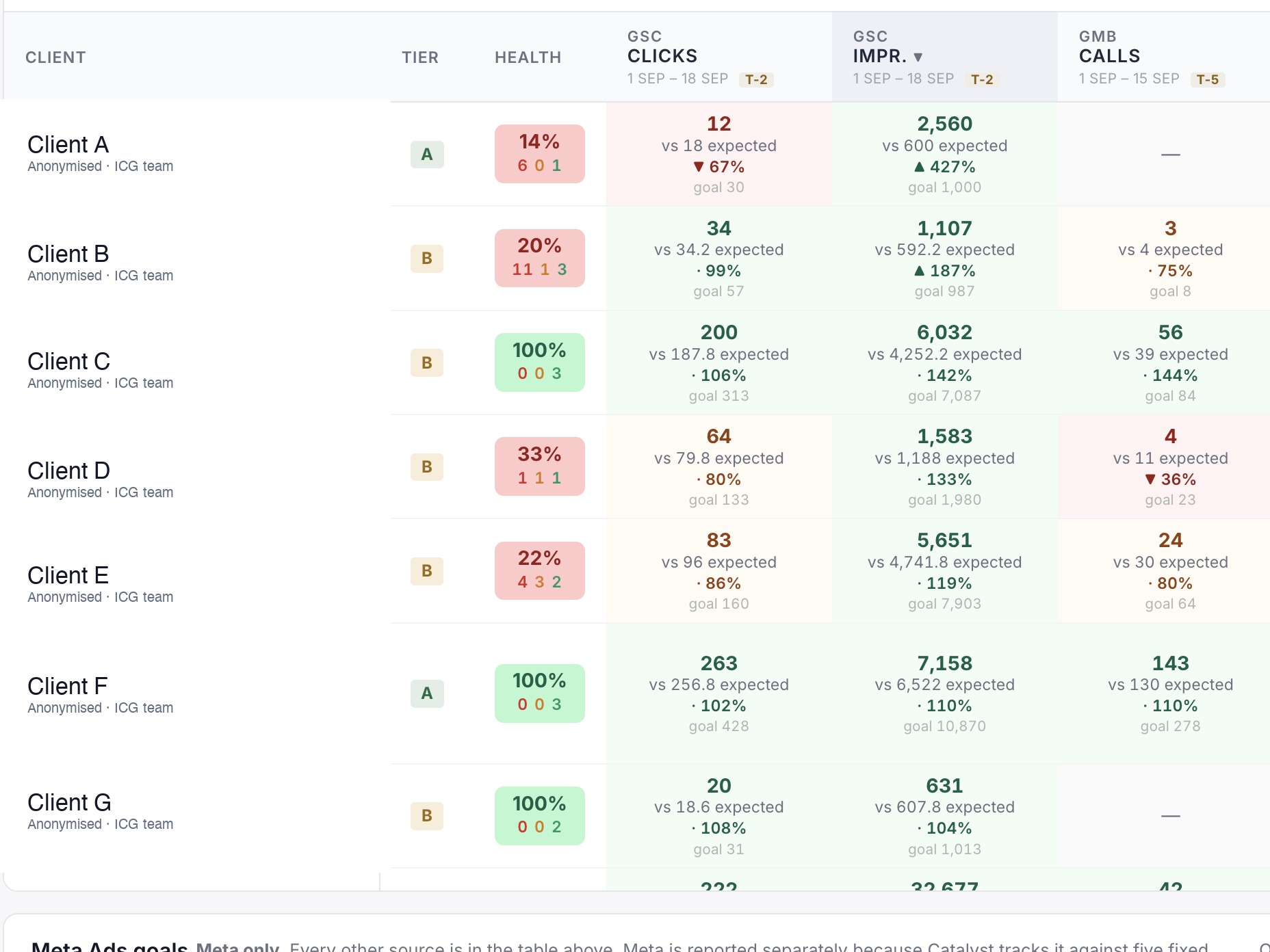
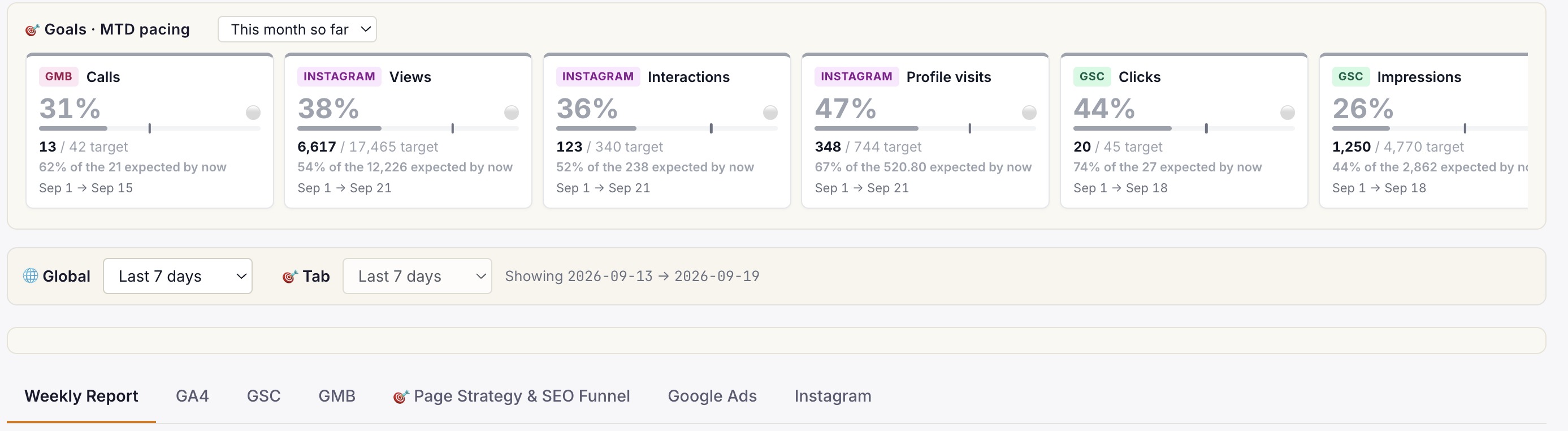
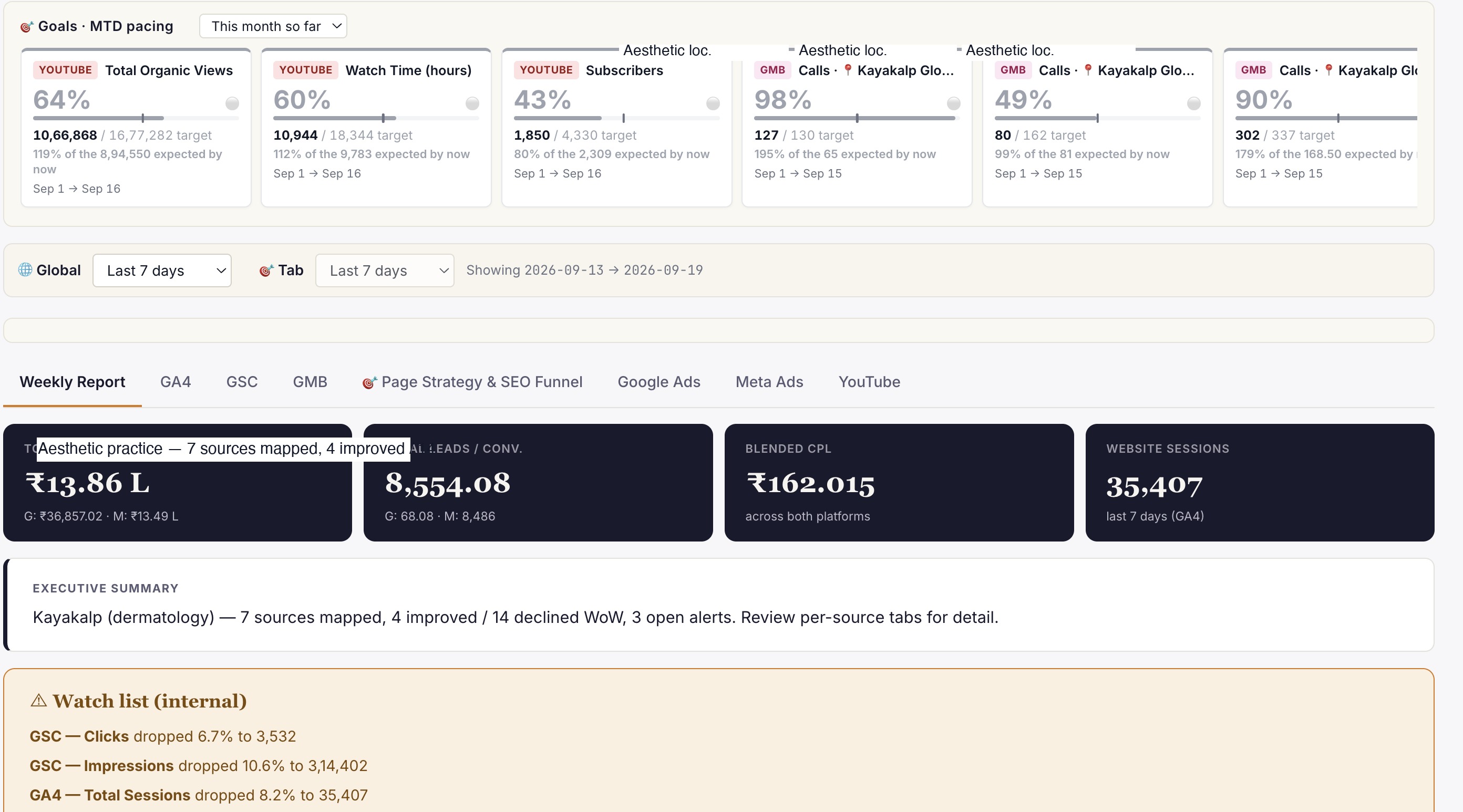
Live client dashboard. GSC, GA4, Google Ads, Meta Ads, IVR calls in one view. Login anytime, not monthly.
Phoenix
Clinic revenue intelligence over your PMS. Daily action queue: Prevent Loss, Maintain & Engage, Grow Revenue. Multi-centre rollout.
Or book a free 30-min audit to see all three in action on your account.
Healthcare brands
that already run on ICG.
A representative slice of the 150+ healthcare brands ICG has delivered for across India. Most engagements remain under NDA.


What ICG clients say · on video.
"Scale up of organic channels and business consulting. ICG has absolute domain authority in their field."
"Working with ICG transformed how we acquire IVF patients in Gurgaon. They understand the fertility journey from inquiry to consult..."
"What Ichelon accomplished — they got all my ideas and worked over 3-4 months to create an amazing, super-customised website."
Need help operationalising this?
Every ICG service is healthcare-only, NMC + DPDP-aware, and built around the patient-research patterns that drive Indian healthcare growth in 2026.
Every practice welcome — packages from ₹20,000/mo.
Goals-Driven engagements · Performance-Linked Payout Models available
More from
ICG.
Five trends shaping Indian healthcare marketing through 2027: AI-first patient research, Conversions API adoption, ABDM discovery, the AEO w...
Healthcare AIO is the discipline of getting your clinic or hospital cited inside Google AI Overviews, ChatGPT and Perplexity answers — not j...
Conversational-search advertising places brand messages inside AI chat answers — ChatGPT, Perplexity, Copilot — rather than beside a results...
Stop guessing.
Book a Diagnostic.
30 minutes. Free. With the AI-powered healthcare-only marketing agency 150+ brands already run on. No slides, no pitch, no hard close.


