


Hospital Meta Ads Agency India 2026 — The Multi-Specialty Playbook
Hospitals and multi-specialty groups need an orchestration partner, not just a media buyer. CPL bands per specialty, compliance stack, brand-vs-performance split, HIS integration, and the seven questions to ask any Meta ads agency in 2026.
No pitch. Written root-cause diagnosis. AI-powered, healthcare only.
Direct answer
Hospitals and multi-specialty groups need an orchestration partner, not just a media buyer. CPL bands per specialty, compliance stack, brand-vs-performance split, HIS integration, and the seven questions to ask any Meta ads agency in 2026.
TL;DR

Hospitals and multi-specialty groups have the hardest Meta ads brief in Indian healthcare. Not because reach is difficult — the audience is broad. Because a hospital doesn't have one funnel. It has eight. Cardiac sits at ₹3,200 CPL. Gynae hums along at ₹1,100. Health check packages, run right, land ₹520-1,180. Oncology, when a specialist campaign is set up cleanly, sits anywhere ₹4,800 to ₹8,500 — and that number is fair, because the lifetime value of an oncology patient is measured in lakhs. Meanwhile the CEO wants brand recall, the CFO wants CAC, the COO wants OPD footfall, and the emergency wing needs always-on visibility. If you're a hospital board evaluating Meta agencies for 2026, you aren't choosing a performance vendor. You are choosing an orchestration partner. This piece explains what right-fit looks like, and what to walk away from.
Hospital Meta ads is a different sport
A hospital account carries more moving parts than any other healthcare Meta ads brief in India. Eight to twelve specialty verticals, each with its own creative, its own landing page, its own compliance angle. Three campaign postures running in parallel — always-on for emergency and OPD, planned bursts for elective procedures, seasonal ramps for health-check packages. Two audiences per specialty, sometimes three — patient, family decision-maker, and referring physician network. All of it inside one Business Manager, with one credit line, one brand tone, and one board meeting every month asking why marketing costs went up.
Most agencies pitching hospitals have never run a hospital account. They have run a clinic account and multiplied it. Those are not the same thing.
The multi-specialty CPL matrix
These are the bands ICG's hospital portfolio holds through 2026. Numbers are for qualified leads — phone-verified, specialty-appropriate, geo-appropriate. Not raw form-fills.
- Cardiac — around ₹3,200. Higher for pediatric cardiac. Consideration cycle 14-45 days.
- Ortho — around ₹1,400 for joint replacement, arthroscopy, sports injury.
- Oncology — ₹4,800 to ₹8,500 depending on sub-vertical. Breast onco lower end. Head-and-neck and rare cancers higher.
- Gynae and obs — around ₹1,100. Fertility overlaps but is a separate funnel.
- General OPD — ₹380 to ₹820. High volume, low friction, package-friendly.
- Health-check packages — ₹520 to ₹1,180 depending on tier (basic/executive/comprehensive).
If an agency quotes you a "hospital blended CPL" of ₹800, they are quietly averaging OPD-heavy volumes with cardiac-light volumes. That number lies. Ask them to break the matrix down per specialty per branch.
Compliance is not one layer. It is five.
NMC Ethics Code — no comparative advertising, no exaggerated outcome claims, no "Best Hospital" framing. Doctor-personal-brand ads for specialists must reflect the individual's NMC registration and specialty status.
ASCI Guidelines 2022 — testimonial handling, price and package disclaimers, before-and-after protocols where used.
DPDP Act 2023 — patient stories require consent record, purpose limitation, revocability. Health data is sensitive personal data under DPDP.
PC-PNDT Act 1994 — for any maternal and reproductive campaign, sex-determination language is banned. Even accidental framing gets flagged.
DCGI and MTP overlays — oncology drug messaging, MTP services messaging, high-risk device messaging each have their own compliance windows.
MoHFW guidance and state health-department circulars — occasionally added on top, especially around emergency-service claims and pandemic messaging.
An agency without a designated medico-legal reviewer on staff will earn you an ASCI or NMC notice inside a quarter.
OPD, elective, emergency — three rhythms in one account
OPD and health-check packages run on a 30-day creative refresh cycle. Volume matters more than novelty. Rotate three pillars: convenience (booking speed, parking, wait time), quality (accreditation, team credentials), value (package pricing, EMI on planned procedures).
Planned surgery — cardiac, ortho, oncology surgery, bariatric — runs on a 45-day cycle. Consideration is longer. Family-decision-maker messaging matters as much as patient messaging. Video testimonials and doctor-face content earn most of the response.
Emergency and trauma services run always-on. Different logic altogether. Geo-tight radius targeting. High-frequency messaging on a small audience. Response time and directions matter more than any offer.
Running all three rhythms inside one Business Manager needs an ad-set naming convention any team member can read at a glance. Naming Intelligence inside Meta Catalyst IQ is what keeps 60+ ad sets legible.

Brand versus performance — the budget split fight
Every hospital marketing head fights this fight. The CEO wants brand recall. The CFO wants CAC. Marketing sits in the middle.
Our working split on hospital accounts sized ₹8L-40L per month on Meta: 20-30% brand (reach, video views, awareness on top specialties), 55-65% specialty performance (lead-gen per vertical), 10-15% remarketing (site visitors, engagers, past enquirers).
Brand budget is not vanity. It is what makes the specialty performance ads cheaper by month four — recognition compounds. Brand also makes it possible to say "as seen on your feed last week" during the sales call. Cutting brand to zero saves nothing. It just pushes performance CPL up 18-25% within two months.
Specialty-siloed ad account structure
A monolithic hospital account — one campaign per objective, ad sets by geo — collapses under multi-specialty complexity. The Meta learning phase never stabilises because signal is mixed.
The structure that works: one Business Manager, one ad account per hospital brand, campaigns siloed per specialty, ad sets siloed per branch inside each specialty, three-to-four ad variants per ad set. This lets each specialty ad set finish its 7-14 day learning phase on clean signal. It also lets the finance team read specialty-level media cost off Meta without needing an analyst.
Naming convention example: [Brand]_[Specialty]_[Branch]_[Objective]_[Creative-pillar]. Boring beats clever every time.
CAPI, offline conversion upload, and HIS integration
Meta's Conversions API is table-stakes for hospitals in 2026. Without it, iOS 14+ and browser-privacy signal loss puts your attribution at 40-55% under-count. With CAPI, you claw back 70-85% of that signal.
The next layer is offline conversion upload from your HIS (hospital information system). Lead comes in via Meta ad. Books an OPD slot. Walks in on day 7. Converts to inpatient. The final event lives inside your HIS. Push it back to Meta as an offline conversion, and Meta's learning finds more people like that patient. Without this loop, you are teaching Meta to find enquirers, not patients.
Any agency that has not integrated CAPI or does not know how to configure your HIS export is running your hospital account with one eye closed.
Multi-branch geofencing and referral capture
A five-branch hospital group in Bengaluru needs five geo-fenced ad-set layers per specialty. Each with its own creative variant, its own branch photo, its own doctor face, its own regional language mix (Kannada + English + Hindi in Bengaluru; Marathi in Pune; Telugu in Hyderabad).
Referral capture is a subtler layer. Referring physicians and diagnostic centres respond to a different content pattern — CME invites, clinical evidence, case discussions. That audience lives on a separate campaign, sometimes on LinkedIn spillover, and needs its own CPL benchmark.
The three ASCI traps hospitals fall into
First trap — "Best Hospital" or "#1" claims in any creative. Even if you have an award. ASCI treats superlatives without qualifiers as misleading. The workaround is factual: "NABH accredited," "500+ cardiac surgeries in FY26," "Empanelled with X insurers."
Second trap — running doctor-personal-brand ads that describe specialists as "world-class" or "renowned." That copy lives inside the ad account of the hospital, but the individual must meet the claim under NMC Ethics. Safer alternative: verifiable credentials, years of practice, procedures done, specialisation.
Third trap — emergency-service ads without a disclaimer. Meta and ASCI both take a stricter view when the ad implies life-critical response times. Add the qualifier ("subject to triage protocol") and keep response promises factual.
What ICG's hospital experience actually looks like
ICG runs multi-specialty and multi-branch hospital accounts inside its Meta Catalyst IQ portfolio — ₹9.1Cr+ optimised monthly, ₹1,581 blended CPL against a ₹3,200 hospital-market benchmark, 23+ accounts with full portfolio visibility. Every hospital engagement includes a specialty-siloed structure, CAPI and offline conversion pipeline, per-branch geo-fencing, brand-versus-performance split management, and a monthly board-facing dashboard the CFO can read without an analyst.
Pricing sits inside our Growth (₹50,000-1L/month) and Scale (₹1L+/month) tiers, depending on Meta spend under management. Included with every engagement: PrismSpy competitor watch across your specialties, and Meta Catalyst IQ on your accounts.
WhatsApp, call tracking and walk-in attribution — the mesh that closes the loop
Hospitals don't get enquiries in a single format. Some prospects fill a form. Some click-to-call. Some tap WhatsApp. Some walk in on a Saturday afternoon with a printed OPD leaflet in hand. If you cannot see all four sources in one dashboard mapped back to their Meta ad exposure, you cannot budget honestly for FY27.
The mesh has four legs. Meta form-lead capture routed to CRM within 5 minutes. Call tracking with dynamic-number insertion so an inbound call carries campaign attribution. WhatsApp campaign IDs preserved via Click-to-WhatsApp with pre-filled context. Walk-in attribution via a "How did you hear about us" front-desk field, cross-checked weekly against Meta reach in that pincode.
Any agency that ships you a WhatsApp Business account without CTWA (Click-to-WhatsApp Ads) campaign IDs preserved is losing 60% of your attribution signal. That is a solvable engineering problem, not a strategy issue — but it needs the agency to know it exists.
Board-level reporting cadence — monthly, quarterly, annual
A hospital marketing head reports to a CFO who reports to a board. The board cares about three questions: what did we spend, what did we get, what's the outlook. If your monthly dashboard cannot answer those three cleanly, the marketing budget conversation gets harder every quarter.
Working cadence: a one-page monthly dashboard by specialty and branch (spend, qualified leads, CAC, revenue), a quarterly deep dive with cohort retention and payor mix, an annual strategy review that resets specialty priorities and tests new verticals. The annual review is where new specialty campaigns get budgeted — expanding into bariatric, transplant, robotic surgery — with defensible test-and-learn windows.
The seven-question shortlist for a hospital-tier agency
- Show me your CPL matrix by specialty across at least three multi-specialty accounts you have run in the last 12 months.
- Walk me through your ad-set naming convention. Can a new analyst read it inside 30 minutes?
- Is Conversions API configured on all your live hospital accounts? Who set up the offline-conversion pipeline from HIS?
- How do you handle brand-versus-performance budget split and defend it to the CFO?
- Name the medico-legal reviewer on your team who signs off healthcare creative pre-launch.
- How do you build referral-physician campaigns separately from patient-acquisition campaigns?
- Show me a competitor watch for the top two specialties in my catchment — who is outspending me on cardiac and oncology this quarter?
The right agency answers all seven with hospital-specific case work. The wrong one pivots to clinic case studies and hopes you accept the substitution. Book a free 48-hour Meta ad diagnostic and we will answer these seven on your live account before any commitment.
FAQ — hospital Meta ads in 2026
What monthly Meta budget does a multi-specialty hospital need to see meaningful lead volume?
Minimum ₹5L/month across a hospital ad account to run three specialties well. Below that, either specialties compete for signal or one specialty gets starved. Ideal for a 5-8 specialty account is ₹12-25L/month depending on catchment competition.
Should each branch have its own Business Manager?
No. One Business Manager, one ad account per hospital brand, branch-fenced ad sets. Splitting into per-branch Business Managers loses signal and complicates billing without adding attribution value.
How does offline conversion upload actually work with an Indian HIS?
Nightly export from HIS of qualified events (booking confirmed, walked in, converted to procedure) with hashed phone/email. Uploaded to Meta via Business Suite or API. Meta matches to ad-exposed users and updates learning signal.
Can we run oncology ads on Meta?
Yes, with NMC-compliant messaging, no drug-specific claims (DCGI-covered), and consent-driven testimonials. Meta's own review is stricter for oncology than most specialties, so expect 15-25% higher creative disapproval rates until the account trust score matures.
What's the right frequency of creative refresh across specialties?
OPD and health check every 30 days. Planned surgery every 45 days. Emergency always-on with quarterly refresh unless response drops. Doctor-brand videos hold longer, sometimes 60-90 days, if performance stays flat.
How long before a multi-specialty hospital account stabilises?
60 days for the first three specialties to reach steady-state CPL. 90 days to complete a full portfolio ramp. Anything faster is usually accidental — repeat customer signal or seasonal lift being read as agency skill.
Is Meta the right first channel for a new hospital brand?
Depends on catchment. In metros with strong specialty competition, Google Ads for high-intent search plus Meta for consideration is the right combo. Meta alone works better for OPD and health-check packages than for cardiac or oncology.
Powered by Meta Catalyst IQ — the decision engine behind every hospital account we run
ICG built Meta Catalyst IQ because most Indian healthcare brands running Meta ads waste 30-50% of budget without knowing it. It is the diagnosis and decision layer above Ads Manager — Hygiene Factors 12-point checklist, Naming Intelligence (surfaces conflicts costing ₹50K-₹2L per account per month), Creative Scoring Matrix (Core Performer, Scalable, Getting Started, Review), 2-Day Comparative, SLC Framework, Money Wastage column in ₹.


- Master Dashboard — 23+ accounts, ₹9.1Cr+ spend/month optimised, ₹1,581 blended CPL vs ~₹3,200 market benchmark.
- Diagnose → Optimise → Grow — daily hygiene checks, weekly creative scoring, monthly money wastage cleanup.
- CPQL Engine — cost per qualified lead (not just cost per lead) at ad-set level. Try the interactive CPQL calculator.
- Portfolio benchmarks — IVF ₹632, derm ₹520-1,180, dental ₹620-1,800, aesthetic ₹400-900, hospital cardiac ₹3,200.
Included free with every ICG Meta ads or Performance Marketing engagement (Starter ₹20,000/-/month tier and above). Not sold standalone. Book a free 48-hour Meta ad diagnostic or WhatsApp us.

Powered by PrismSpy — every hospital and specialty competitor ad, watched daily
ICG built PrismSpy because hospital-brand Meta competition is invisible without it — you cannot see which of the five hospitals in your catchment is running which cardiac offer this week without a tool that catalogues it. 75+ Indian healthcare brands tracked, 2,150+ active ads catalogued, ₹50Cr+ aggregate ad spend visibility per month. Every competitor ad — creative, offer, hook, run-length — refreshed daily. It runs underneath every Meta ads and performance marketing engagement at ICG.
- Watchlist Dashboard — 30-75 competitors per specialty cluster (IVF / dermatology / dental / hair transplant / aesthetic / hospital), daily refresh.
- Comparative Insights — highest-quality ads, longest-running creatives (proven converters), top hooks, emerging offers.
- Offers Intelligence — 1,197 offers tracked, discount intensity by brand, value tier distribution.
- Service Cluster + Inspirations — 419 services tracked, 4,697 searchable ad inspirations by hook / language / format.
Standalone from ₹4,999/- per specialty vertical, or bundled free inside HealthApex OS (₹14,999/- flat, 9 tools). Book a 30-min PrismSpy walkthrough on WhatsApp — Rohit + Hanuman walk you through your specialty's competitive landscape.


Related reading
Book a free Meta ads account audit.
Raman Soni's team pulls your account, checks CAPI/EMQ, reviews creative for NMC compliance, and shows where CPQL is leaking. 45 minutes, actionable output.
The three platforms
behind every ICG engagement.
Beacon
CAPI middleware that fixes Event Match Quality, translates CRM statuses to Meta-standard events, dedups across channels.
Agency OS
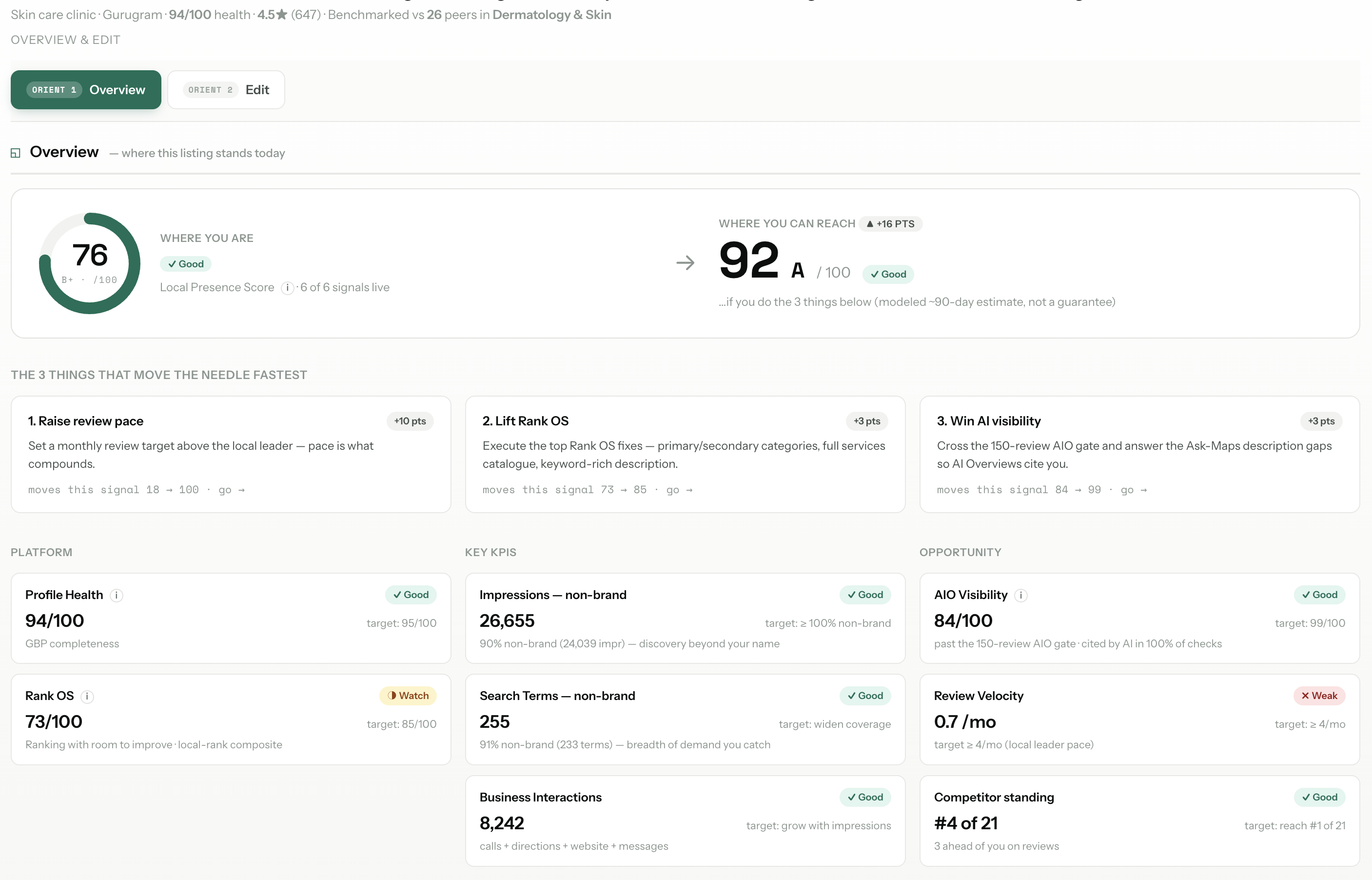
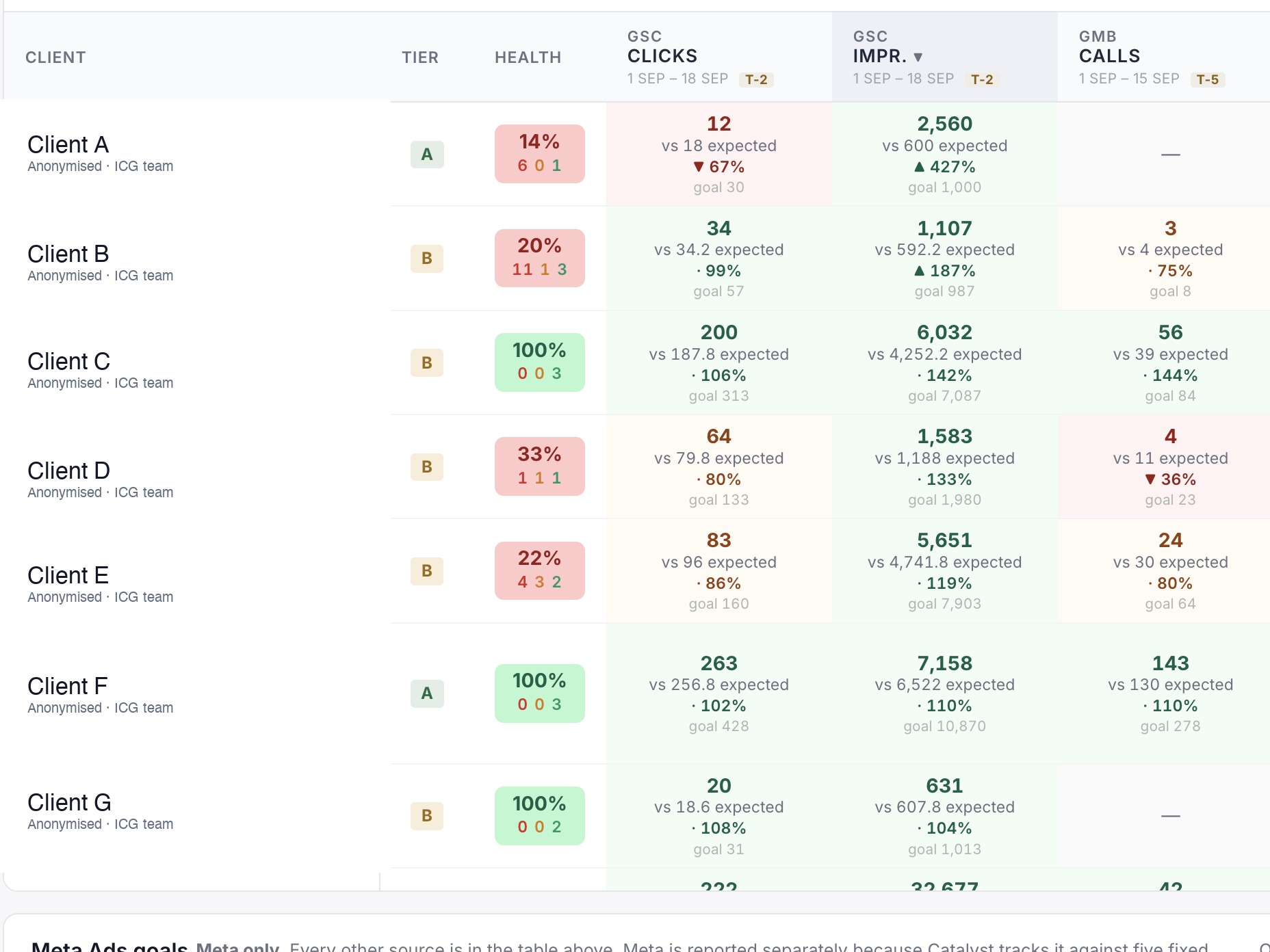
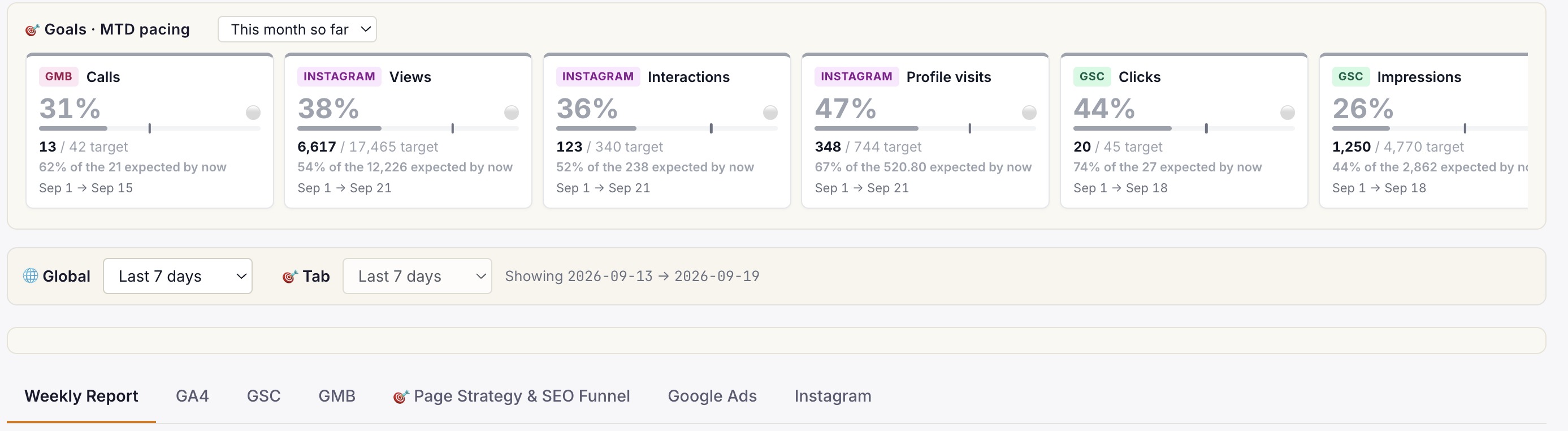
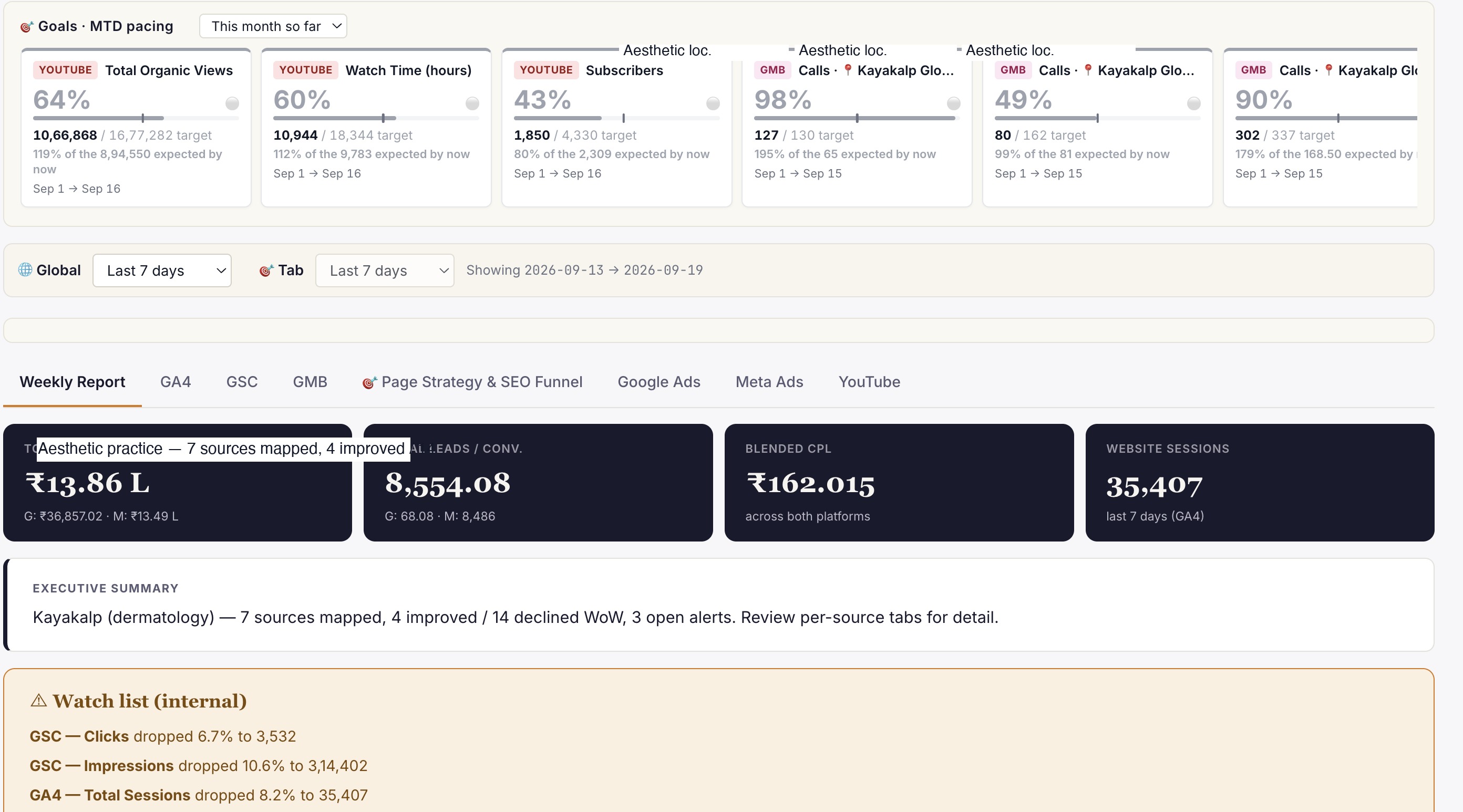
Live client dashboard. GSC, GA4, Google Ads, Meta Ads, IVR calls in one view. Login anytime, not monthly.
Phoenix
Clinic revenue intelligence over your PMS. Daily action queue: Prevent Loss, Maintain & Engage, Grow Revenue. Multi-centre rollout.
Or book a free 30-min audit to see all three in action on your account.
Healthcare brands
that already run on ICG.
A representative slice of the 150+ healthcare brands ICG has delivered for across India. Most engagements remain under NDA.


What ICG clients say · on video.
"Mental health marketing requires a different sensitivity. ICG built compliance-aware campaigns that respect both patients and our..."
"Bariatric surgery patients need a long consideration cycle. ICG built a content + paid system that respects that timeline."
"Working with ICG felt like working with an in-house growth team that happens to specialise in healthcare."
Need help operationalising this?
Every ICG service is healthcare-only, NMC + DPDP-aware, and built around the patient-research patterns that drive Indian healthcare growth in 2026.
Every practice welcome — packages from ₹20,000/mo.
Goals-Driven engagements · Performance-Linked Payout Models available
More from
ICG.
Hindi and regional-language SEO means publishing proper pages in the languages your patients search in, on their own URLs and linked with hr...
A new pharma brand in India should start digital work before launch, built around who it may legally address. This six-month plan covers pro...
Hospitals and clinics in India can still advertise after the NMC's 6 October 2026 guidelines, but only with factual, verifiable information....
Stop guessing.
Book a Diagnostic.
30 minutes. Free. With the AI-powered healthcare-only marketing agency 150+ brands already run on. No slides, no pitch, no hard close.


