


AI route planning that puts MRs
in front of the right HCPs. Every day.
Without intelligent scheduling, MRs spend 30–40 minutes each morning building their own call plan from intuition. High-priority accounts get visited because they are convenient — not because they are strategically important. Pharos RouteIQ eliminates the planning friction and eliminates the coverage variation.
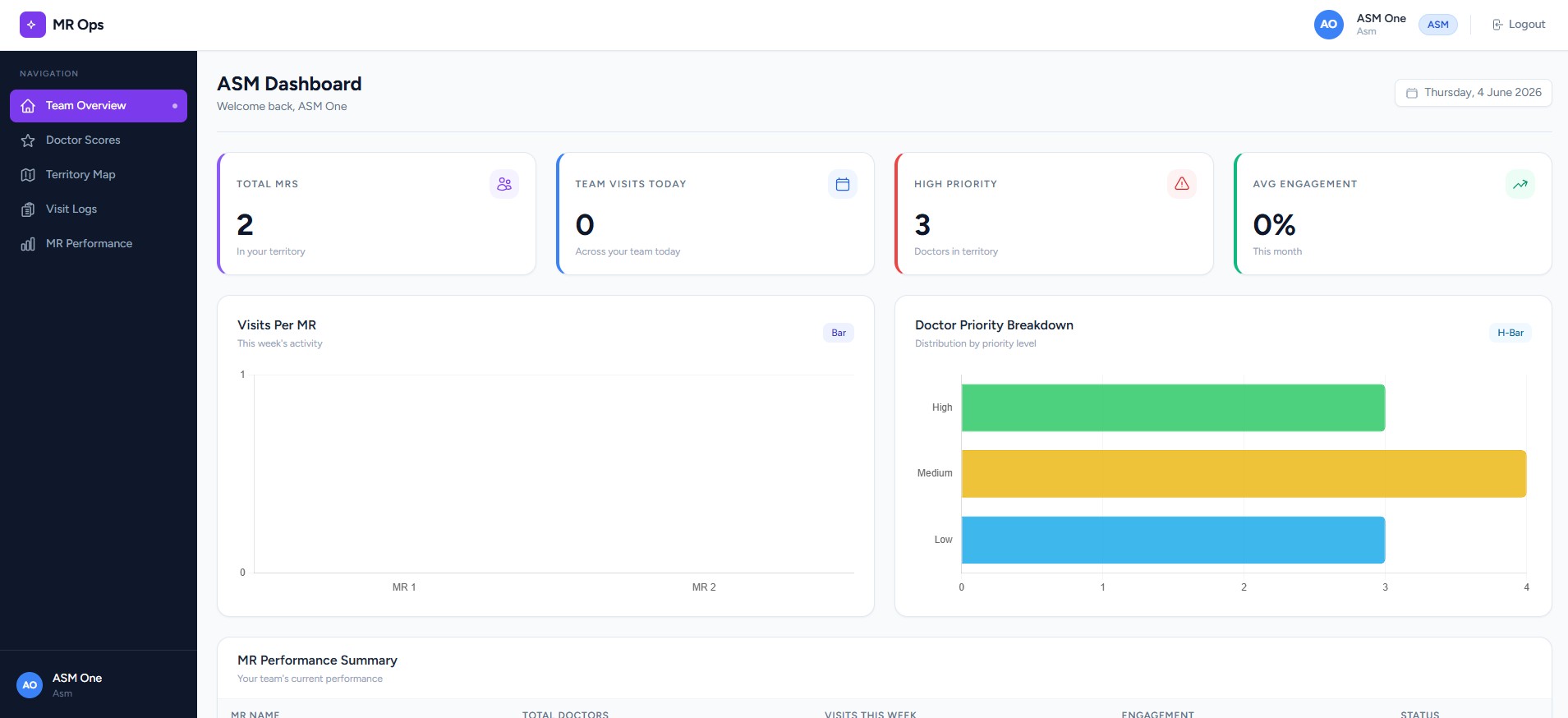
Pharos RouteIQ · AI route planning for medical representatives.
The morning that disappears
into manual planning.
Planning optimal daily visit routes for a large medical representative field force is logistically complex and time-consuming. Without intelligent scheduling, MRs spend 30–40 minutes each morning building their own call plan from intuition and habit. High-priority accounts get visited because they are convenient — not because they are strategically important. Low-priority accounts get time that should go to high-value HCPs. Coverage quality varies by MR. RouteIQ eliminates the planning friction and eliminates the coverage variation.
Three capabilities. One tool.
AI-Driven Visit Planning
Auto-generated optimised daily call plans based on HCP priority scoring and territory geography. Planning time eliminated. Productive field coverage maximised. Every MR starts the day knowing exactly where to go.
Real-Time Territory Maps with HCP Priority Scoring
Live visibility into territory activity and HCP engagement levels. Managers identify coverage gaps and redirect field effort before they affect performance targets — not after.
Multi-Role Dashboards
MRs see their daily call plan and HCP context. Area Sales Managers see zone-level coverage and performance. Admin users see territory-wide patterns. One platform. Three views. No switching between systems.
What the engagement
actually looks like.
How Pharos RouteIQ optimises field force routing and visit planning
A typical RouteIQ engagement is triggered when a sales head asks: "How many of our MR daily visits are actually productive?" Most pharma sales teams cannot answer that question with data. RouteIQ makes the answer visible — and then optimises it.
Daily route optimisation. RouteIQ takes each MR's planned HCP visit list and produces an optimised sequence using time-of-day patterns (which HCPs are accessible at 10am vs 4pm), spatial efficiency (minimise drive-time between visits), engagement priority (RxFlow's intent-scoring drives sequencing), and historical conversion patterns (which HCPs convert better in long vs short visit formats). The output: a daily route that increases productive HCP engagement time by 25–40% within the same field-day window.
Visit planning intelligence. RouteIQ surfaces which HCPs the MR has not visited recently (within target frequency), which territories are under-engaged, and which HCPs are showing early switching signals via RxFlow. The MR's plan is data-driven instead of habit-driven.
Pre-visit briefing. Before each HCP visit, RouteIQ surfaces a 60-second briefing: last visit date, last conversation summary, current product engagement status, objections to address, and competitive context. The MR walks into each visit prepared with full context instead of reconstructing the relationship from memory.
Integration with RxFlow and Signal
RouteIQ depends on RxFlow for HCP relationship data and Signal for AI-driven coaching insight. The three modules together form the field-force-operating-system stack: RxFlow holds the relationship truth, Signal coaches the individual call, RouteIQ optimises the day.
Outcome targets
(1) Productive visit time per field-day — typically 25–40% lift within 90 days; (2) Visit frequency compliance — measurable improvement against target-call-plan adherence; (3) MR satisfaction — measurable via internal MR surveys (lower navigation cognitive load, higher pre-visit confidence).
How Pharos RouteIQ connects
to the rest of Pharos.
RouteIQ converts HCP priority data from RxFlow into the daily call plan. Signal coaches the MR after each visit. Gate surfaces the pipeline impact.
Built for specific roles.
Nine modules. One intelligence layer.
Built for the specific frictions of pharma.
ICG's commercial and field force engagements run on RxFlow, RouteIQ, Gate, Signal, and Pulse — five tools that connect field activity to prescription outcomes.
Explore the full Pharos platform →Every ICG pharma engagement runs on some combination of these nine modules. The pilot engagement determines which ones are active from Day 1.
Start a pilot project →
Led by a pharma specialist.
IIT BHU-founded leadership team.
Every ICG pharma engagement is led personally by Aditi Tripathi — M.Pharm, IIT BHU — with Abhash, Deep and Rohit (Co-Founding Team) bringing the scientific rigour, delivery architecture and commercial lens built across 8+ years. IIT BHU pharmaceutical engineers at every level of the engagement.

100+ specialists. One process. Every deliverable in-house. Gurgaon, since 2018.

Abhash Kumar
Strategy Lead · IIT BHU + IIM Bangalore
Leads scientific strategy and quality governance. Sets the standard for scientific rigour across every engagement.
Profile →
Deep Das
Operations Lead · IIT BHU (B.Tech + M.Tech)
Owns the AI-powered delivery system — the multi-tenant operations layer that runs every pharma engagement on time and on spec.
Profile →
Rohit Gupta
Business & Growth Lead · IIT BHU + IIM Rohtak
Pharma engineer who owns business growth and the commercial lens connecting science to prescription outcomes.
Profile →
Aditi Tripathi
IIT BHU · M.Pharm
Aditi leads every pharma engagement end to end — from scoping the scientific writing architecture to governing quality across delivery. Her M.Pharm from IIT BHU means she doesn't need the science explained to her. "She explains it to everyone else."
See Pharos RouteIQ live.
30-minute demo. No commitment.
The demo walks through mr route optimization on real (anonymised) pharma data. You see exactly how the tool fits the engagement before any commercial conversation.
